
After a good night’s sleep and breakfast in our room at The Cecil Hotel (omelette toast with chai) we set off to continue our exploration of Kolkata. The sky was dark and overcast and the air was humid. We handed our laundry in. The hotel manager said it might take a bit longer than usual as it was due to rain. There was a cyclone that was hitting the South Indian coast (on the south eastern side of India they are hit by a second wave of monsoon in November, like Thailand) and the impact was also going to be felt in Kolkata.
We caught the metro over to the city cathedral and the Victoria Memorial, which we had glimpsed but not entered the day before. I found the cathedral a bit underwhelming (although they did have great Christmas crib models still under plastic wraps outside). The Victoria Memorial, however, is a magnificent spectacle. In front of a huge white domed building is a massive statue of Queen Victoria. Within the memorial building, which is a cross between St Pauls Cathedral and the Taj Mahal, there is a soaring domed hall, various marble statues and a number of canons.

We spent some time wandering around, heading upstairs to admire the views of the surrounding parkland and city. There was an exhibition about the history of the Indian independence movement. I knew little about the resistance fighters that had fought for the freedom of India over many years. They were briefly mentioned in my history lessons, but the main focus was always Gandhi. He was more of a guru or religious figure, campaigning against the caste system and inequality which had been magnified by the British occupation.
Kolkata has a long history of leftist resistance. This is still apparent. Harrington Street is renamed ‘Ho Chi Minh Sarani’. The area where our hotel is has an Indian Coffee House where rebels and resistance fighters used to meet. According to Lonely Planet Guide, Kolkata was badly hit by partition, being flooded with refugees from what is now Bangladesh. It was also impacted by refugees from the India – Pakistan war in the 1970s. Its economy was hit by losing land in partition. Following independence West Bengal was under communist control for many years. Measures that were intended to attack the feudal system of land ownership and represent proletarian demands, in reality did nothing to improve the economy, which was impacted by repeated strikes. Kolkata was not seen as a good city to invest in and corporate firms moved to Delhi and Mumbai. Since 2011 the communist party has been out of power and continued efforts have been made to bring positive changes to the city.

Subha Chandra Bose Indian nationalist memorial in Kolkata. Bose moved to Japan when he was at risk of being arrested by the British for his part in Nationalist resistance activities. He supported the Japanese/ Nazi Germany against Britain during the second world war. He is still a hero to many Indians for his nationalist/ terrorist (depending on whether you were British or Indian) activities.
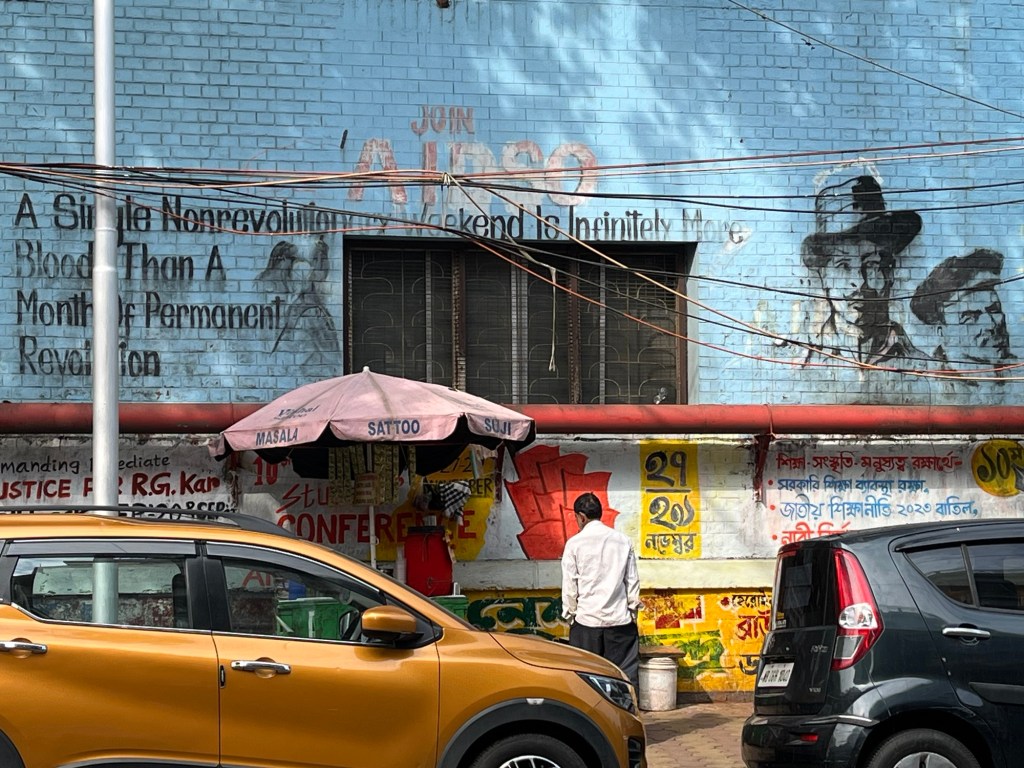
As we left the Victoria Memorial it started to rain quite heavily. We headed off to get refreshments and got quite wet in the process. We finally located a South Indian restaurant where we sat down to lassis and dosas with a sigh of relief. As it was still raining we had a good excuse to visit the famous sweet shop KC Das where they claim to have invented Rasgolla which are sponges in rose syrup. I tried one but was not too keen on it, it was a bit too rubbery for my taste. I preferred the Mishti Doi which is sweetened curd in a small bowl. The speakers in KC Das continually assailed our ears with the KC Das jingle. I was humming it for the next two days.
The next day was our favourite so far in Kolkata. The weather was bright again and we set off for Howrah Bridge from our hotel. We got lost in a maze of narrow streets, which gave us a fascinating insight into the life of the city. It wasn’t too crowded with traffic as it was a Sunday.
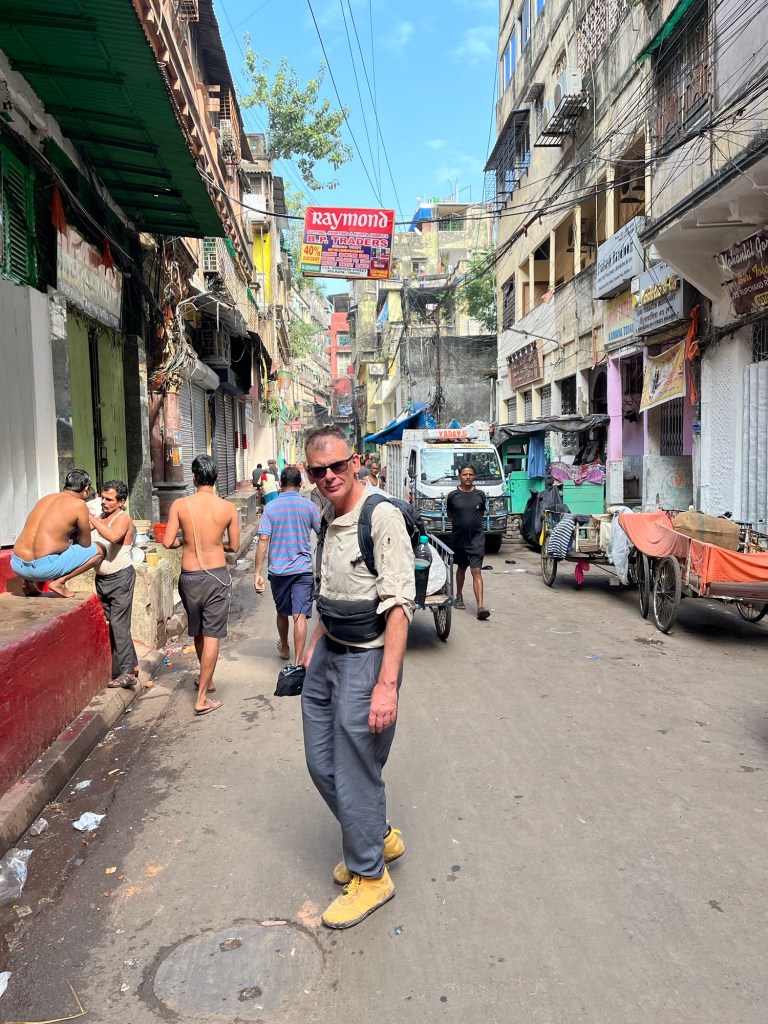
We finally reached Howrah Bridge and the flower market. It reminded me a bit of the old London street markets that don’t exist anymore – everybody focused on doing their deals and rushing back and forth. We wandered through the flower market, ending up at the old dock/ ghat area where people live and bathe in the river.
We headed back for an excellent (though by Indian standards expensive) breakfast at ‘The Chutney company – Piccadilly Square’. Reinforced with coffee we explored BBD Bagh. Although there are old British buildings falling into decay throughout Kolkata this area has an abundance of them. It is fascinating to look around at what must have been a beautiful residential area one hundred years ago. Now most of the buildings are crumbling, with trees and growing around and through them. Unfortunately we couldn’t get into a couple of the buildings such as St Andrews Church and vicarage, as it was a Sunday.


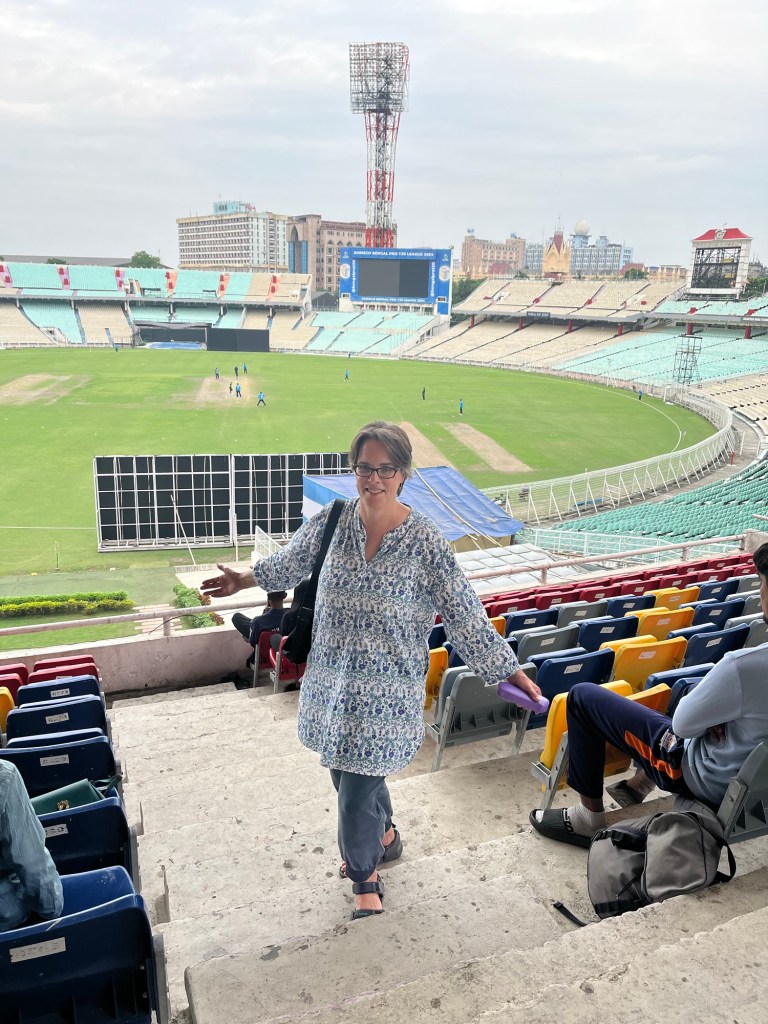
We finished off the day by visiting the Eden Cricket Ground. It wasn’t officially open but the guards kindly let us have a look around and take some photos. There was practice going on – I am not sure if it was the Indian team or not.
We headed back to the Cecil for a well earned rest – we had a train booked to Bhubeneswar the temple city in Odisha the next day.
 Kate's Travels
Leave a comment