
We had a limited amount of time before we needed to catch the train from Kolkata to Delhi to get our Air India flight back home on 16th December. There were some interesting looking towns between Siliguri and Delhi that we could have visited. An Indian couple we met suggested visiting Varanasi. We considered that, but we had been there on our previous visit to India and there is so much to see in this country that we wanted to go to as many new places as possible. I had read about the shore temples in Odisha and had wanted to visit them for a long time. We had not made it to eastern India on our last trip and might never manage to get this close to them again. They were only an eight hour train journey away so we decided to book a ticket.
I believe that Odisha was once one of India’s poorest states but it is now modernising fast – it has overtaken West Bengal and a number of other states. The modernisation of Bhubaneswar was evident as soon as we arrived in the city – a showpiece shopping complex in the centre of the city and ongoing construction everywhere. The city has the same traffic issues as everywhere else in India. We were driven to our hotel by autorickshaw down a six lane motorway that runs through the centre of town. The hotel, Pratishta Paradise, was small and simple, but sparkling clean. Although we were quite near the main road, the area was quiet and near the attractive old town where a lot of the ancient temples are. I had a great night’s sleep due to the shutters in the hotel windows which blocked out the light and sound.
We spent our first day wandering round the temples and tank in the old town. The tank area was very tranquil. We sat and watched the reflections of the trees and the temples in the water as people, cows, dogs and cats wandered by. It was very hot and there were a lot more mosquitos here than anywhere else we have been in India. The surrounding landscape is a marshy delta. I later discovered that Odisha is a high risk area for malaria.

The temples in Bhubaneswar and the surrounding area date from around the eighth to the thirteenth centuries Many of them, especially the earlier ones, were originally Buddhist and even the older ones still have a lot of Buddhist features. There is also a lot of Jain influence. There are around 700 temples in total and we only saw a small handful of them. The one that is most sacred to Hindus, the Lingaraj temple, does not allow any non Hindus in. This included Indira Gandhi – because she married a Parsi ( who practice Zoroastrianism and originate from. Persia). Tim and I were able to view the temple from a platform constructed next to it. We had been warned about the ‘guides’ who fraudulently try to extract money from people in order to allow them to enter the platform and managed to evade them.

We wandered into other temples in the same area (where non Hindus are allowed). It was fascinating to watch the priests in one temple carry large pots of food into an area where they would all later be fed. A line of priests sat along the roadside, completing ceremonies and Vedic consultations with Hindu pilgrims.

My favourite temples were the Mukteshwar, Kedara Nouri and Shree Parsurameswara temples. They were all close to each other in the old town. At the Muketeshwar temple is a big tank. We were watching the dragonflies and butterflies hover above it when an Indian couple pointed out a large snake as it slithered out from a crack in the rock on the edge of the tank and into the water. The temple has a close connection with snakes. There is a shrine with a number of snake images in the temple grounds. There are also carvings of creatures whose top half looks like a woman but whose bottom half takes the form of a snake all over the temple – they look a bit like mermaids.

I also liked the small Vaital and Sisiresvara temples which were next to each other in an area of town that we wandered into, looking for a cafe. The Vaital temple is a tantric temple. Both temples were built in around the 8th century AD. A priest unlocked the sanctuary and showed us round, telling us that it contained a skeleton. When I looked in, there was an eerie figure with strange silver eyes staring back at me. The priest told us to avoid looking at its eyes as this could bring bad luck, but it was too late!
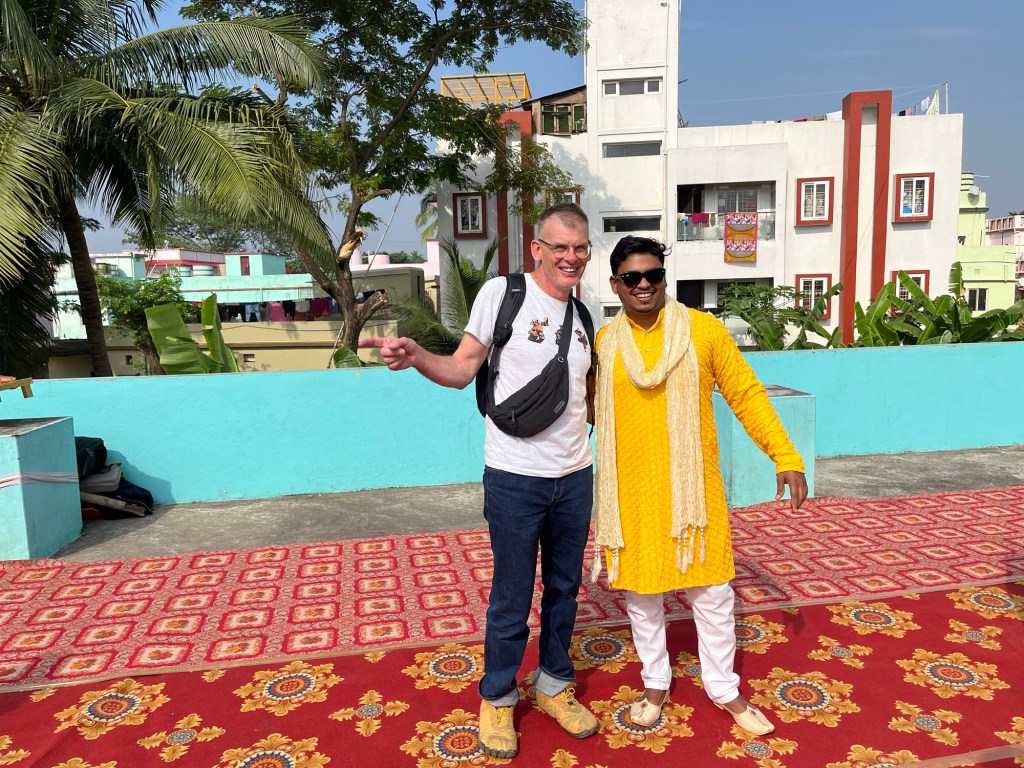
As we were leaving the temple a man beckoned to us. He wanted us to join a groom’s party, which happens just before a wedding. We went and spent some time chatting to the family and having our photos taken with them. Everybody was dressed in yellow, an auspicious colour and was in a very joyful mood. We were invited to stay for some food but we politely said goodbye as we were feeling quite tired by this point.
We found a couple of great places to eat during our time in Bhubaneswar – a small roadside Dhaba which served delicious fresh Vada, which are a bit like savoury doughnuts served with a sauce. Indian people eat these for breakfast. In the evenings we went to a local cafe which did dishes like pasta and pizza as well as Indian food.
On our second day in Bhubaneswar I noticed an e-mail from our home insurance saying that it had expired. Luckily we have paid off our mortgage, otherwise we would have been in real trouble. I was anxious to get it sorted out as soon as possible so we walked to the modern air conditioned shopping mall and sat in their food court eating Nutella pancakes and drinking cappucinos while I did searches for insurance companies on compare the meerkat.com. As we were in the area of the state Museum we spent a few hours wandering around there and looking at some of the statues from temples that have been removed from their original sites for preservation purposes.
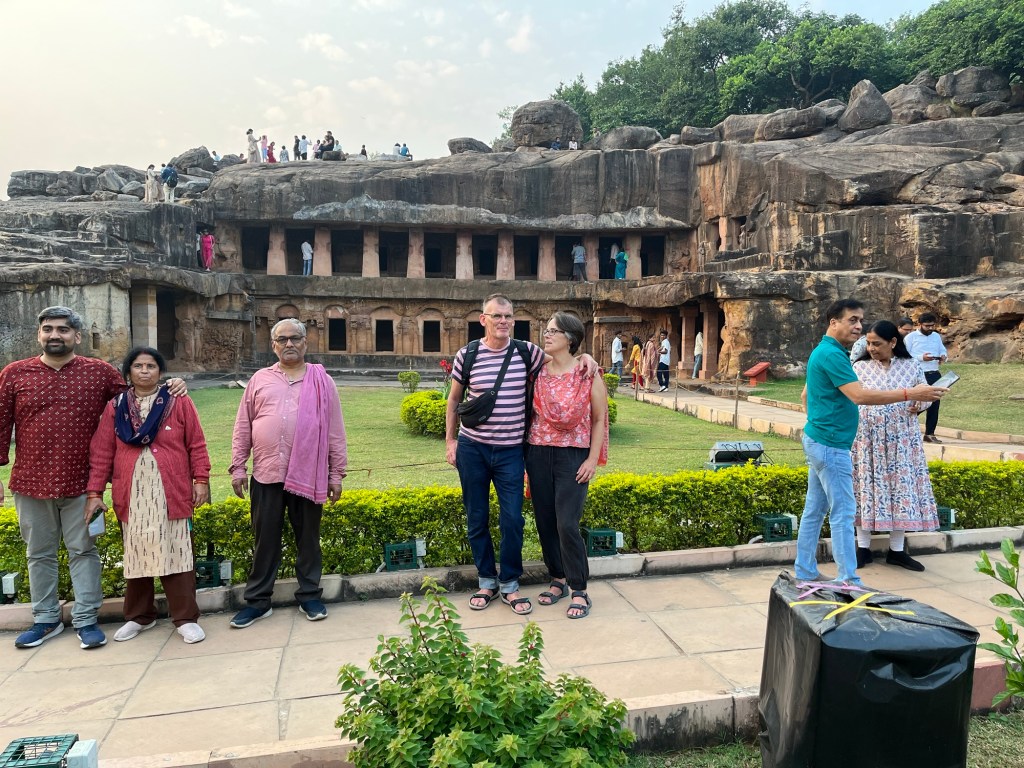
I don’t usually like booking tours, but I wanted to go and see the ancient Udayagiri and Khandagirir caves that were just outside the city. The easiest way to do that was on a tour, so we joined one run by Odisha Tourism on our final day in Bhubaneswar. Our guide was very informative with regards to the temples. We returned to the Muketeshwar temple, which I didn’t mind and also visited another temple further from the centre of the city where we spotted a family of mongooses. This temple was tantric like the Vaital Temple and had lots of carvings of mermaid/ snake women like the Muketeshwar Temple, but sadly I can’t remember its name now.

The tour included the local zoo, which I would not have considered going to, but in fact was very enjoyable. The enclosures were roomy and the animals seemed well looked after. We also visited a Buddhist peace stupa in Dhauli, just outside Bhubaneswar that I wouldn’t have even known about. This was erected jointly by India and Japan. It recalls the battle of Kalinga between King Ashoka who spread Buddhism through India and beyond and the Mauryan Kingdom. Many lives were lost in this battle.
Our tour companions included an Indian couple with their two adults sons, one of which was studying for a Phd in physics in Germany. They were interesting to chat to.
The caves were interesting but very crowded with tourist. We were shown some ancient carvings and paintings by our guide.
We were booked on a train to Puri, where we would get a bus to visit the famous thirteenth century Konark Sun Temple the next day.
 Kate's Travels
Leave a comment