
We bought tickets to Hue, Vietnam from ‘Miss Noy’ travel agency with some trepidation. Miss Noy’s husband, a French man who has been living in Vietnam for many years did nothing to reassure us.
‘We heard that the journey is a bit uncomfortable,’ said Tim.
‘It is run by Vietnamese,’ said the Frenchman. His shrug implied ‘What can you expect from these people’. He told us, ‘They will pile goods around your feet so you cannot move, stop to drop things off and pick up more people…I cannot promise that this will be a comfortable journey.’
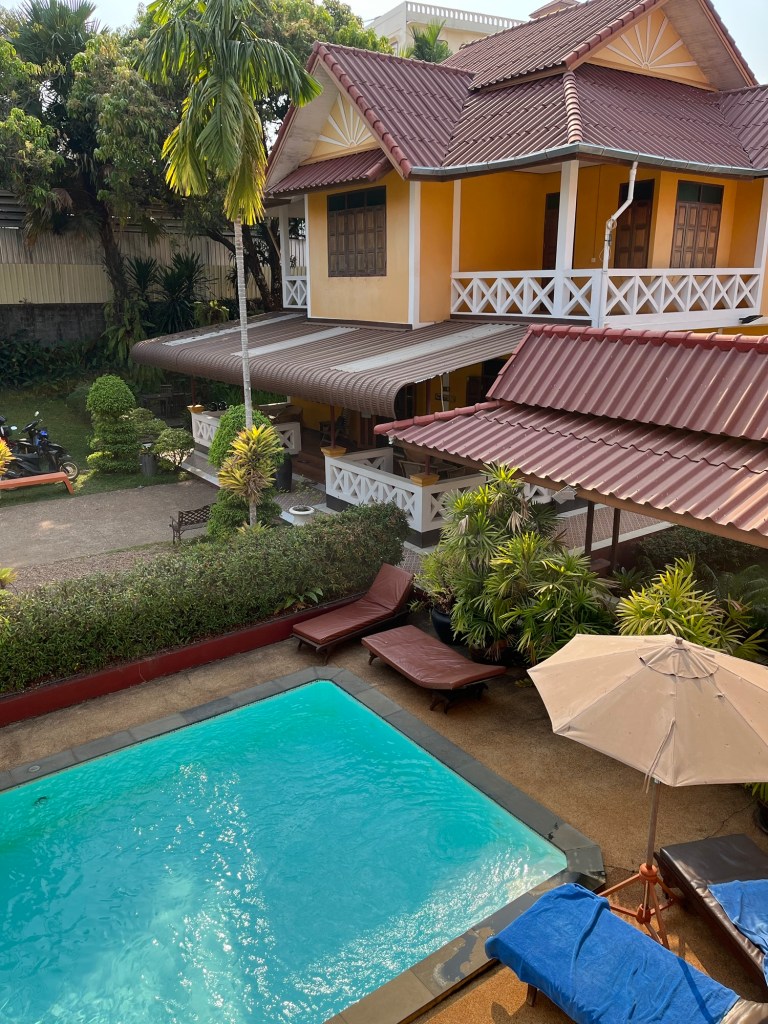
The only other option was flying to Da Nang which was very expensive and hard to book as it appears that the planes don’t run every day. I had allowed some recovery time for my cystitis. We were staying at a more upmarket hotel with a small swimming pool and rooms with tasteful, old fashioned furnishings. If we weren’t ready for the journey to Vietnam now when would we be?
Although the journey was long (around ten hours) and a bit uncomfortable I had to admit we had done worse previously. The mini van wasn’t as rammed as I expected and the air conditioning worked. The only issue was the lack of decent food at the two stops we made. At the first the only fare available was meat of questionable origin on sticks. Tim tried one and survived but said the bones were a bit crunchy. The second, in Vietnam, was geared to truckers and the woman in charge didn’t seem to want to serve tourists.
The border crossing was extremely smooth. After being prepared to have to pay extra money in bribes we were not charged anything for our passports to be stamped in order to allow a 45 day visa free visit to Vietnam.
There was a hold up of around an hour just across the border on vertiginous, twisty roads. A lorry had lost its container as it negotiated a hairpin bend, shedding a load of some sort of root crop. A crane had been deployed to clear the road before we were able to move on. The scenery as we climbed into the mountains was lush and green. Small villages with wooden houses dotted the roadside. The fresh cool air was a relief after the heat of southern Laos.
It was at this point, at the end of the journey, that I started to feel sick. I assumed it was the hairpin bends in the road. Although it is unusual for me to feel ill with travel sickness nowadays, I suffered from it extensively when I was younger – it was only cured by an overnight coach to the south of France when I was eighteen. As I thew up into a plastic bag I was glad that I hadn’t eaten much during the journey.
Once we reached our hotel in Hue the sickness did not abate. I forced myself to consume some disgusting tasting kimchi crisps, thinking that maybe I was feeling so terrible because I hadn’t eaten all day. I promptly threw them up again. I had to accept that I was ill. I spent all night and most of the next day with diarrhoea and vomiting, able only to manage the occasional sip of rehydration fluid. It was at this point that I remembered Tim mentioning that he had noticed a little girl belonging to one of the staff members at our last hotel in Pakse throwing up. Due to my symptoms and the sudden onset, I was pretty sure I had norovirus.
Finally I started to feel better and ventured out onto the streets of Hue with Tim. He made several trips to Vietnam thirty years ago, when he fell in love with the place. He recalled Hue as a small town surrounded by rice paddies. All the food eaten there in those days was said to be grown there. It was full of beautiful old traditional and colonial French buildings. He remembers lounging by the river with friends and being taken to buy marijhana by rickshaw drivers. His memories of whether he did any sightseeing or not are hazy. Now he couldn’t recognise the city. The old buildings are destroyed or are overwhelmed by modern multi storey blocks. The streets are choked with motorbikes and cars, with few bicycles to be seen (thirty years ago they were still the main mode of transport). Tourism has taken over with Chinese, Japanese, Indian and Korean visitors in addition to Europeans.
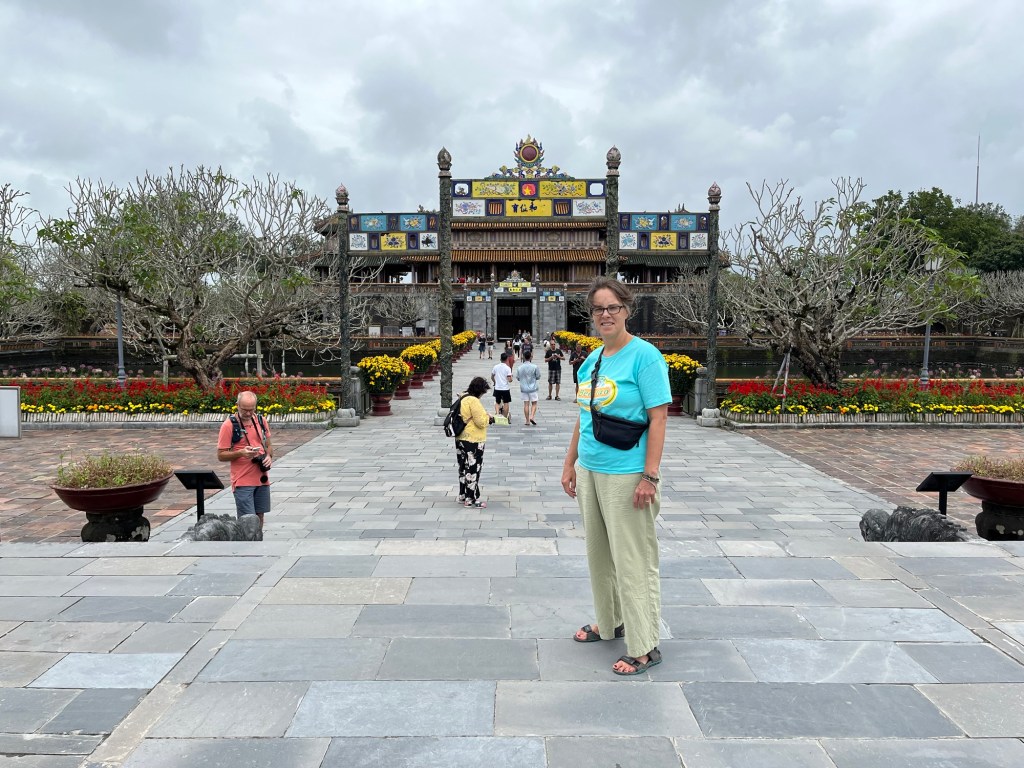
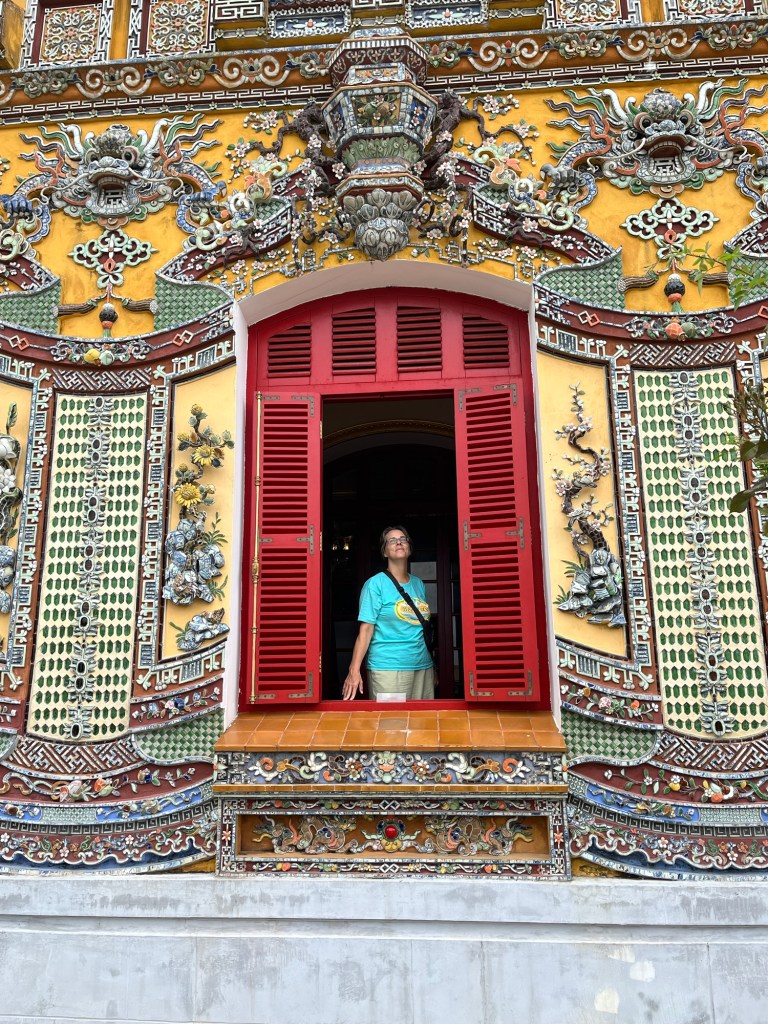
It was only when we took a trip to the old citadel that I began to enjoy Vietnam. It is very skilfully and sympathetically restored having been bombed to rubble during the Vietnam war along with most of the rest of Hue. It is a massive site with a whole series of buildings and we could have easily spent the whole day there. I was still feeling a bit wobbly after my illness, so we returned to the hotel mid afternoon for me to get a bit of a rest.
Despite the challenges of fast paced modernisation the Vietnamese people we met seemed to take everything in their stride. In general they seemed genuinely friendly and keen to chat. I had read that there were more travel scams and hassle in Vietnam than in Thailand or Laos but we didn’t experience that. In general everything we did seemed very good value.
We hired a taxi via our hotel the next day to visit the Royal Tombs and the Zen Buddhist monastery of Thich Nhat Hanh, who is sometimes known as the Father of Mindfulness. I have read some of his books, which I have found wise and useful in my life. Hanh was exiled from Vietnam for many years after he refused to take sides in the Vietnam war. In recent times he has been accepted back into the country. Following an illness that left him unable to speak he returned permanently to his home monastery in Hue where he died in 2022.
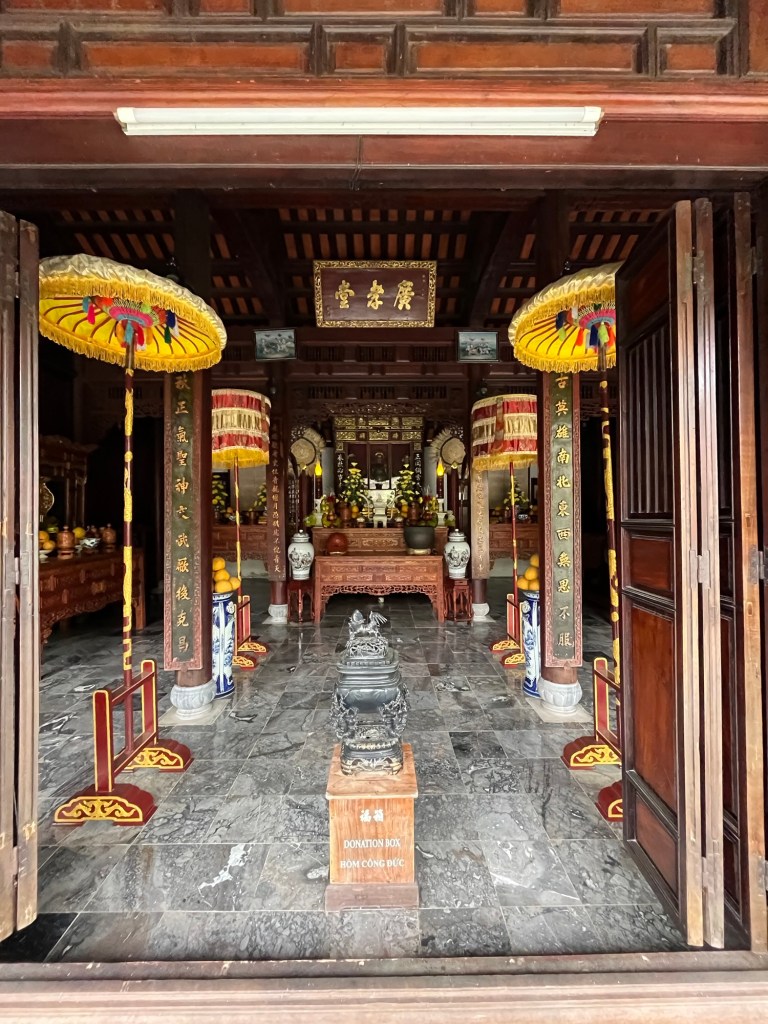
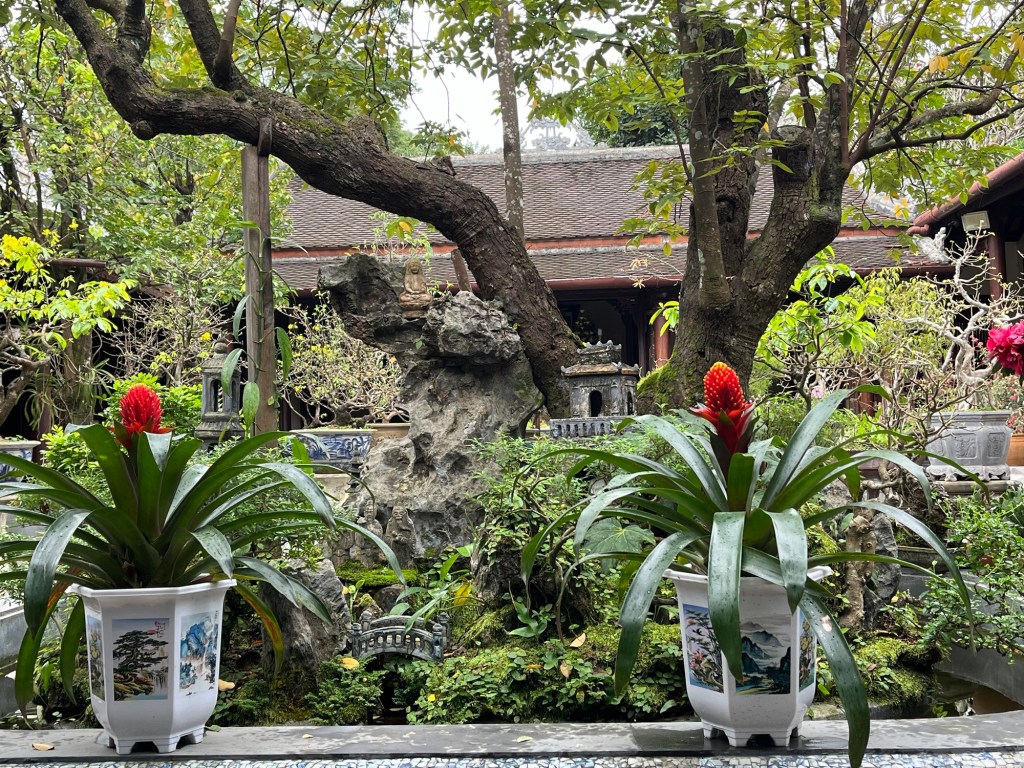
The monastery was full of ancient gates and buildings. Chinese lanterns swung gently in the breeze. A courtyard was filled with bonsai trees and a miniature garden. At the main temple I made an offering for my family. I could have hung out there much longer but we wanted to visit the Royal tombs as well so we headed back to the taxi.
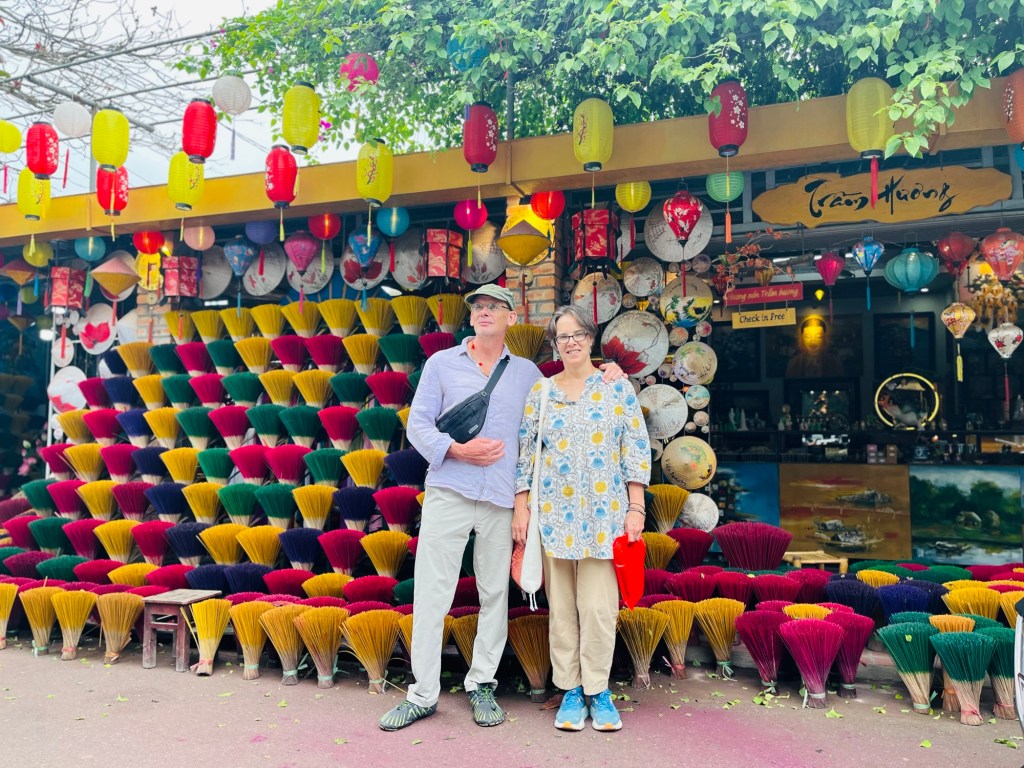
On the way to the tombs the driver stopped on a street where incense is famously made and sold. The bright displays attract a steady stream of visitors.
Then we headed for the Huong Tho tomb, This was similar in layout to the citadel with a series of buildings progressing across a number of moats and bridges. The final building where the king was interred cannot be entered. It was raining hard by now, but the atmosphere was refreshing and cool.
The most modern tomb Thuy Bang was built during the French occupation. It was another short drive away. We passed the large white statue of the female goddess who seems to be popular in Vietnam and reminds me a bit of statues of our lady. The Thuy Bang tomb is on a tall hill reached by lots of steps. It features the intricate enamel work that Hue is famous for and which we also saw at the citadel.
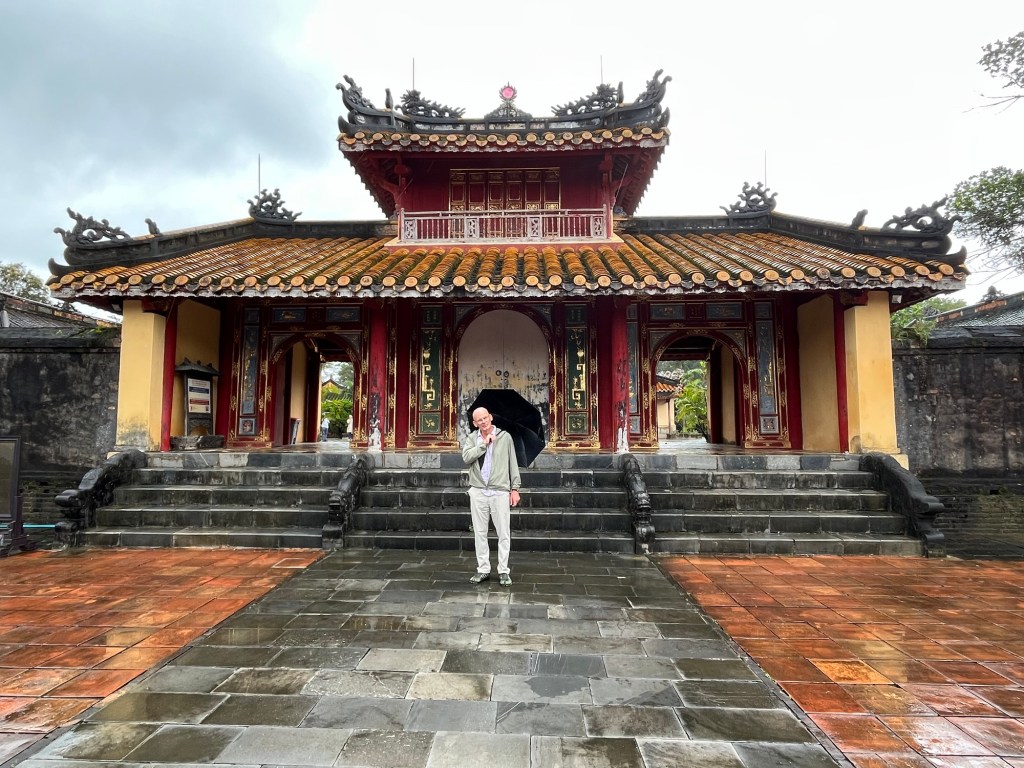

We could easily have spent another day or two in Hue. There were other tombs we could have explored and trips on the perfume river we could have done. In better weather the town is near some good beaches. Maybe another time….
The next day we had a tour booked, taking in some sights on the way to Hoi An, which would be our next stop.
 Kate's Travels
Leave a comment