
We were pleasantly surprised by ‘Daily Limousine’, the transport service we had booked via the 12Go app to take us to Trang An. They picked us up and dropped us off door to door, the seats were roomy, the air con was effective and there was even WiFi. No it wasn’t an actual limousine, but it was better than the average traveller minibus.
The first part of the journey, negotiating the traffic through the Hanoi suburbs, seemed to take a long time. Tall tower blocks jostled with basic low rise dwellings as the minibus stopped and started, crawling through various neighbourhoods. Eventually we reached a toll road and things sped up. Lush green rice paddies began to appear, but the countryside was environmentally devastated. A lot of recent rebuilding had occurred. We passed a lot of old style French looking buildings with dates from the late 1990s and 2000s inscribed on them. We initially took one massive and ornately carved building to be a cathedral, but when we looked on google maps it turned out to be the private home of a local concrete baron. We noticed one comment below the information on google maps saying that the owner of the mansion has ‘robbed the Vietnamese people’.
We were saddened to observe that the limestone karsts we started to notice all around were being mined. These karsts are ancient eco systems supporting all sorts of wildlife. An article in Tuoi Tre (Vietnamese media) reports that a company was given a thirty year license to mine by the local government who now regret this decision. Illegal mining also takes place. When we stopped for a coffee break during our journey we could see the concrete plant that the mined karsts supply in the distance, belching out smoke.
Trang An became a world heritage site in 2015, which means that at least it and the national park beyond are protected from exploitation. We could see a lot of building going on in relation to tourist development but in Trang An, for now at least, this appears to be being done in a way that is more sympathetic to the environment. There is a focus on small home stays rather than massive hotels, whereas neighbouring Tam Coc and Ninh Binh are more built up.
Our homestay was run by a muti generational family with a small baby who was constantly in somebody’s arms and never seemed to cry. The weather was very hot and humid, but during our time there we experienced a few rain storms that cleared the air a bit.
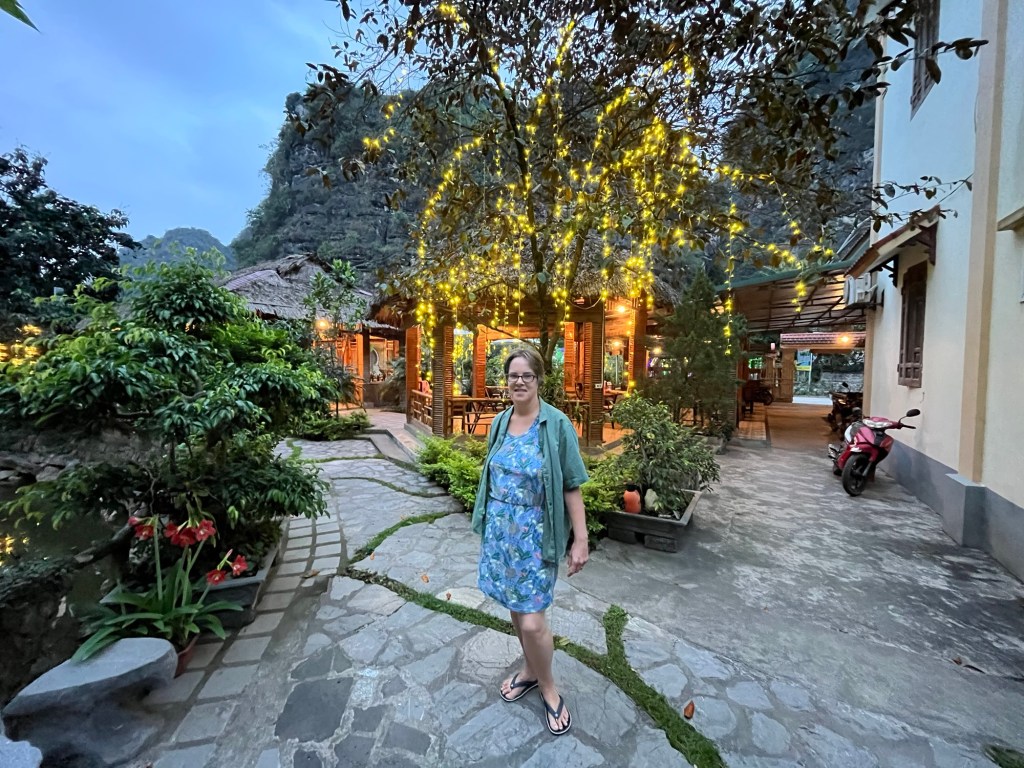
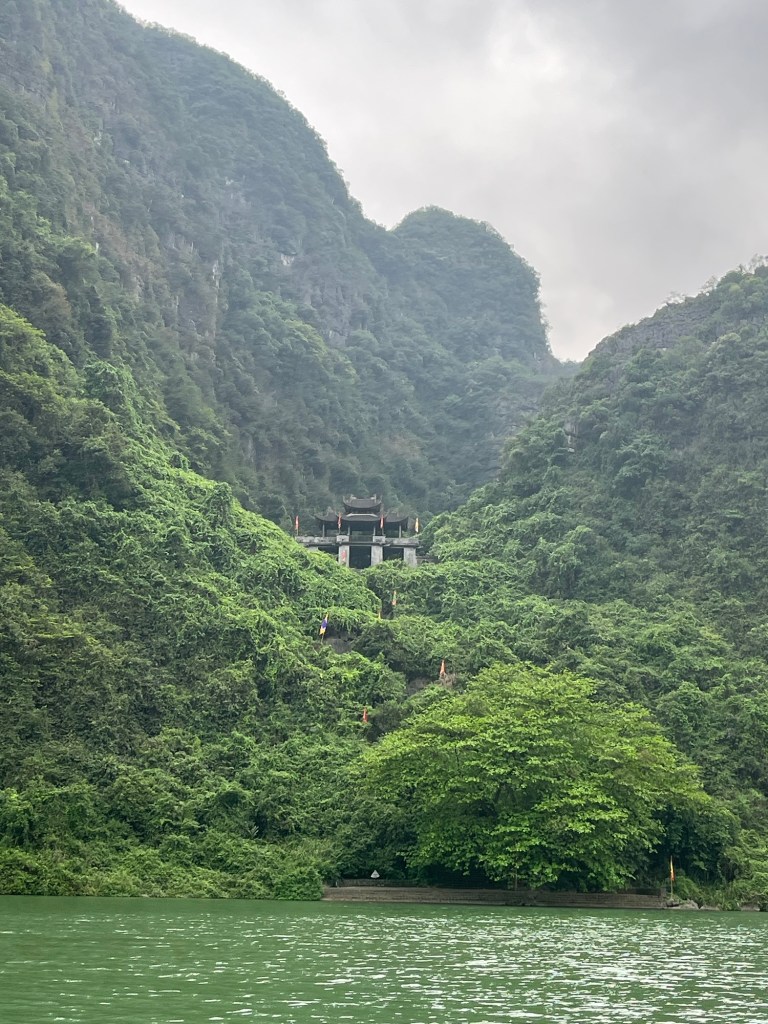
We hired bikes and cycled round the area where there are ancient sites as well as the natural wonders of the karsts to see. The biggest draw is the boat trips along the rivers and through the caves that dot the area. The boats also give participants access to remote temples that cannot be reached by other means of transport.
We hired a boat, initially accompanied by a Vietnamese family. At the first temple they disappeared. They wanted to continue on a shorter route than us. That meant Tim and I had the boat to ourselves. I have put a video and pictures on social media about the trip – it was one of the best experiences I have had in Vietnam so far.
In the boat the only sounds we heard were birdsong and the plop of the oars. The caves were filled with stalagmites stalactites. Sparkling minerals were embedded in the cave walls. I was a little concerned about the impact of the lights on the wildlife though.
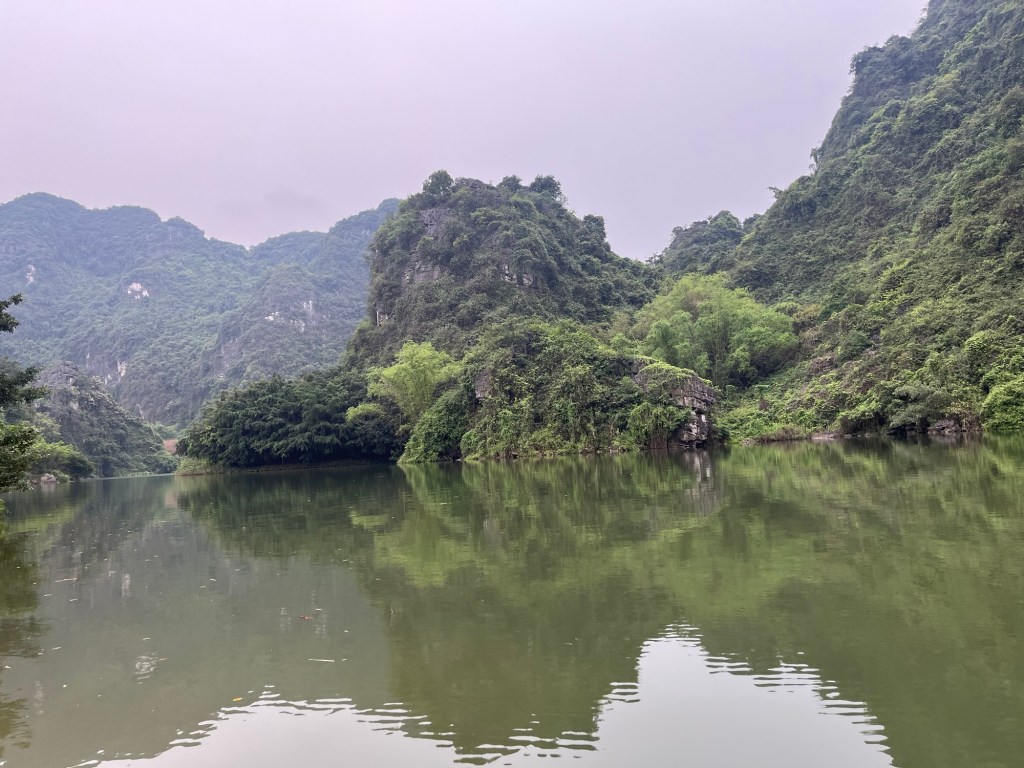
I particularly loved the reflections of the karsts and the surrounding trees and reeds in the still water. It was a wonderful feeling emerging from a cave into what felt like a secret, water filled valley hemmed in by karsts and knowing that the only way out was through another cave. We met very few other boats.
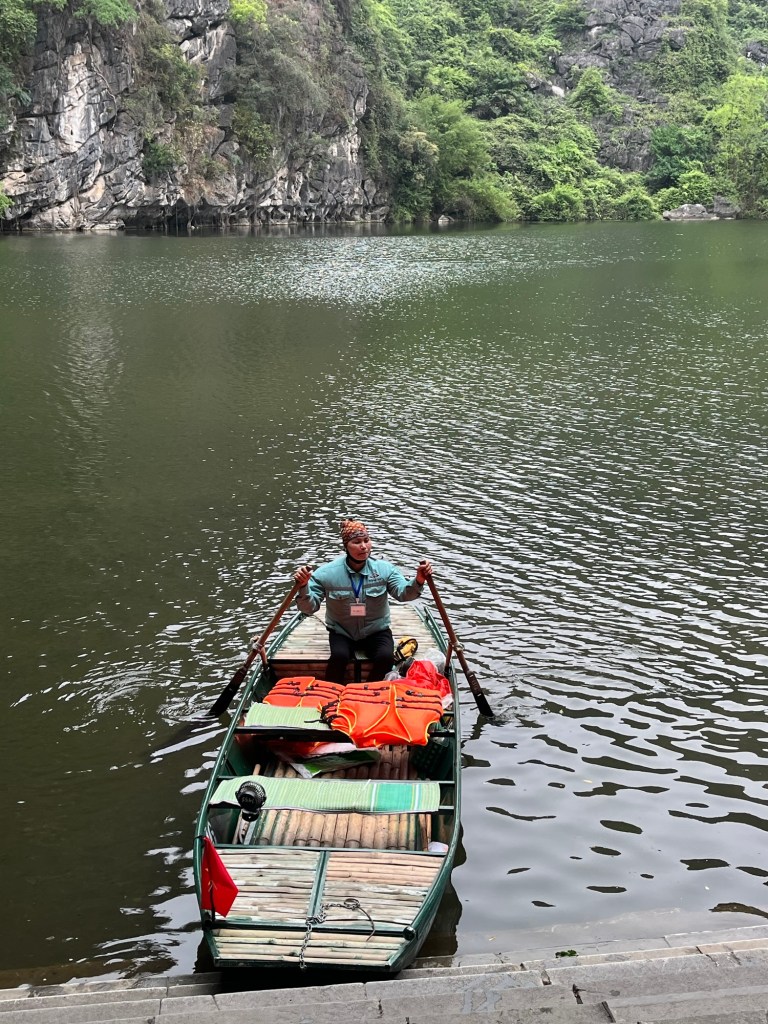
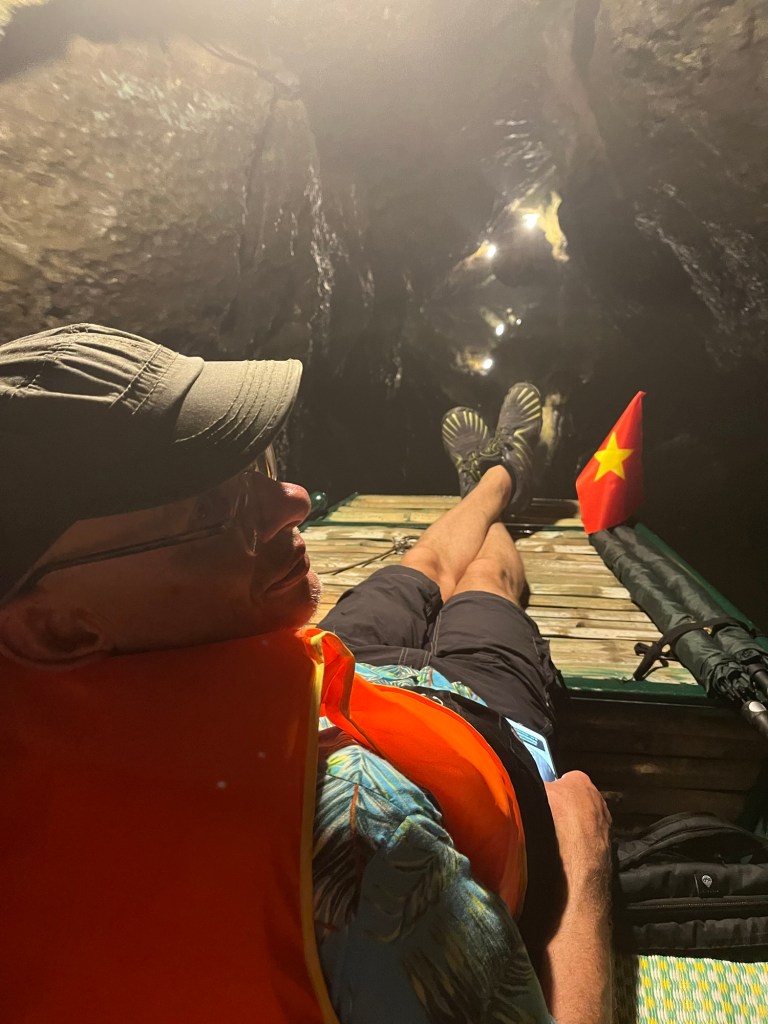
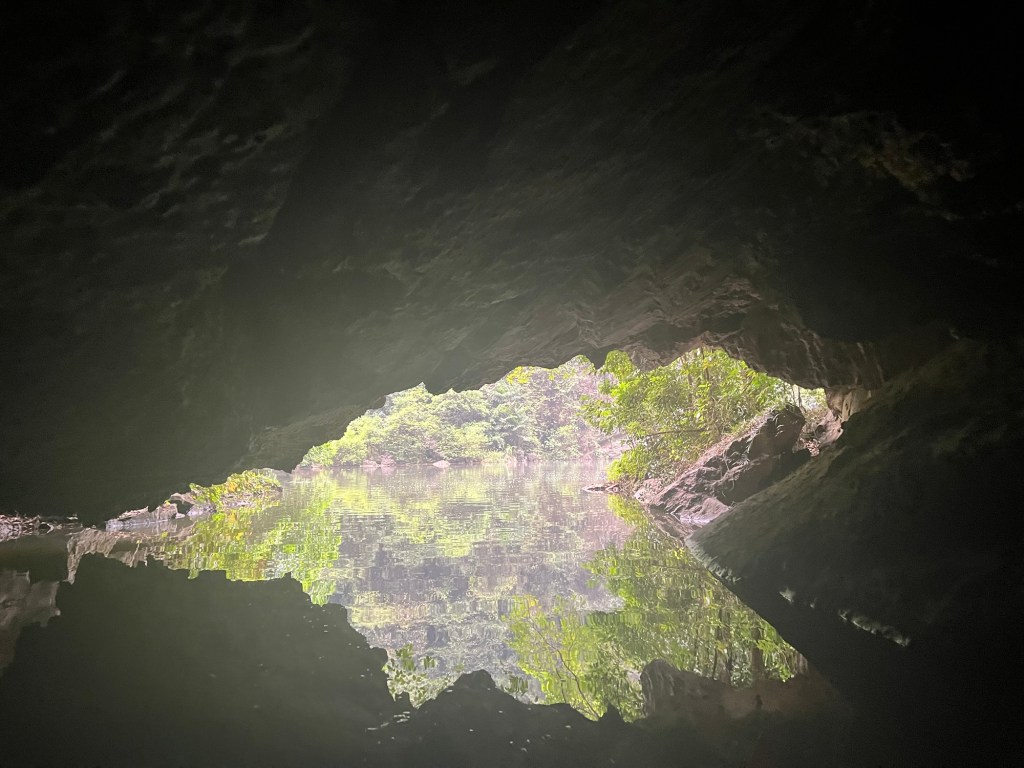
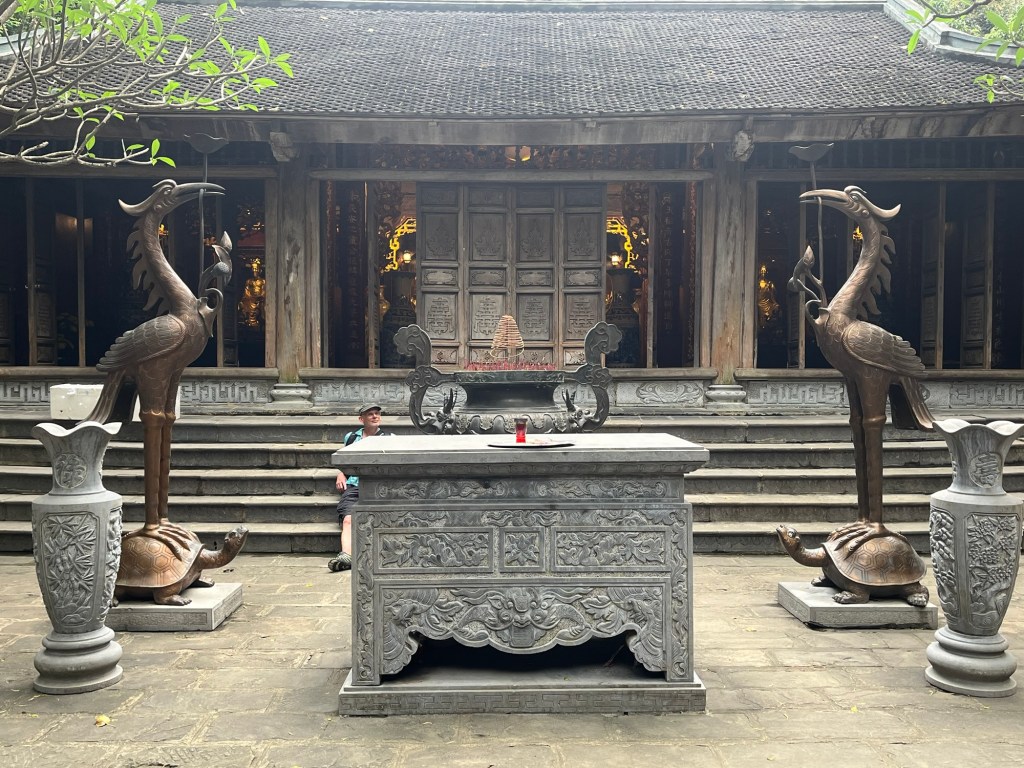
It seemed like the whole of Trang An was being developed by a government corporation. I remembered the Vietnamese woman studying in the UK who I met at the airport had explaining to me that that is how things are organised in Vietnam. Although this centrally organised development is not as chaotic and piecemeal as it is in, say, India, there is also the risk of corruption and local people being left out of the process. From what I could see though, a lot of locals did seem to be employed in the national park tourism activities in a way that is positive for them. The central organisation meant that safety standards like provision of life jackets were adhered to.
We spent the rest of our time in Trang A visiting a lake and the remains of the ancient capital on our bikes. It was fun to see the Vietnamese tourists all out around the lake for the Unification day weekend, often dressed up and taking pictures.
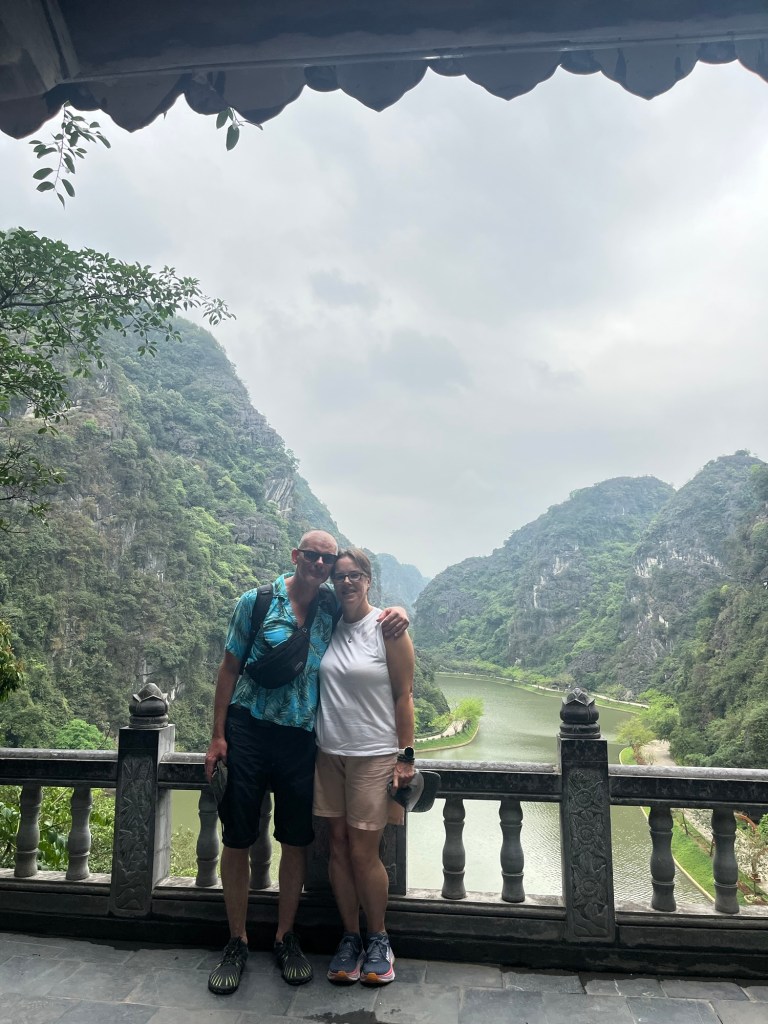
We met an Australian Vietnamese couple who told us that the concrete baron is a good person who has contributed to development in the area and built the Buddhist shrine at the lake. According to them he has renounced his worldly goods and built the opulent mansion for his parents. This is contrast to what I read online. I remembered the Vietnamese student at the airport telling me that ‘foreign Vietnamese’ often have a different take on the country due to longstanding political differences. I guess that countries like Vietnam entered the ‘post truth’ era years before the UK and Europe.
It was time for us to return to Hanoi’s chaos and finish our sightseeing there, but I could easily have spent more time in the Trang An area.
 Kate's Travels
Leave a comment