
We were lucky as there had been heavy rain for the last couple of nights which had cleared the air and significantly reduced the temperature before our trek started. We arrived at the Sapa Sisters office in the nick of time and were introduced to Zhao Mai our guide. All the women who work as guides for Sapa sisters are from the Hmong ethnic minority. In the course of the walk I learned from Zhao that these are a far from homogenous group. Zhao is from a Catholic Hmong family but fell in love with a boy from an animist Hmong family. She ended up moving in with her boyfriend’s family which she described as being ‘kidnapped’. I understood that it was a kind of fait accompli by her and her boyfriend – once she had spent time at his house her parents couldn’t object to her marrying him. However, the wedding could not be in a Catholic Church and Zhao’s parents only grudgingly accepted it. They were never willing to spend any length of time visiting Zhao at her husband’s family’s house. Zhao said it is easier now as she and her husband have moved out to their own house.
Zhao told me that the Hmong ethnic minority can be Catholic, Animist or Buddhist but they live in villages together. They are an extremely resilient group and have adapted to changing times. Some Hmong supported the Americans during the Vietnam war and many emigrated to neighbouring countries or to America, Australia and other western countries where they have communities. When I asked Zhao what has made them so resilient she says that they all support each other, even when times are difficult and the extended family is central to the way in which they live. I wondered whether Zhao’s husband’s family have a history of being more supportive of the communist party than Zhao’s family. Certainly when we visited the houses where her in laws live there were pictures of Ho Chi Minh and communist party flags on show, but I didn’t think it would be polite to ask these sorts of questions.
Zhao seemed to know many people in the various villages we walked through. As well as working as a guide, she still does agricultural work in her village. She explained that Hmong women work as guides while the men continue to work on the land as they are not as sociable as the women and are not so quick to learn English. She has three sons and was hoping for a daughter so she could pass down her knowledge of how to make the distinctive Hmong indigo garments. She showed us the plant that the Hmong use to produce the indigo. It is a lengthy and skilled process that only the Hmong women can participate in. Zhao said that while in the past Hmong people would have had many children, she will not have any more now, even though her parents want her to. Now people know that having fewer children will give them a better life.
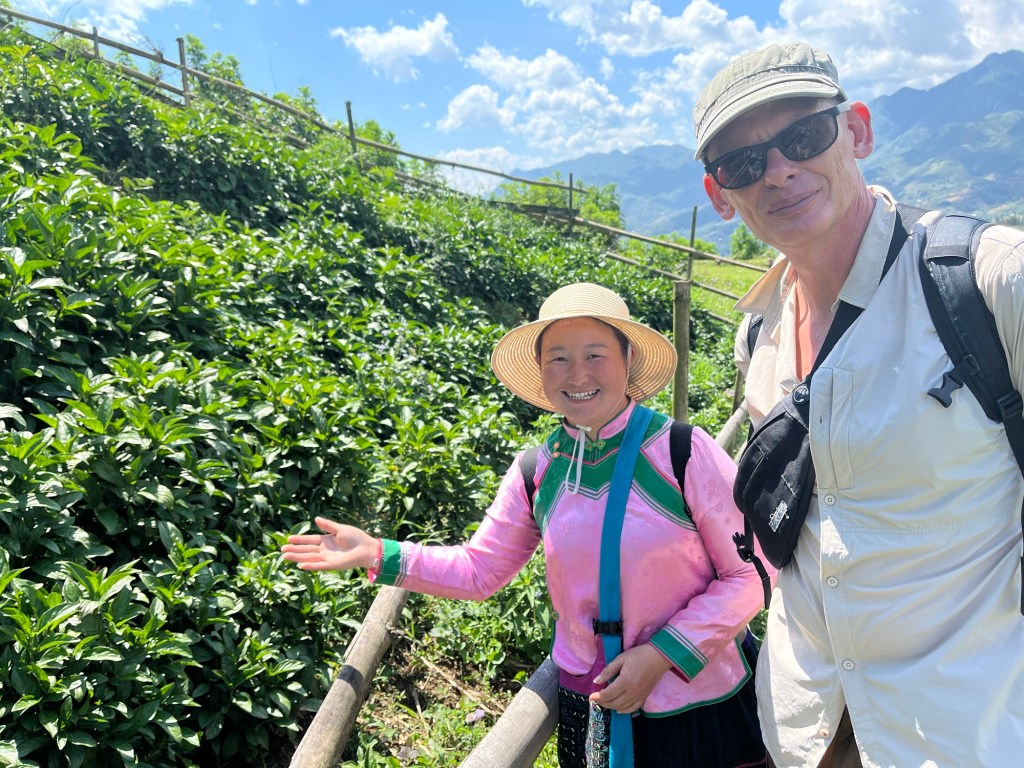
Our walk started with a frantic scramble as Zhao led us down a practically vertical bank through a building site. Luckily one of the builders noticed me struggling and gave me a thick bamboo stick to steady myself with, but it didn’t stop me falling on my bum, an event that was to be repeated many times on the trek. The terrain was much more challenging than I was expecting. Walking through the rice paddies was interesting and gave us bucolic views. It also involved balancing precipitously along narrow ledges with mud, fertilised by pig manure, on either side of me. My trainers needed a serious clean by the end of the trek.
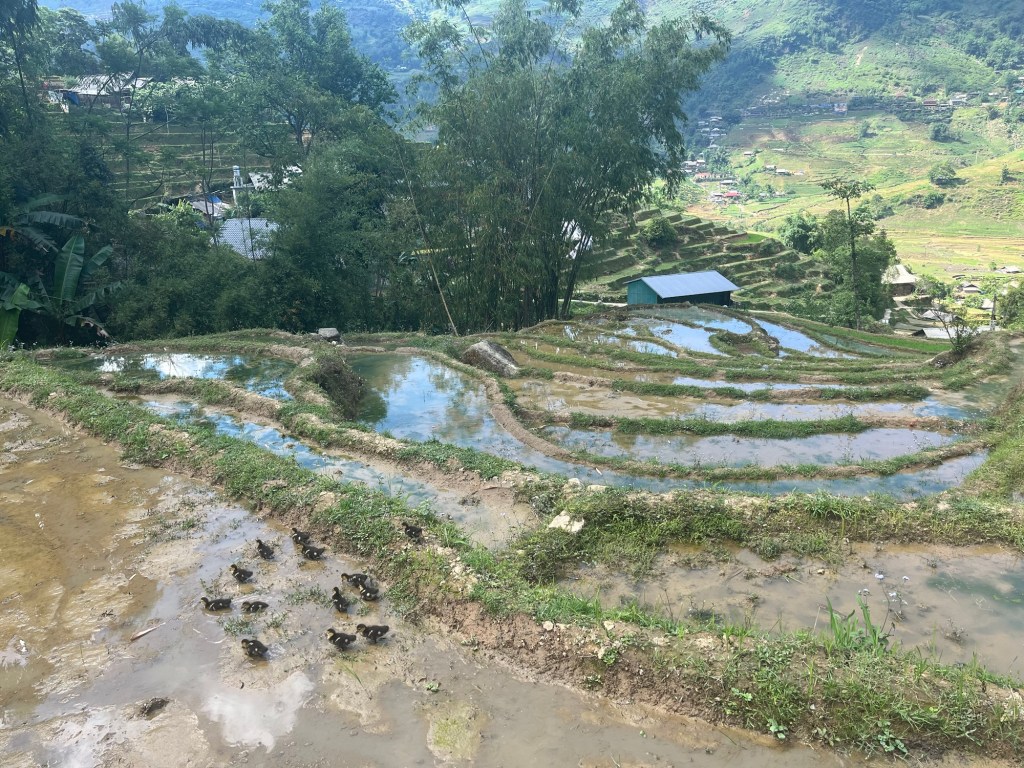
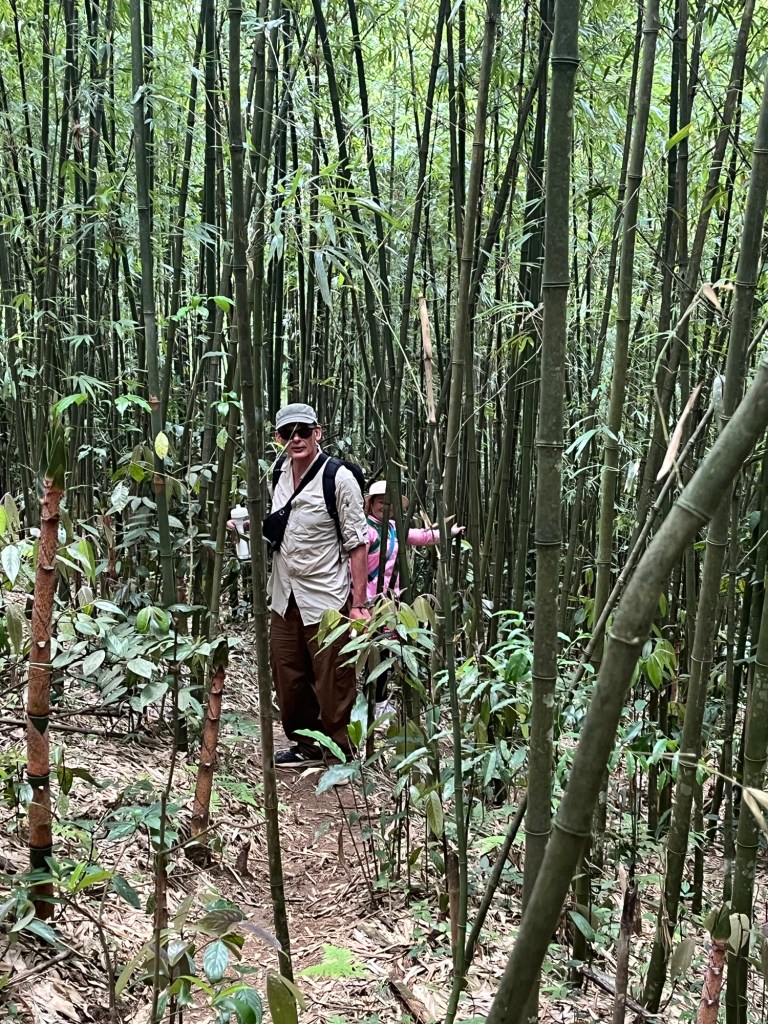
The second day of the trek involved a long climb up a steep valley that was exhausting in the sticky heat. Zhao then decided to treat us to a ‘short cut’ that involved another scramble down a near vertical slope. Nevertheless the reward of getting off the roads and seeing the beautiful countryside was worth it. I particularly enjoyed walking through the ‘bamboo forests’, which were cool and shady. I also liked seeing the village animals running free: chicken, pigs, and a particular breed of duck called a ‘groot’.
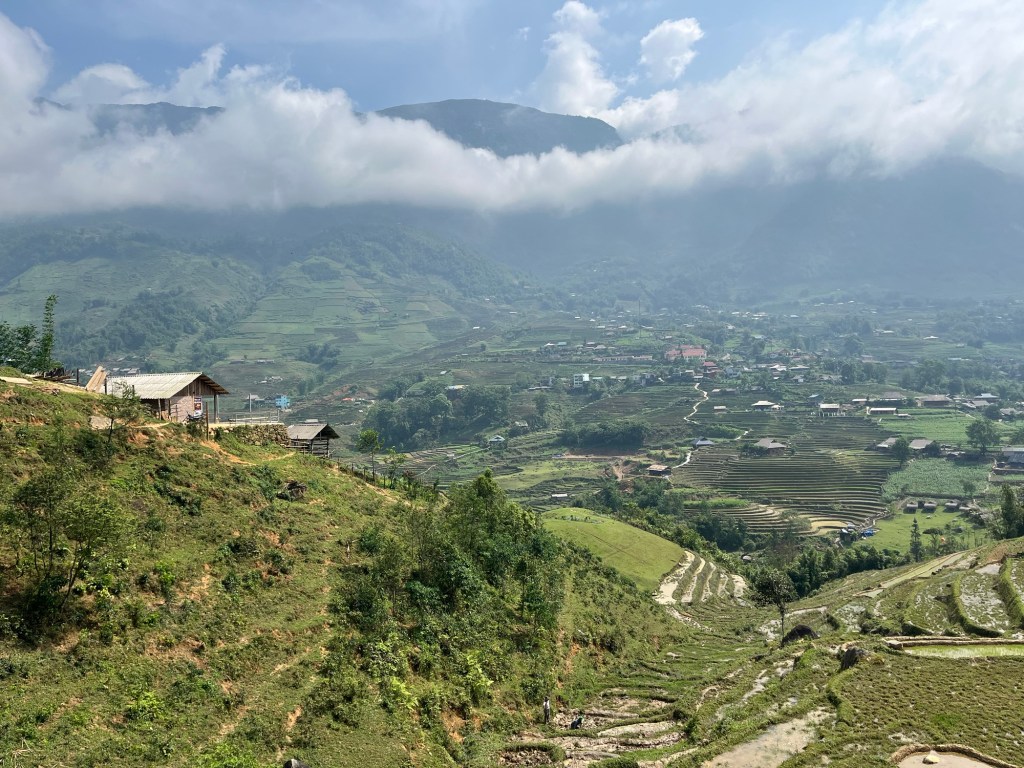
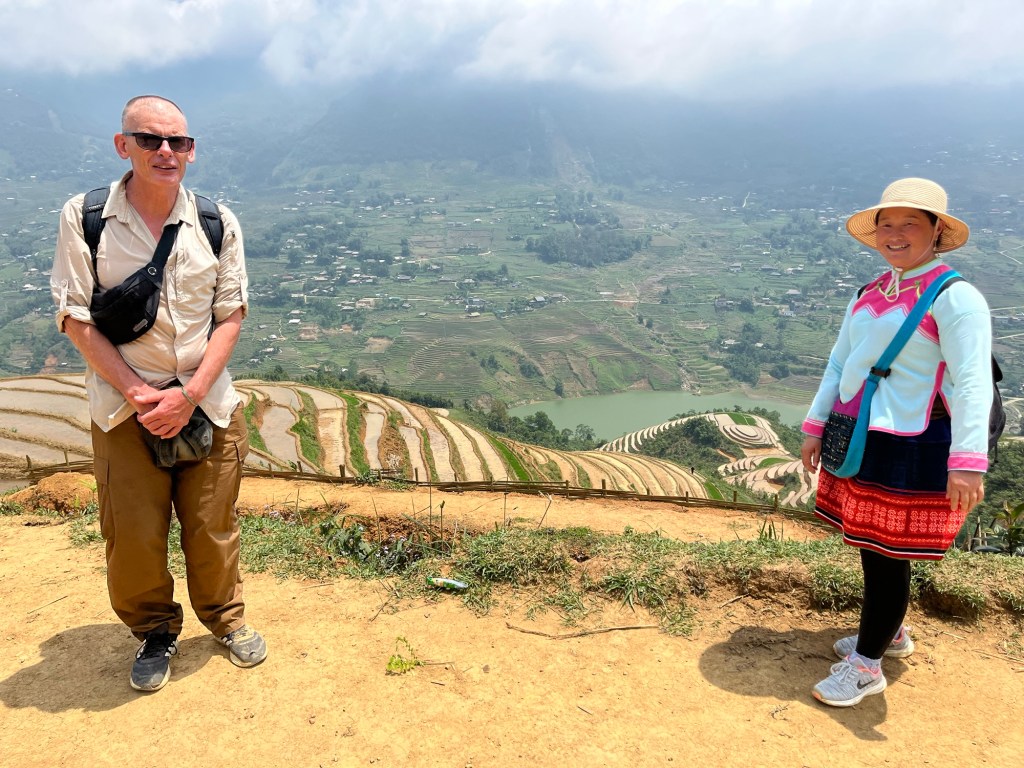
As well as telling us about the local culture, Zhao had a wealth of knowledge about the animals, crops and nature all around us. She explained that the buffalo were being used to churn up the soil prior to rice being planted. It is harder for the poorer farmers who have narrower paddy fields where the buffalo can’t work. She pointed out young buffalo being trained to do the job and said that they are not always keen to work and sit down in the mud, refusing to move! I can’t say I blame them.
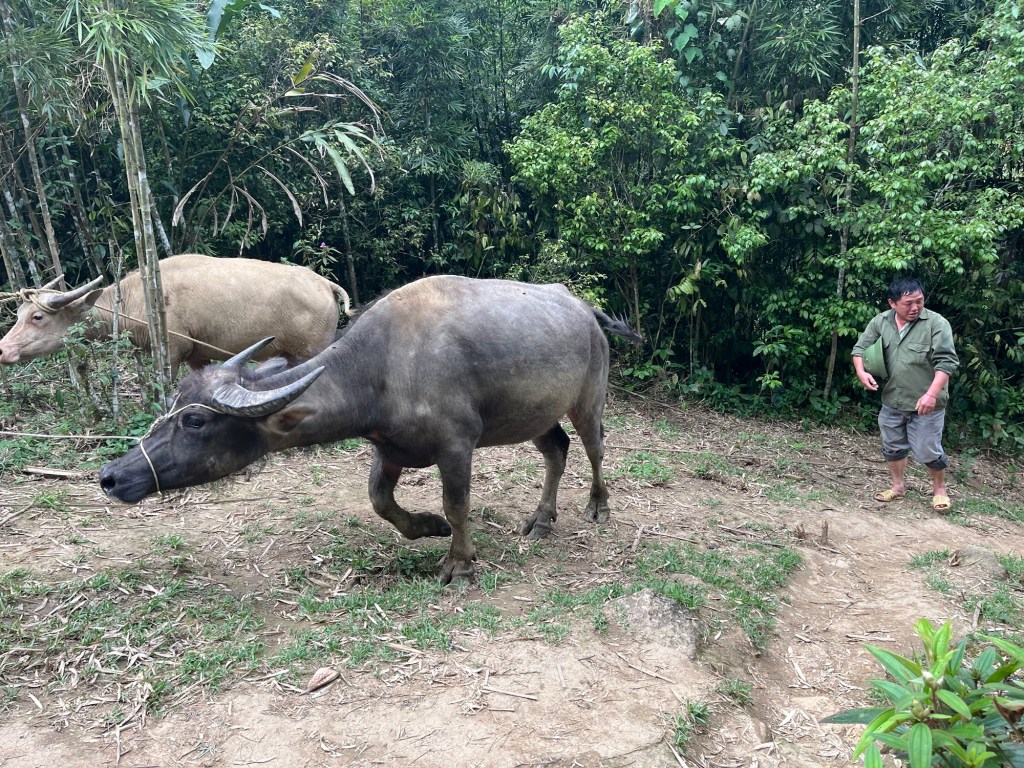
Zhao also pointed out a poisonous plant that people use if they are suicidal. She told us the sad story of her older brother, who ate this plant as the parents of his girlfriend would not let her marry him and forced her to marry somebody else. He was seen at the hospital and was thought to be recovering but then took a turn for the worse, could not get medical attention in time and died. Zhao says that if people ingest this leaf there is a chance they can be saved, but if they smoke it, it leads to certain death.
Zhao also explained how Cat Cat village (which we didn’t visit) has become a tourist village. Like in other parts of Vietnam rich Vietnamese or Chinese have formed corporations which buy up land in places like Cat Cat. There is little option for the locals not to sell. The village becomes a kind of disneyfied tourist village where nothing is owned by locals, although some of them are employed there. The Cat Cat locals were forced to move out to the hills around the area.
We stopped at a village where some of Zhao’s in laws live for lunch on our first day. They served us some delicious food. Although there was evidence of tourism encroaching, it generally seemed to be inhabited by ordinary Hmong families. The village we stopped at on our first night was not as overtaken by tourism as Cat Cat but it did still seem to mainly consist of tourist lodges. The house of Zhao’s in- laws where we stayed seemed to be one of the last remaining local properties. Zhao said that her relative, who owns it, could modernise it, but she doesn’t want to as her husband, who has now passed away, built it for her. We spent a comfortable night there and ate a delicious dinner with family members.
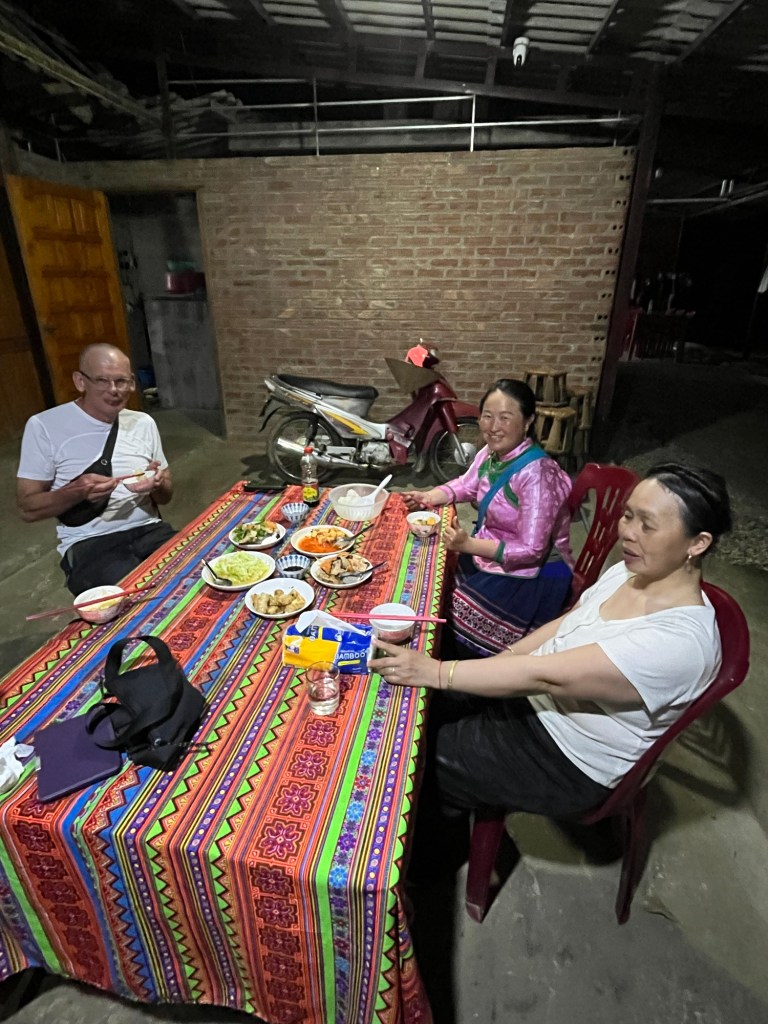
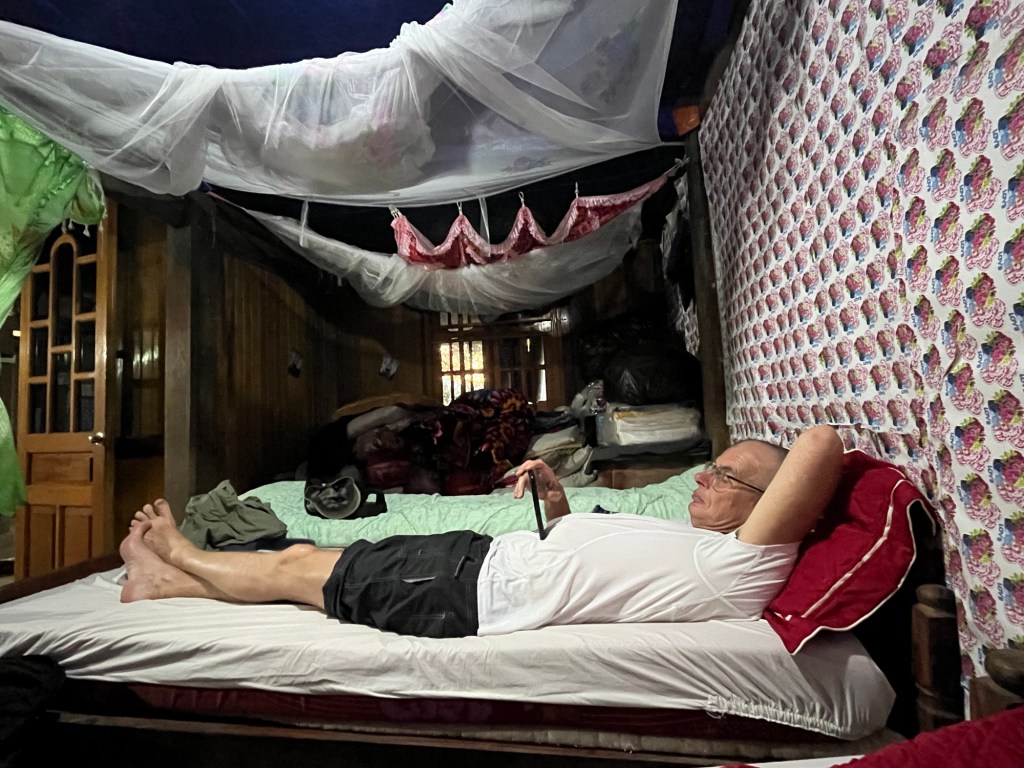
The second night we stayed in a village inhabited by a different ethnic minority (whose name I have forgotten). It has been badly impacted by the building of a dam. Zhao said that in the past she would end treks here by taking tourists to visit the local hot springs and bathe in the water fall. The dam has destroyed these attractions, also making the village less attractive for tourism. As it is at the bottom of the valley it is very hot and the construction of the dam has not helped this. During our trek the heat had been gradually building up as there had been no rain. Even the locals were complaining about the heat and saying that it was too hot to go to the fields and work.
We stayed with a local family in their homestay, which used to get lots of visitors, but since the building of the dam has fallen on hard times. The lack of tourists to the village has caused issues. As the family that we stayed with still have some tourists visiting on treks, this has caused jealousy in the village with the homestay owner’s neighbours doing things like chopping down trees so that his homestay visitors are disturbed. Once again this shows the negatives as well as the positives of tourism – although it brings in money and can improve the lives of people it can also lead to greed, conflict and jealousy, especially when the rewards are thin and chased by many, or not spread around evenly.
Zhao also told us how there have been issues with the dam proving to be a danger to locals here, just like dams have in Sikkim where there was a major disaster when a dam burst. When the water gets too high it needs to be released and local people are often not warned about this. It has led to children and fishermen drowning. The Chinese owner of the dam has offered buffalos as recompense, but this has not made up for the loss of loved ones.
We stopped at a waterfall where the water’s flow is now very restricted due to the dam. A local farmer who was checking his pipes expressed concerns to Zhao about whether there would be enough water available for his rice crop. Zhao told us a funny story about a tourist who had flown their drone up the waterfall. This was the first time they had tried it out. It got stuck at the top. Even though the tourist offered a reward of $100 no locals were willing to risk their lives climbing up to try and retrieve it! She also told us a number of cautionary tales about tourists who have died or been badly injured trekking alone locally, particularly up Mount Fansipan which is the highest mountain in the area.
Tim reminisced with Zhao about how the Sapa area has changed since his original trip here. Zhao recalled how she and her friends used to be terrified of tourists. Her Mum would tell her that they put Hmong children in their rucksacks and kidnapped them! She agreed that while tourism has improved the lives of a lot of people in the area there are still many poor people, for example the tribal people who come into Sapa to sell items or beg. Many bring their children with them, which makes the tourists feel more sympathetic to them. However it also means that the kids miss out on school, so ultimately it is not something that is helpful. There was a disaster recently when a small boy who was sleeping under a car in Sapa to keep warm ending up being crushed and killed when the car drove off.
Although it was a physical challenge, I found the trek very rewarding. I felt that I learned a lot about the local area from Zhao that I would have been unaware of it if I hadn’t done it. I also felt that my money was genuinely going to locals. Zhao said that she has worked for Sapa Sisters and Ethos and they are both more generous than other trekking companies – for example they support women when they are pregnant and unable to act as guides. They also pay more than other companies.
On our third day the weather was so hot that Tim and I opted to chill out at the homestay and return to Sapa rather than doing any more walking. We said goodbye to Zhao and headed back to Jungle Lodge for a well earned day’s rest, before getting the day train back to Hanoi. We were planning to spend just one night there before travelling to Halong Bay.
 Kate's Travels
Leave a comment