
After our sojourn in Pu Luong we were relaxed and ready for a twenty four hour long trip to Hoi An in central Vietnam. The limousine bus from Pu Luong dropped us off at Hanoi railway station. We sat in Highlands coffee enjoying the air con – annoyingly all their drinks seem to have tapioca balls added to them, which I can’t stand. Then we grabbed a couple of banh mi (bread with whatever you want inside it) to fortify us for the overnight train journey. This time we were taking the ‘Lotus Express’ a seventeen hour ride to Da Nang. The train was similar to the one we took to Sapa – comfortable enough and much better value than night trains in the UK. The views at the end of this trip between Hue and Da Nang were spectacular. The train passes through lots of tunnels as it cuts beneath the Hai Van pass, hugging the coastline. We glimpsed gorgeous looking beaches lapped by an azure covered ocean and fringed by lush green forests.
We drove across the Hai Van pass in a bus on the day I heard that my Dad had died. Not only was I distracted with trying to book a flight home, but it was raining heavily so we didn’t get to see any of the views. This rail trip more than made up for that ride.
The hotel we had booked at An Bang beach in the Hoi Area had arranged a taxi to pick us up at the station for a reasonable price and the driver was waiting, a card with my name on in his hand. Da Nang is an expanding city filled with multi storey hotels and shopping centres. I was glad we had decided not to spend any time there. A Bang beach has only low rise developments which tend to be friendly to the budget for the time being. As we stepped out of the taxi and into ‘Under the Coconut Tree’ hostel it was clear that we were back in the heart of traveller land. Everywhere we looked there were beauty and massage shops, souvenir shops and cafes. I was relieved that ‘Under The Coconut Tree’ had upgraded us to an air conditioned room for free after I messaged them to check if the room I had booked had air con. The temperature was 30 degrees with a high level of humidity.
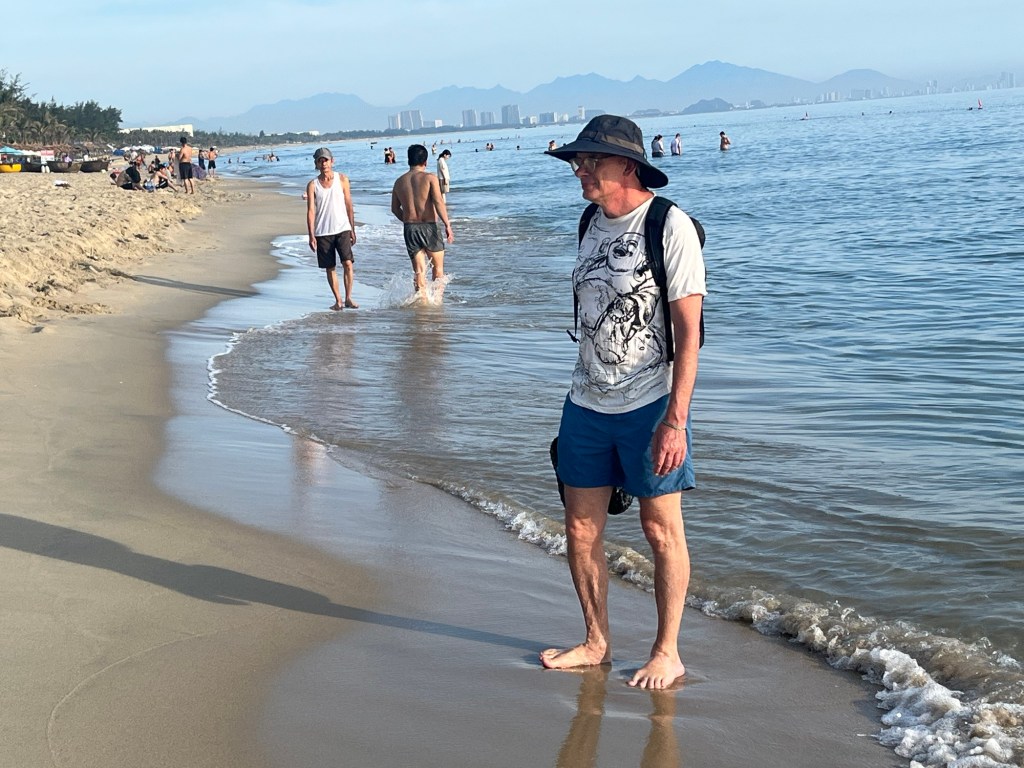
We planned to have a beach break at An Bang and visit Hoi An old town and the My Son ruins. The beach at An Bang is ok – a long stretch of sand with variable levels of cleanliness and good provision of beach loungers, bars and restaurants. My favourite beach destination remains Greece though, swiftly followed by Thailand. We spent our first day trying to swim while dodging flocks of jellyfish and relaxing on sun loungers. As the sun set the beach filled with Vietnamese locals and tourists. They sat on mats and munched on clam porridge. Apparently this is a flavourful dish but it didn’t look too appetising to my western eyes and I gave it a miss.
I booked an early morning tour to the My Son ruins, a UNESCO heritage site, hoping to beat the crowds and the heat. This was a good call. We had the place to ourselves and our guide, Van, was fantastic. He told us that he had been an interpreter for the Americans in the Vietnam War. When it was clear that the Americans would be leaving he and his family were offered support to leave. His wife couldn’t get to Ho Chi Minh with their two very young children in time. He faced the heartbreaking choice of whether to leave alone or stay and face certain punishment. He decided to stay. He is clearly still deeply in love with his wife and showed us pictures of her as a young woman – she was very beautiful.
He was sent to a re-education camp somewhere near the Laos border (he still isn’t sure exactly where) and faced enormous hardships. After two and a half years it was decided that he wasn’t a CIA spy and he was released (if it was decided that you were a CIA spy you had to remain in the camp for at least ten years). He was so emaciated when he arrived back home that his wife didn’t recognise him. Since this time, he and his wife have built a good life in Vietnam, although he has not had any support due to his past involvement with the Americans. He showed us a picture of the last American soldier he worked for. He told us that this American veteran visited Vietnam a little while ago. The American brought his sister who had lost her husband in Vietnam. Van took them to the last place that the American’s brother in law was seen alive. It was a very emotional occasion for all of them.
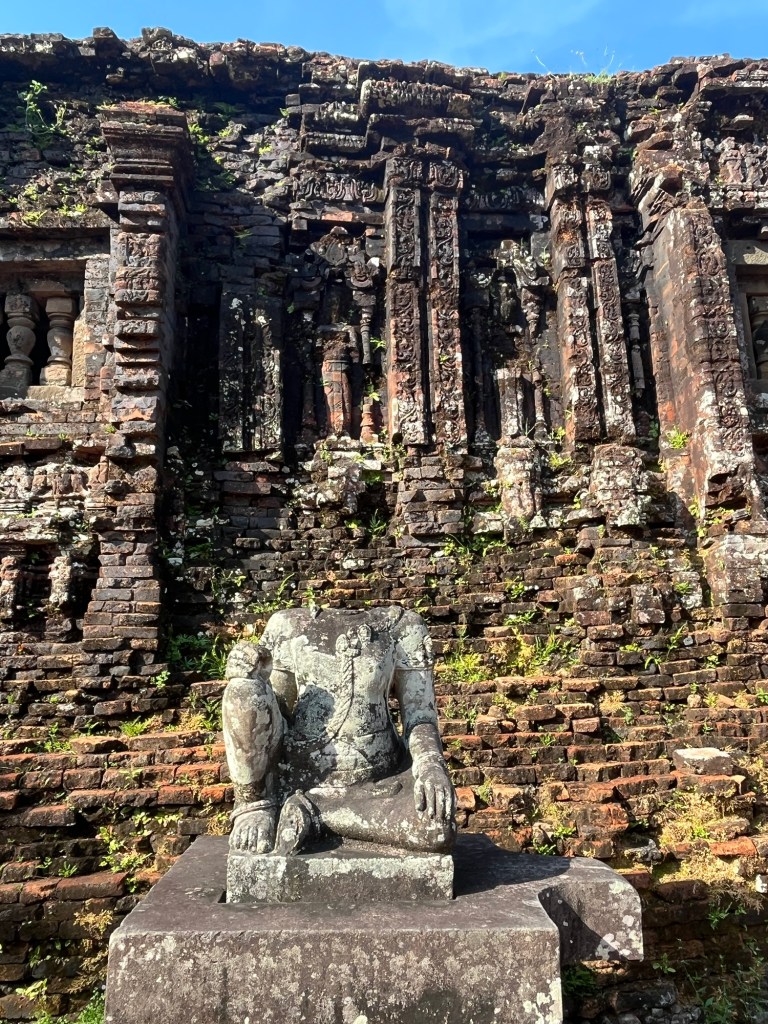
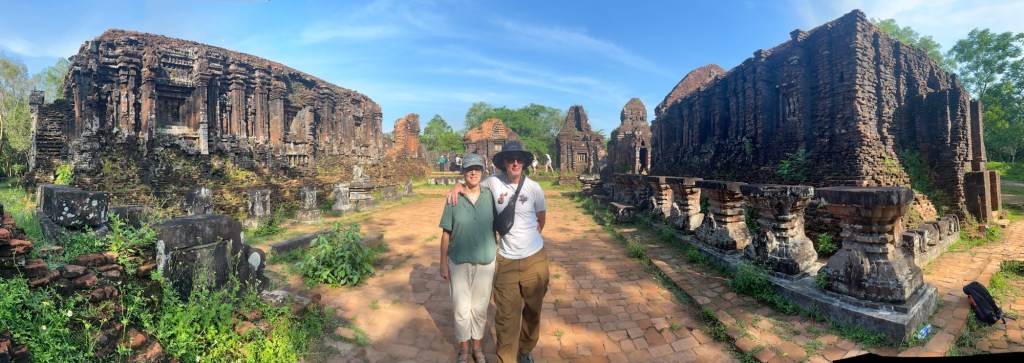
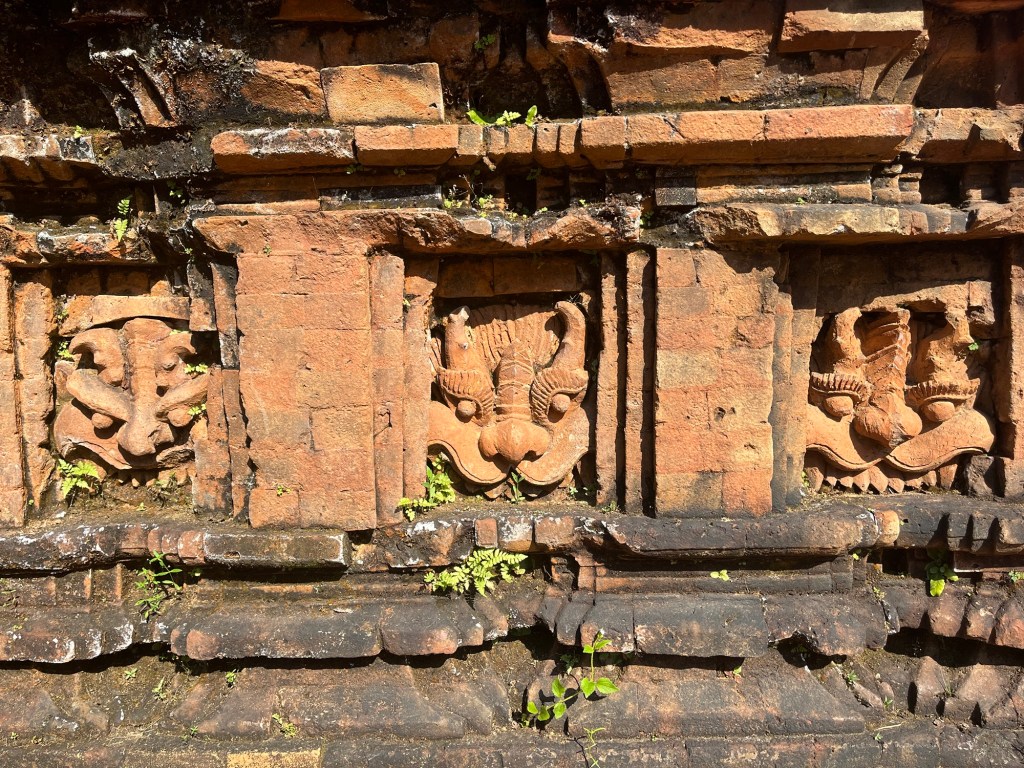
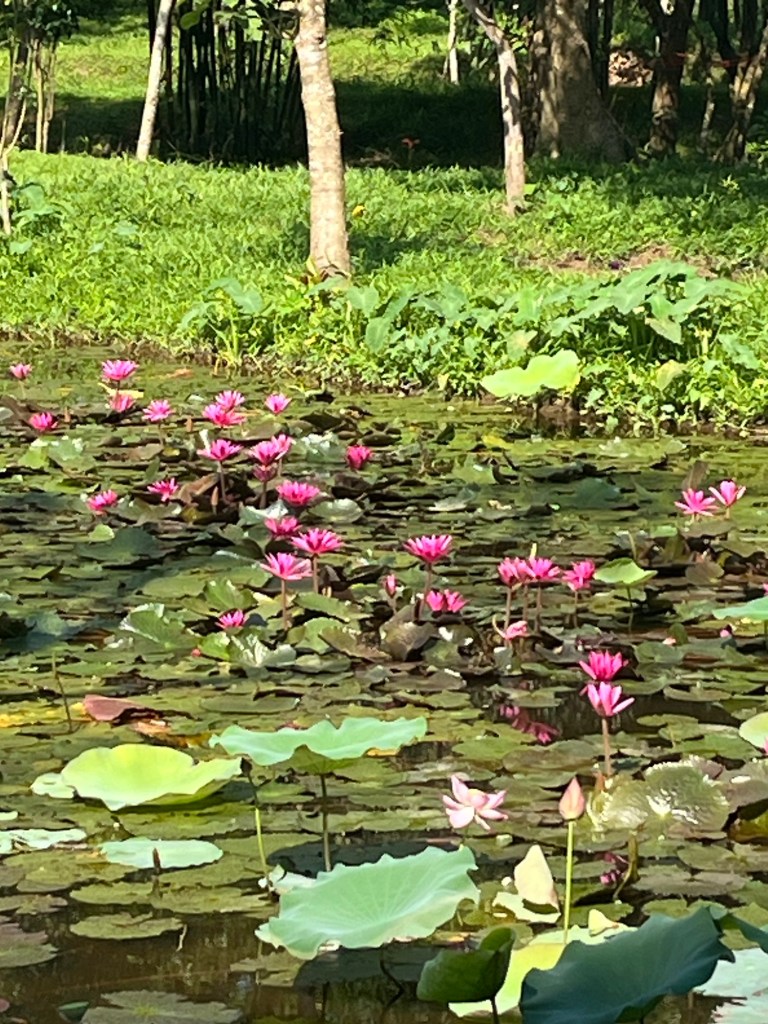
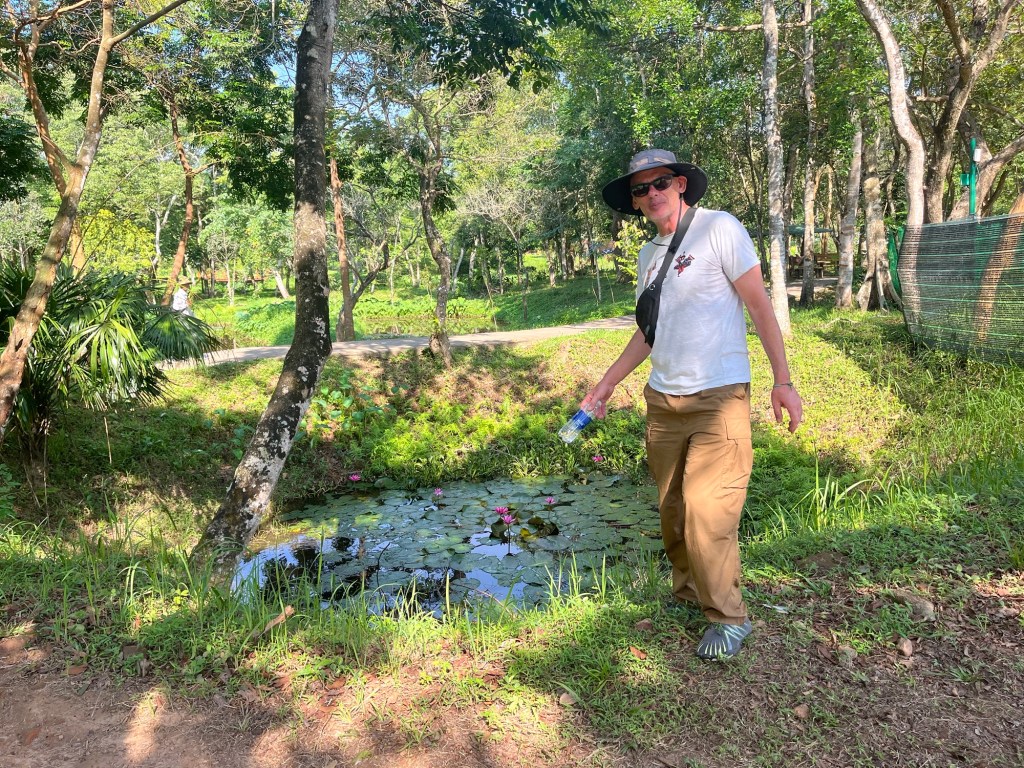
My Son is surrounded by bomb craters. A number of them have been turned into beautiful pools filled with lotus flowers and ringed by orchid plants. There is still some unexploded ordnance in the woods around the site. A lot of the temples, which were built between the 4th and 12th centuries were destroyed in the war. Like at the temple we visited in Laos, there has been a partnership with the Indian government to fund restoration of the monuments and a skilled job has been done. Van pointed out to us what bits of the monuments were restoration and what was original.
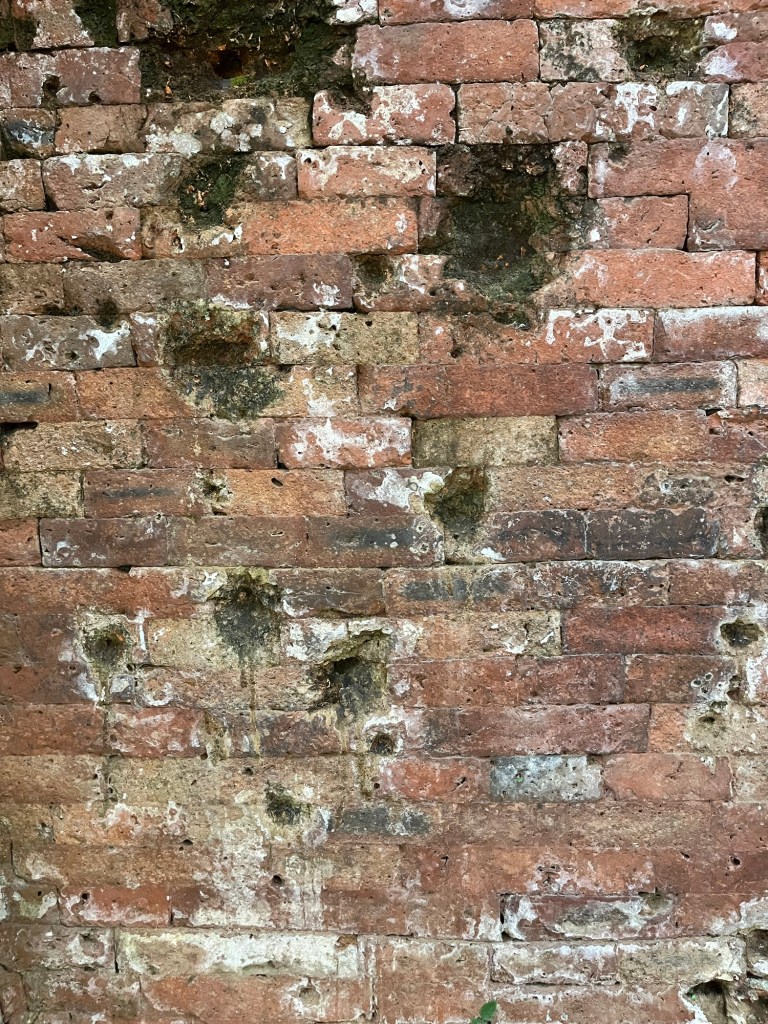
We could see the links between the construction of these temples and those we had visited in Orissa, India, which were built during a similar time period, although the ones in My Son relate to the Cham dynasty, a different Hindu Kingdom to that in Orissa. All the temples are linked by the ‘Golden Road’ of Hindu/ Buddhist culture that William Dalrymple writes about.
We just had two companions on the tour with us – a Spanish man who was working as an English teacher and an English woman from Twickenham. The Spanish man was spending two or three months travelling and then a month or two back at home. He can work remotely giving his Spanish lessons. Travelling is a much cheaper way for him to live than renting in Madrid.
The English woman works for a company that sells toys and puzzles to supermarkets and other retailers. She travels to China a lot on business and always tags a trip onto the end of her visits. Her company have been badly hit by the trump tariffs and she has been looking at re-locating manufacturing to cities in Vietnam. This trip has involved visits to a number of Vietnamese factories. She said that the labour laws in Vietnam are stricter than those in China – in China there are very few restrictions whereas in Vietnam there are working hours limits and people are entitled to time off. Sadly that’s why more companies choose China for manufacturing of goods. Apparently many companies are getting round the tariffs by shipping goods manufactured in China to Vietnam and putting ‘made in Vietnam’ labels on them. They are then exported from Vietnam, not attracting such high tariffs.
Our trip ended with a delicious breakfast at a cafe on the My Son sight. We complacently watched buses full of tourists beginning to arrive and disgorge their passengers as the heat of the day began to kick in. We were back at ‘Under The Coconut Tree’ for a nap by 10am!

 Kate's Travels
Leave a comment