
It turned out that we had a lucky break with our trip from Chandigarh to Manali – although it didn’t initially feel like it. The reception of The Cama Hotel in Chandigarh ordered us a taxi to take us to the bus station, which was only a five minute drive away. The bus station seemed to be fairly organised compared to others we have experienced in India and we were quickly directed towards the stand from which buses head to Manali. We were congratulating ourselves as the bus we had jumped on trundled out of Manali. I had dismissed a sneaking worry that this bus didn’t look like the one in the picture that I had booked on 12go. It turned out that it wasn’t. It was the more expensive Volvo bus. Luckily it wasn’t fully booked, but we had to buy another two tickets from the conductor. In fact, I think that the Volvo bus which we took was much more comfortable than the bus I thought we had booked. For some reason it hadn’t been advertised on 12go. This was a reminder that we were now back in India and that booking via 12go was not always going to be failsafe – the best method is via the bus company websites (although this is sometimes complicated as a foreigner). It is generally possible to turn up to the bus station on the day and buy your ticket.
The bus wound its way up steep roads and past several cleared landslides. It had been blocked in a number of places a few days before as there had been severe flooding in areas close to the road. On the day we travelled the sun shone brightly and we experienced no disruption. I was in touch with several members of the IndiaHikes group that we were doing our trek with, who were due to travel up the next night. By that time it had started raining again and they had terrible journeys. There are further landslides every time it rains heavily which have to be cleared and the road remains shut for hours. Only small vehicles were initially let through so they had to get taxis on an alternative route and arrived many hours late.
The hotel where we were staying in Manali was a little grubby round the edges but they did provide excellent food to our room. It was in a peaceful and beautiful area of old Manali, away from the hustle and bustle of the new town. The disadvantage was that taxis and autos couldn’t reach it so we had a ten minute walk along a narrow path with our rucksacks in order to reach it. There were a group of Indian and European travellers there who had been staying for many weeks. Manali does seem to be a place where people experimenting with being hippies get stuck.
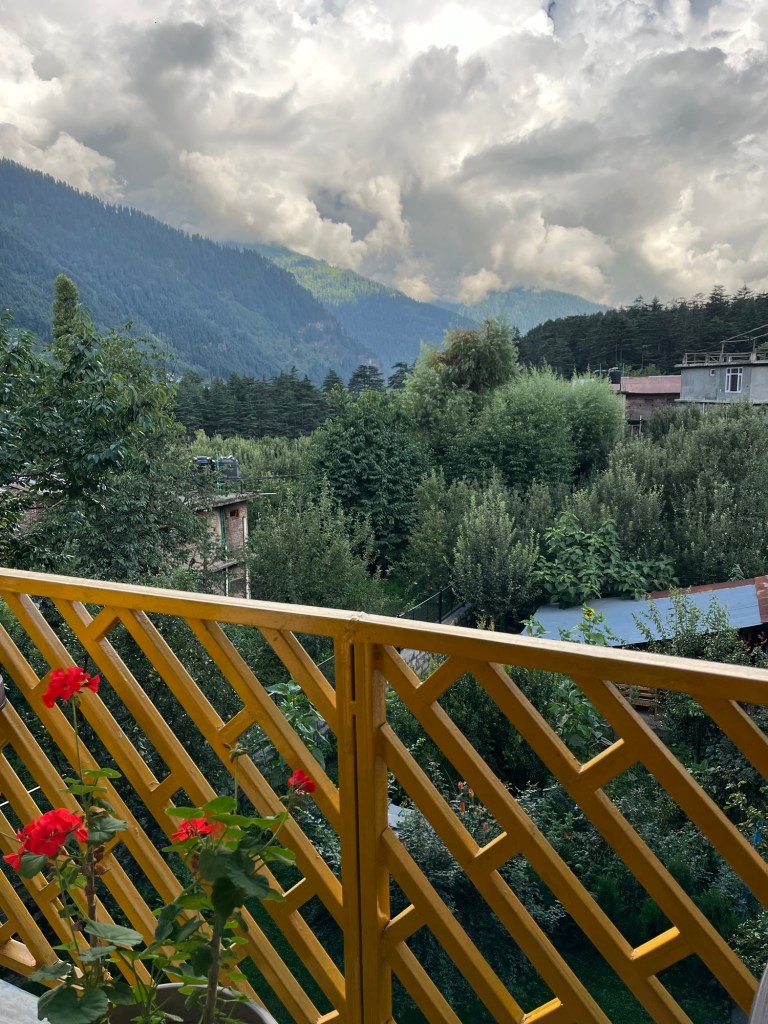
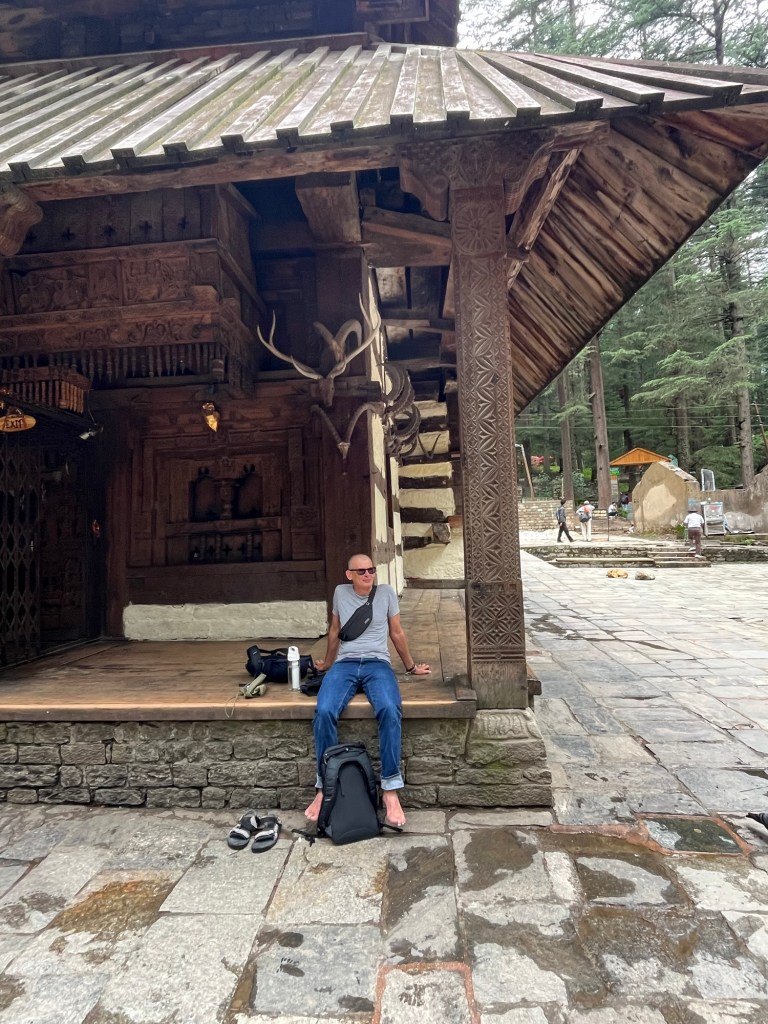
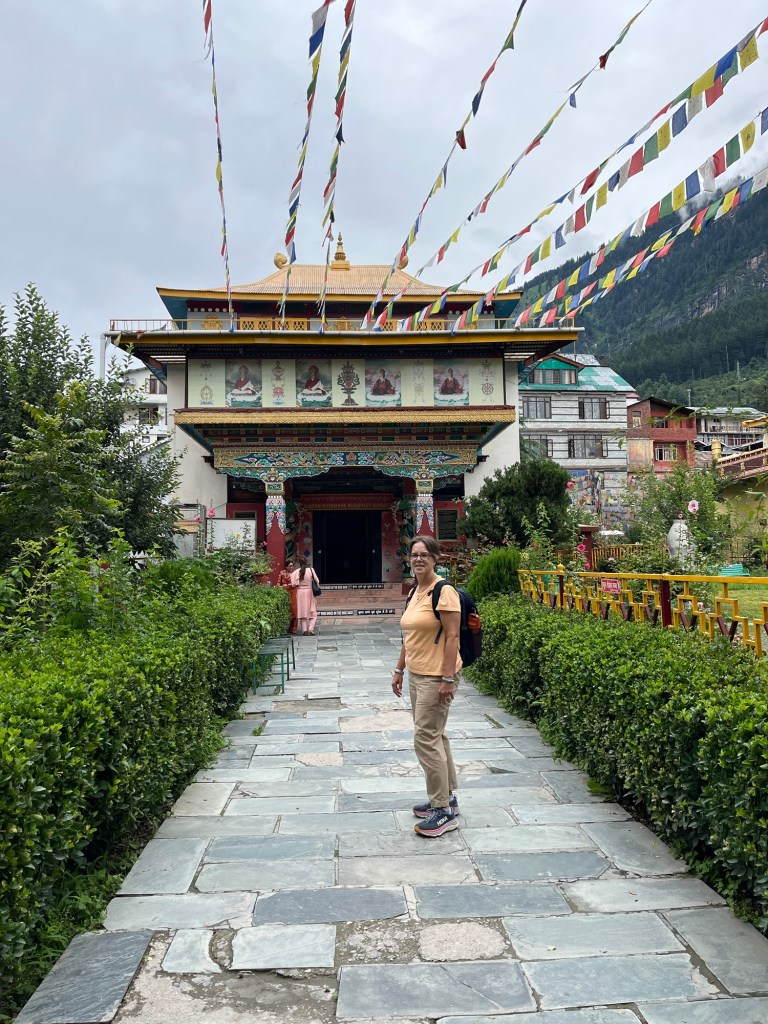
We took advantage of the still bright skies to explore the town on our first day. We strolled from old Manali through an area of pine trees to the temple of Hidimba Devi. It is a wood and stone temple and the wooden pillars are covered in intricate carvings. There were not too many people about and it was a peaceful scene. Then we got a little lost in the outskirts of Manali. We wandered past traditional homes, cows, villagers carrying load of hay and playing children. If felt as if we were in a village rather than in Manali proper. We finally found our way down to the Buddhist Monastery and the centre of town. We found a bakery on The Mall where we treated ourselves to cappuccinos and cinnamon buns.
The next day we were due to head off on our Indiahikes trek to the Chandrakhani pass. The manager of our hotel helpfully agreed to hold onto our bags so we only needed to carry a minimal amount of belongings to last us for the five days of the trek. We had booked transport from Beas Bridge in the centre of Manali. This was via three minibuses and allowed us to meet our fellow trekkers for the first time. We were the only Europeans in the group. Most of the others were from various areas in south India. We sped off up a switchback narrow bumpy road. The higher we got the more spectacular the views were. We headed through Naggar towards the Indiahikes campus where we were due to spend our first night.
We had a busy evening getting our blood pressure and oxygen saturation taken, picking up our hire goods (we had hired most things we needed such as hiking boots, trekking poles, tiffin boxes etc), eating dinner and getting to know our fellow hikers. That first night we were sleeping in swiss tents, one for women and one for men. They had bunk beds in but the toilet was a bit of a walk along a path, so this served as a good preparation for the camping ahead of us over the next few days. Although I was a bit worried about being separated from Tim it gave me a chance to bond with my fellow women trekkers. I particularly liked two of them, Vineeta who, with Tim, was the oldest trekker and worked as a doctor in Bombay and Manasee, who had been working in the US conducting medical research. A group of about five trekkers arrived late – they all worked as software engineers for Philips. After breakfast the next morning we set off early for the village from which we would start our trek.
 Kate's Travels
Leave a comment