
In order to visit the Nubra region of Ladakh a special permit has to be obtained for foreigners as it is in a sensitive area bordering on China and Pakistan. Travel agents in Leh can organise this for a moderate payment. When we arrived at our agent’s office in plenty of time for our trip he said he was still awaiting the permit, so we went for breakfast in one of our favourite cafes across the road. They serve delicious homemade apricot jam with local bread and very good coffee.
Within an hour our permits had been delivered. We were travelling with Rohit, a physics teacher from Dharamasala and his 14 year old daughter. She was quite shy and enjoyed spending time on her Dad’s phone lying in the back of the car. Teenagers all over the world are very similar these days….
The first leg of our trip involved a steady climb to reach the Khardung La pass. This was higher than any pass we had been over yet, at 5359 metres. We would be spending the second night of our trip sleeping at 4350 metres so we decided to start taking diamox again before the trip to be on the safe side.
Our driver was young but displayed just the right ratio of speed to care. He was clearly experienced driving this route and I breathed a sigh of relief. The route to and over Kardung La pass was as spectacular as anything we had experienced on this trip so far. From the pass we got our first glimpse of the Karakoram mountain range which we had last seen when we were in northern Pakistan in 2000.
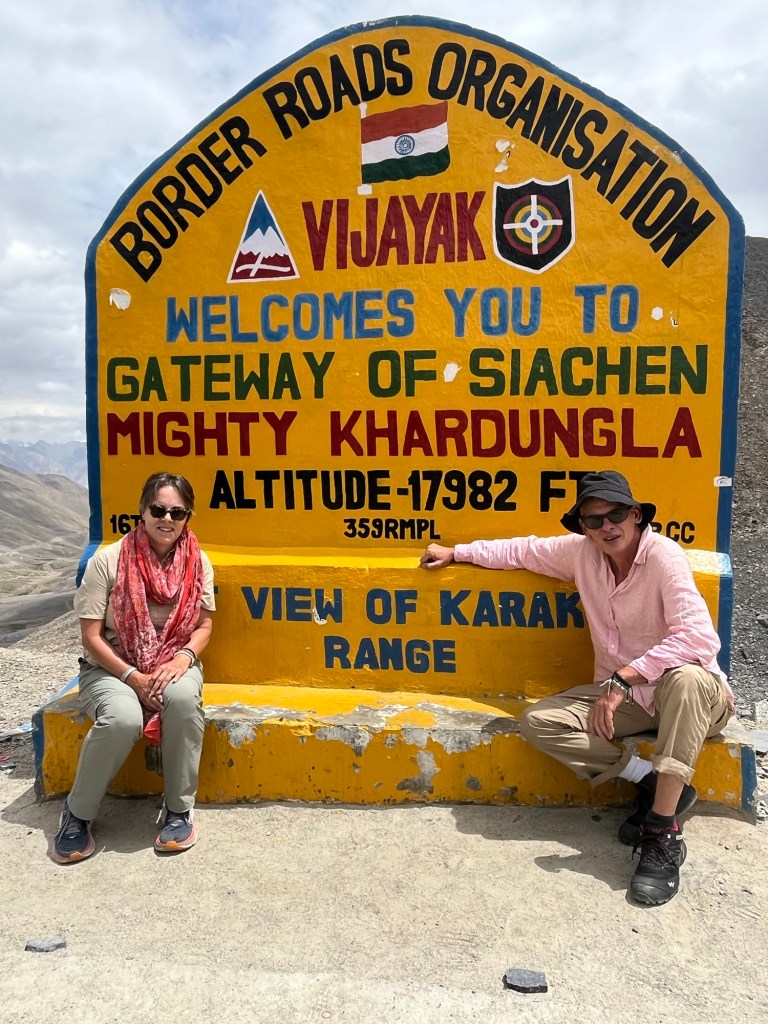
Khardung La pass
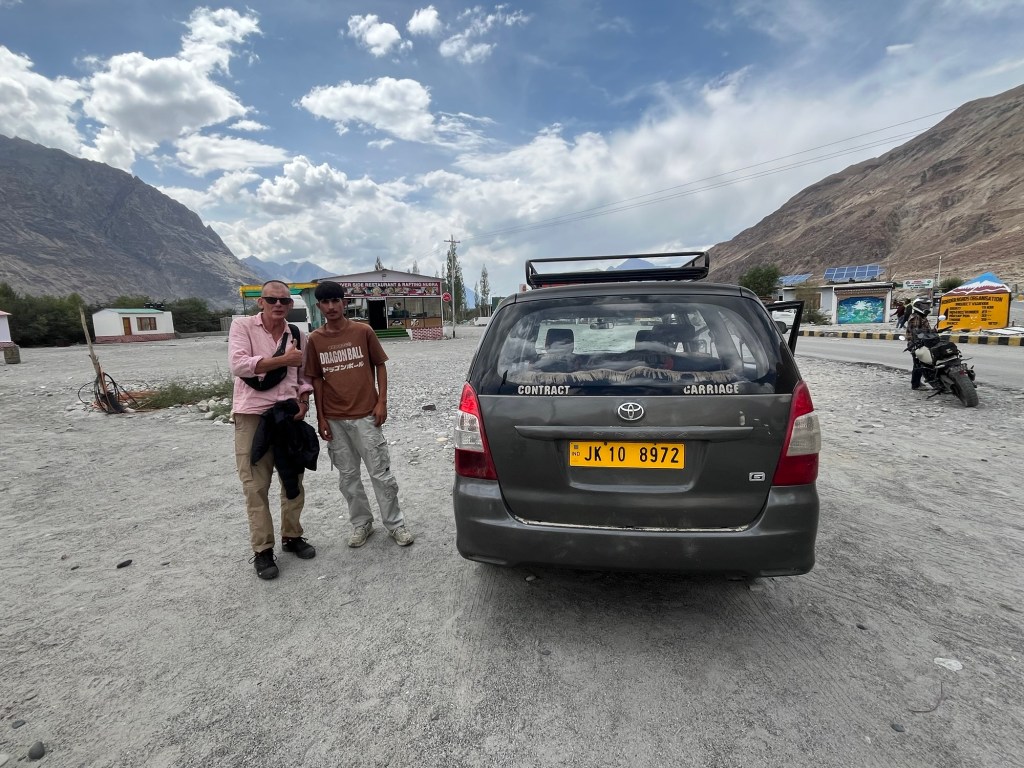
Tim with our driver
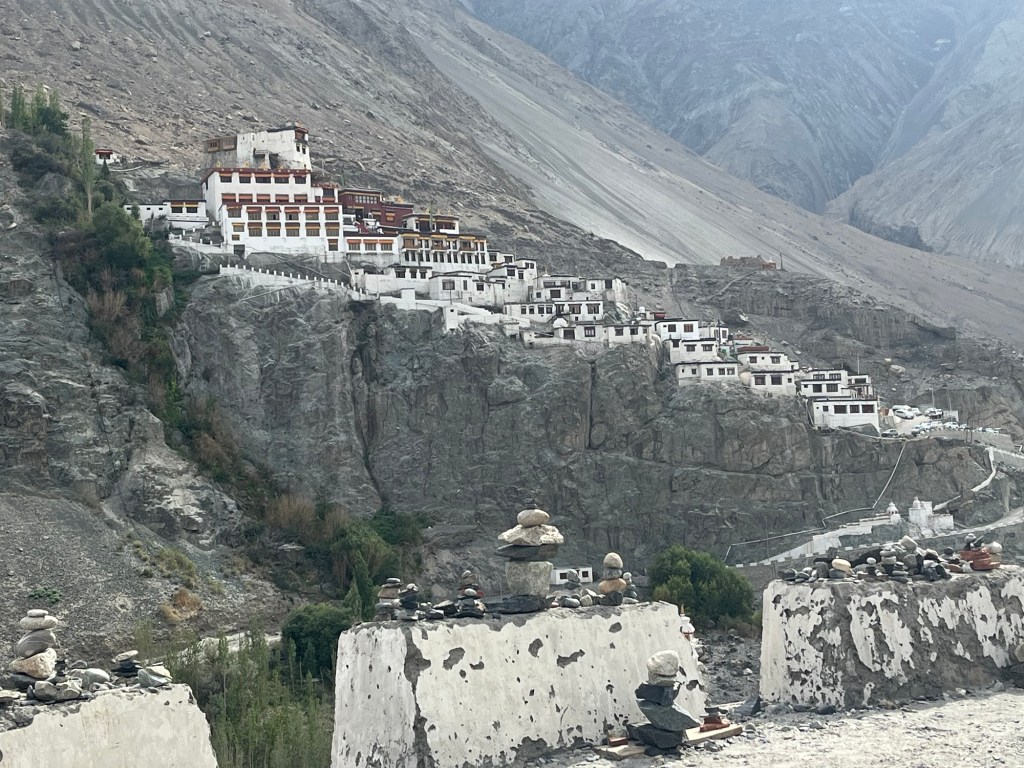
Once we were over Khardung La we descended to Diskit monastery. This was possibly my favourite Ladakhi monastery yet. It looks out over a green valley and the atmosphere as you climb up and spend time in its various temples is awe inspiring yet tranquil. The monasteries of Leh fit perfectly in the beautiful yet hostile environment that they inhabit.
The walls outside and inside the temples of the monastery are covered with intricate and beautiful pictures and mandalas.
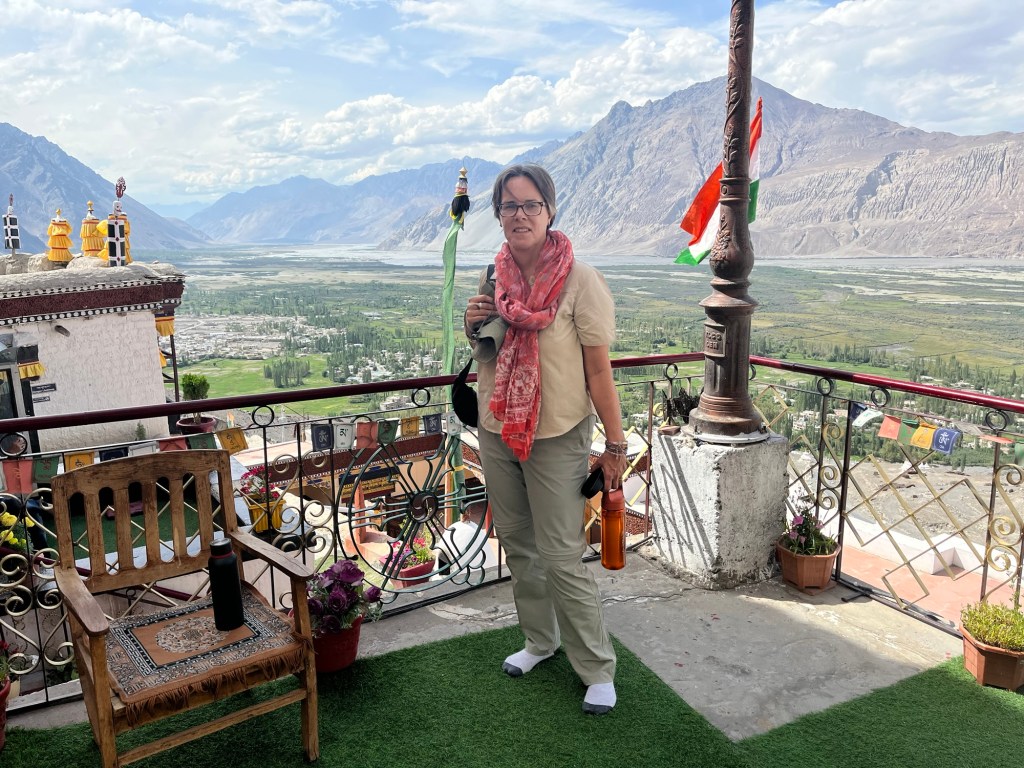
Diskit monastery
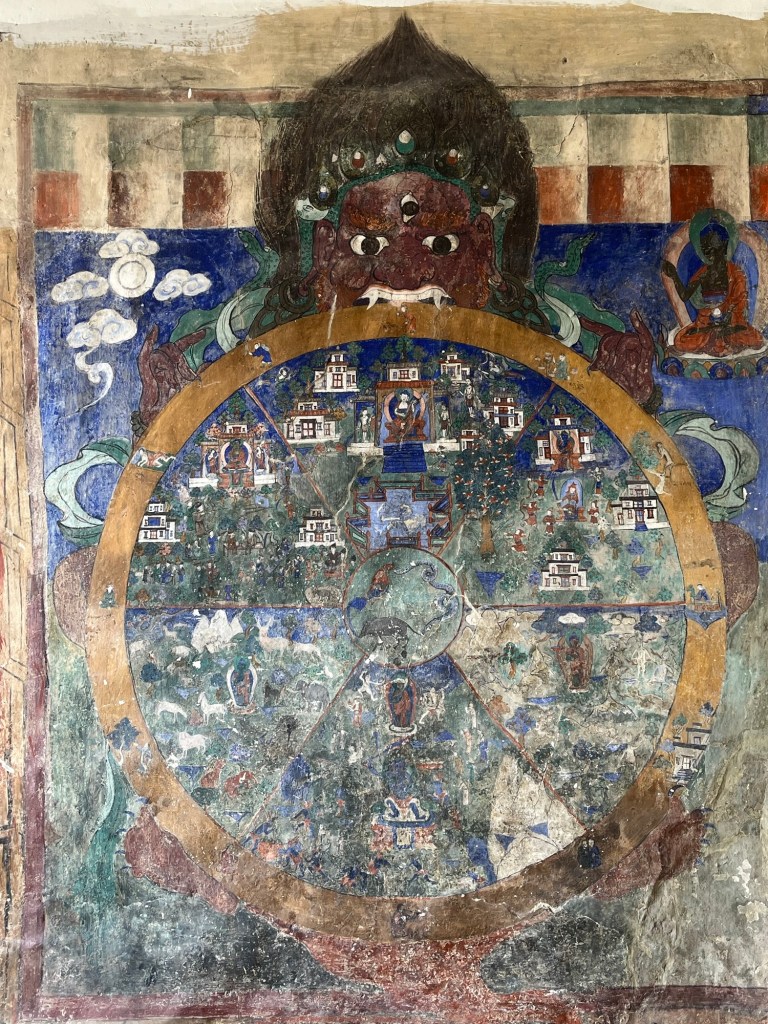
Diskit Monastery
After a break for lunch we continued on the road to Nubra. The landscape was becoming more uniformly bare and stark, although occasionally we would come upon an emerald oasis nestled in a valley.
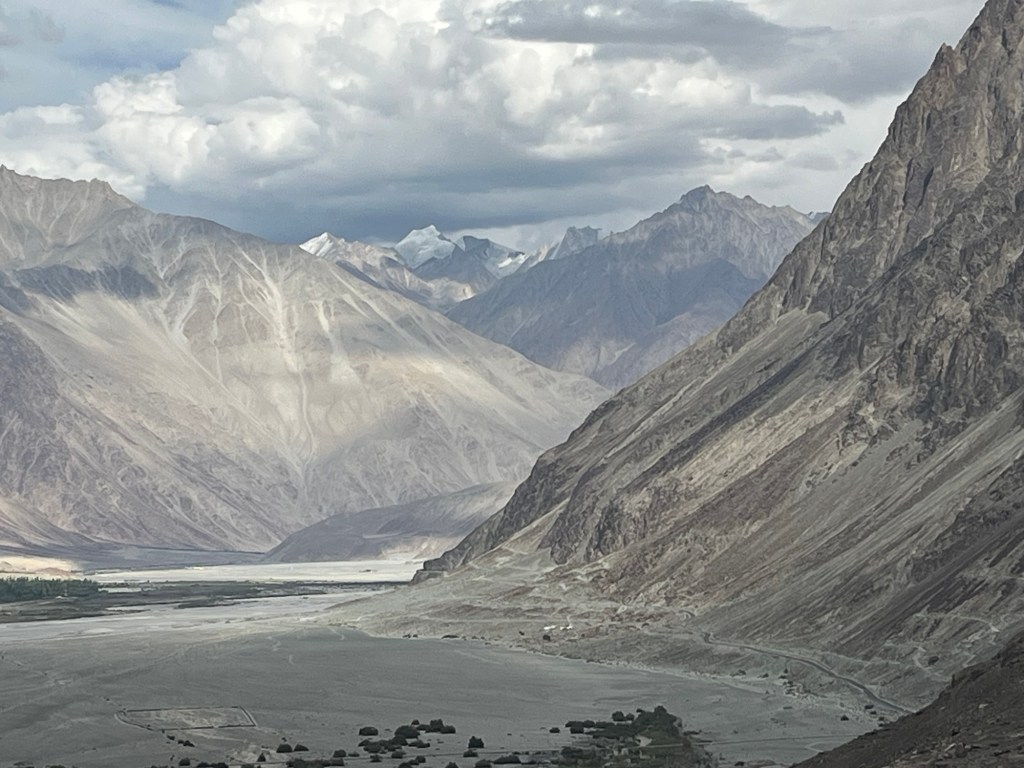
The road to Nubra
That night we stayed in Hunder at a lovely hotel that provided us with a delicious evening meal and breakfast. A few other people were staying there, mainly Indian tourists with their own transport. We spoke to a young couple who had travelled all the way from Bangalore with their three year old and their dog! Indian people have travel stamina!
Hunder is a pleasant shaded village with many hotels. Its most famous attribute is a large Mani wall (made of stones with chants/ prayers inscribed on them) which we drove past.
There was an option to take a Bactrian camel ride across the nearby sand dunes at sunset. Bactrian camels have been native to this area for years. I believe the area is part of the old Silk Road route.
I have disliked camels since an adventure in the desert of Morocco many years ago. I recall that my camel was very grumpy and uncontrollable. After about 2 hours of desert wandering I had a very sore bum. At our camp in the desert we were surrounded by enormous scarab beetles all night. It was not a happy experience.
I felt a bit of a spoil sport for skipping the opportunity to ride a bactrian camel, but I didn’t want to revisit my Moroccan trauma. I have to admit that it was more than pleasant kicking back in the hotel after a long day’s driving. Tim opted to stay with me.
The next day we travelled to Turtuk in the Indian part of Baltistan. We were very close to the area of Pakistan where we had travelled all those years ago – we were only separated from it by 25 years and a mountain range! The people, clothing and setting were all very familiar.
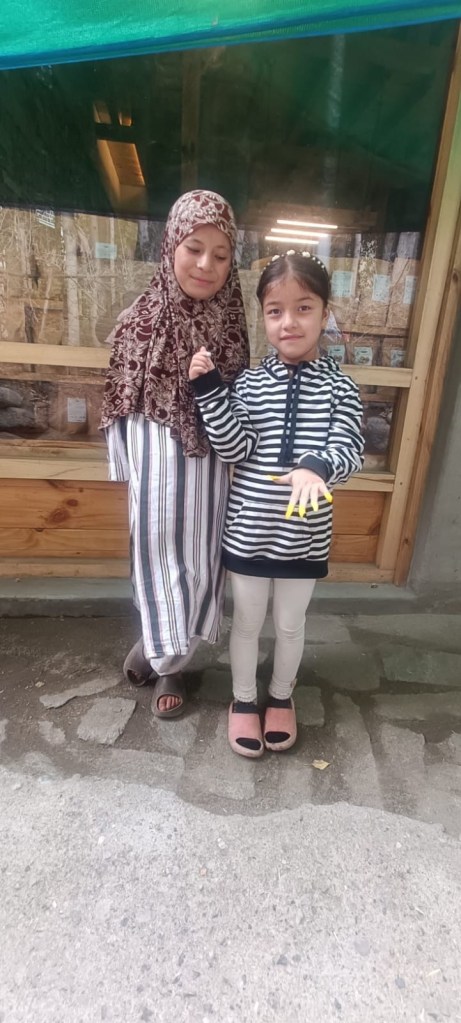
Elderly villagers offered us apricots and mulberries for sale, to supplement their income. We had lunch and then wandered through the village. Like in Leh and Hunder numerous small water channels ran through the village, irrigating the fields and providing for the daily water needs of the villagers. Groups of kids played in the alleyways. We chatted to some little girls, one of who had created beautiful false nails for herself using the petals from a sunflower.
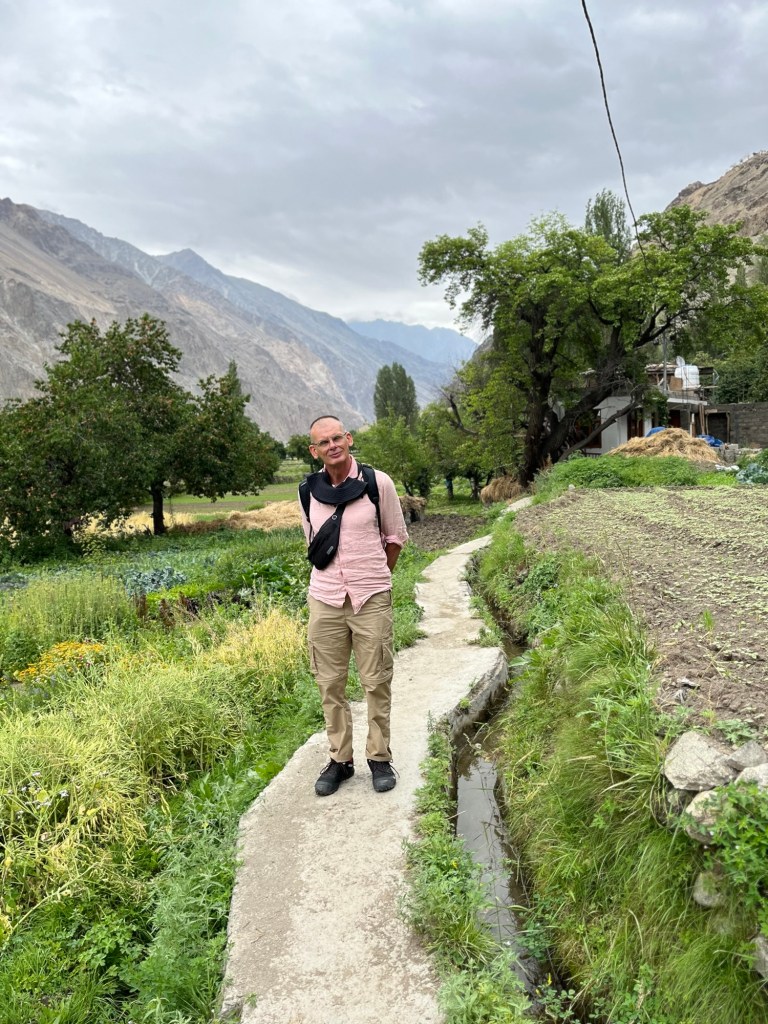
On the other side of the village was the Yangon Palace which we nearly missed. A very informative guide showed us around. He was at pains to tell us that the residents of this village were all originally Hindu prior to conversion in the 17th century.
I could have easily spent a couple of nights in this village, but we had to move on.
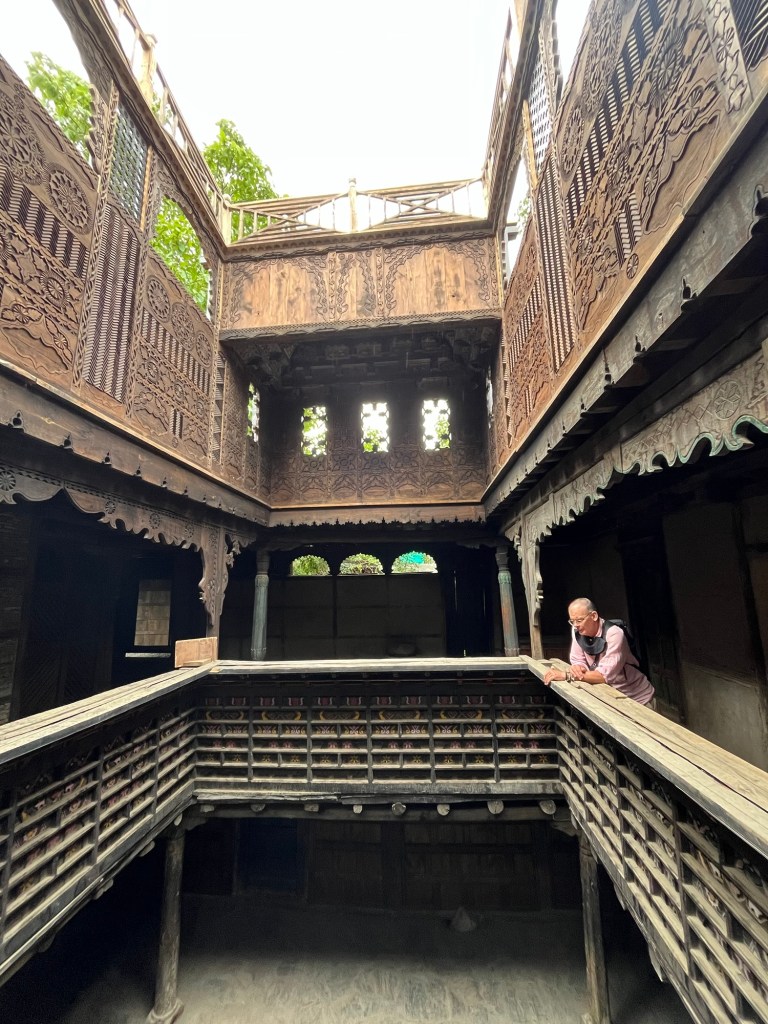
Turtuk Yabgo palace
We headed onwards and upwards across the Wari La (5312 m) and Chang La (at 5360 m even higher than Khardung La) passes to Pangong Lake.
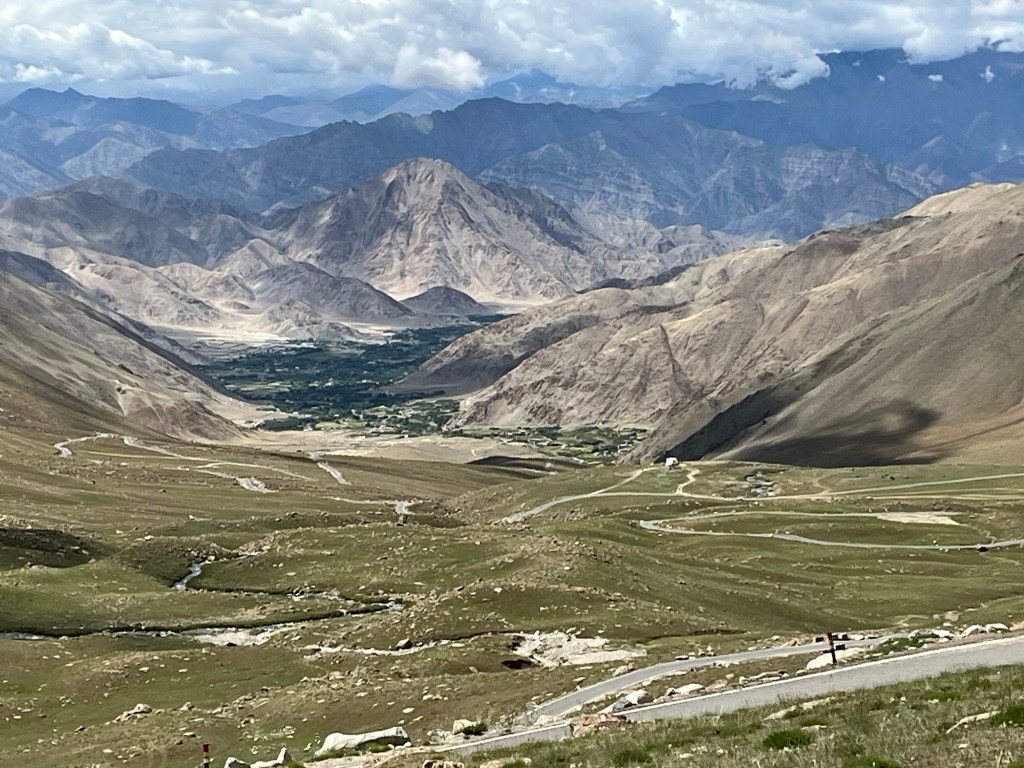
I have to admit that although the setting of Pangong Lake, surrounded by mountains, was magnificent I didn’t warm to the location. The mountains felt so bare and cold and the place was so inhospitable. Other than a few shrimps nothing lives in the water as it is brackish.
Rohit told us that a famous Indian film was set here. Indian movie buffs have the chance to pose with items related to the film. He said that if a film is made in pristine countryside anywhere in India it is a dead cert that the place will soon be overrun by Indian tourists. Apparently that’s how Manali became so popular with the Indian tourist market.
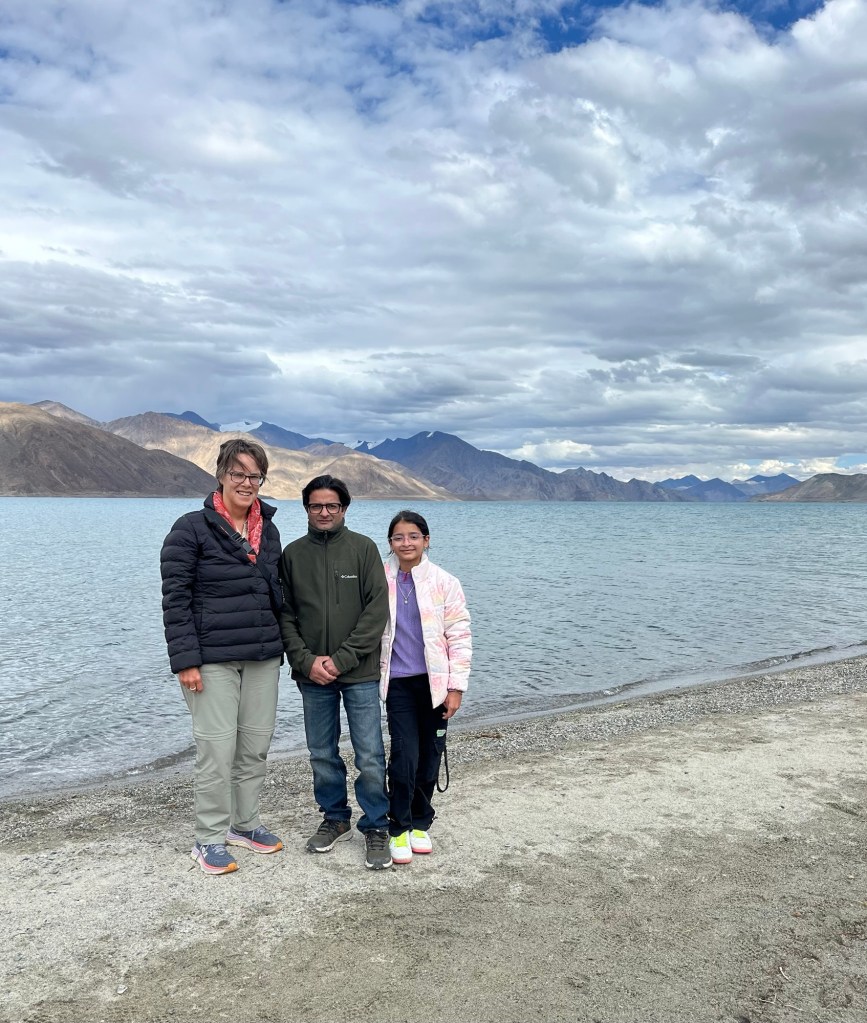
We stayed in a yurt overnight that provided food. There were proper beds and even a flushing toilet. We had quite a comfortable night. Tim mulled on starting a yurt export business to the UK.
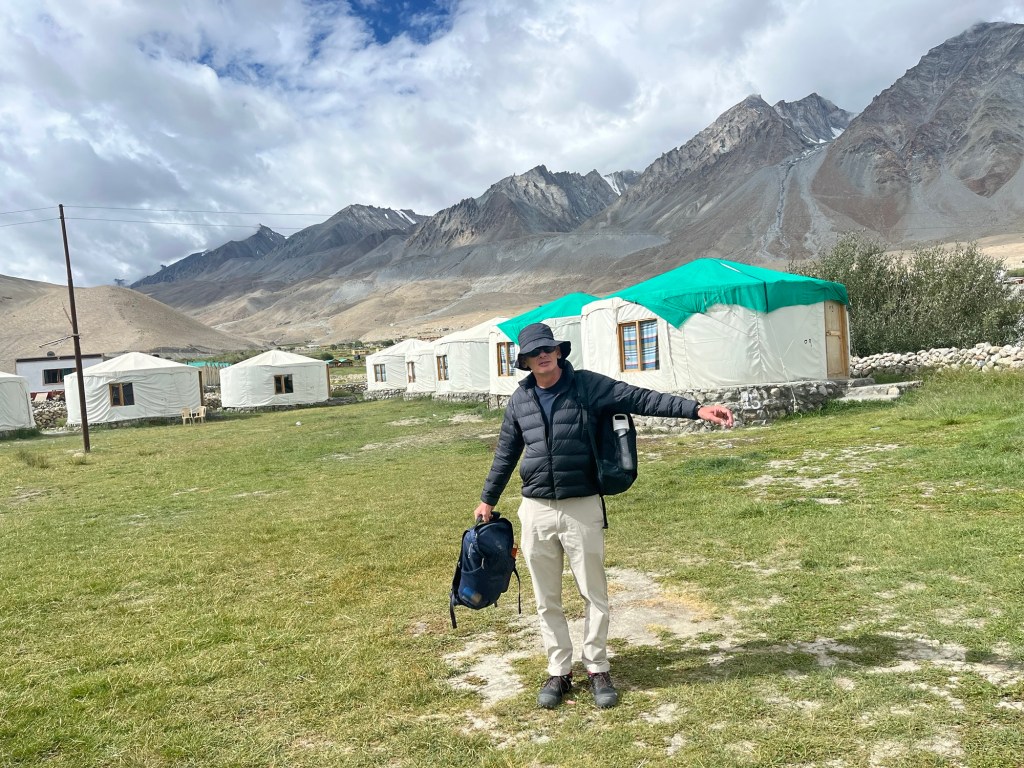
The yurt camp at Pangong lake where we stayed
We considered whether to include a visit to a telescope another few hours down the lake, but we all agreed that we couldn’t fit it in in the time we had (although Rohit was keen to try). In the event it was cloudy so I’m not sure if we would have seen much.
The next day we headed back to Leh. We stopped at the cafe where we had got lunch the day before and Rohit disappeared for a long time. It turned out that he had been bargaining to buy a yak’s tail that would be used in ceremonies at his local Mandir (temple). He told us that this would bring many blessings and that yak’s tails are a hard to get and valuable item in Hindu ceremonies. Tim had a peek at it and reported that the bloody end where it had been removed was visible and it smelt a bit. I believe that specialist craftsmen weave the hair from the tail into a whisk, which is then used in the temple.
After that we headed directly back to Leh, all exhausted after our three intense travelling days.

 Kate's Travels
Leave a comment