
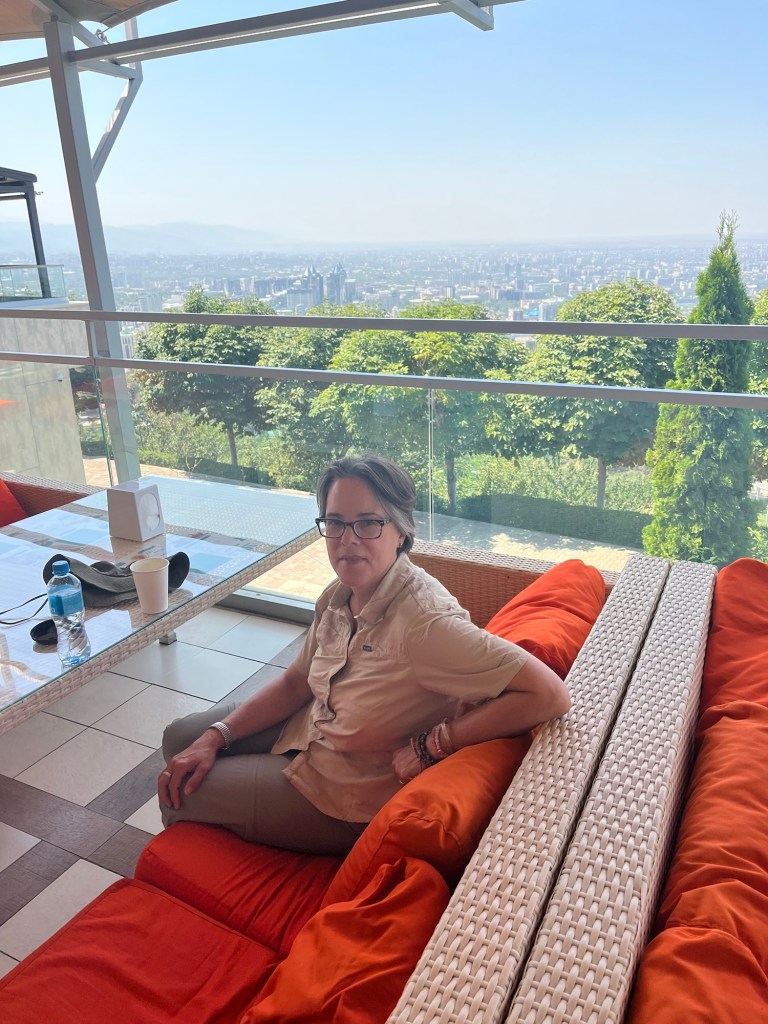
We spent our last day in Almaty travelling by metro to an area of the city we hadn’t yet explored. It was built between 1988 and 2011, so is quite modern and has beautiful murals decorating some of the stations. We took a cable car up a hill overlooking the city. The views made the ride worthwhile. It was modern and very safe according to Tim, but I am not a fan of cable cars. To make things worse this one stopped suddenly and swayed violently back and forth at one point. I could see that the Russians sharing the car with us were a bit scared, even though they pretended not to be. Tim said that they had just applied the brake temporarily for some reason and it was fine. After a short stop stranded in mid air we started off again. At the top there was a kids’ funfair area. It would have kept our kids happy for hours when they were under the age of about twelve. These funfairs are to be found in a lot of parks and open spaces in the Stans and I believe that they are a very popular Russian hangover. We chilled out for a while, drinking coffee in a cafe with a view.
After that we escaped the heat by visiting the Central State Museum of the Republic of Kazakhstan. Inside, the building looked like it was inspired by the shape of the yurts to be found throughout Kazakhstan. The exhibits were a mixed bunch. There was an interesting section on the history of the peoples of Kazakhstan. This included information about the many groups forcibly relocated to the east of Kazakhstan from elsewhere in the Soviet empire during the Stalin era. These included Kukaks (rich peasants who were seen as a threat to the collectivisation process), Jews, Armenians, Volga Germans, Koreans, Crimean Tartars and Chechens among others. Some of these groups took the chance to move away once the policy was relaxed (for example, many of the Jews migrated to Israel), but others remained.
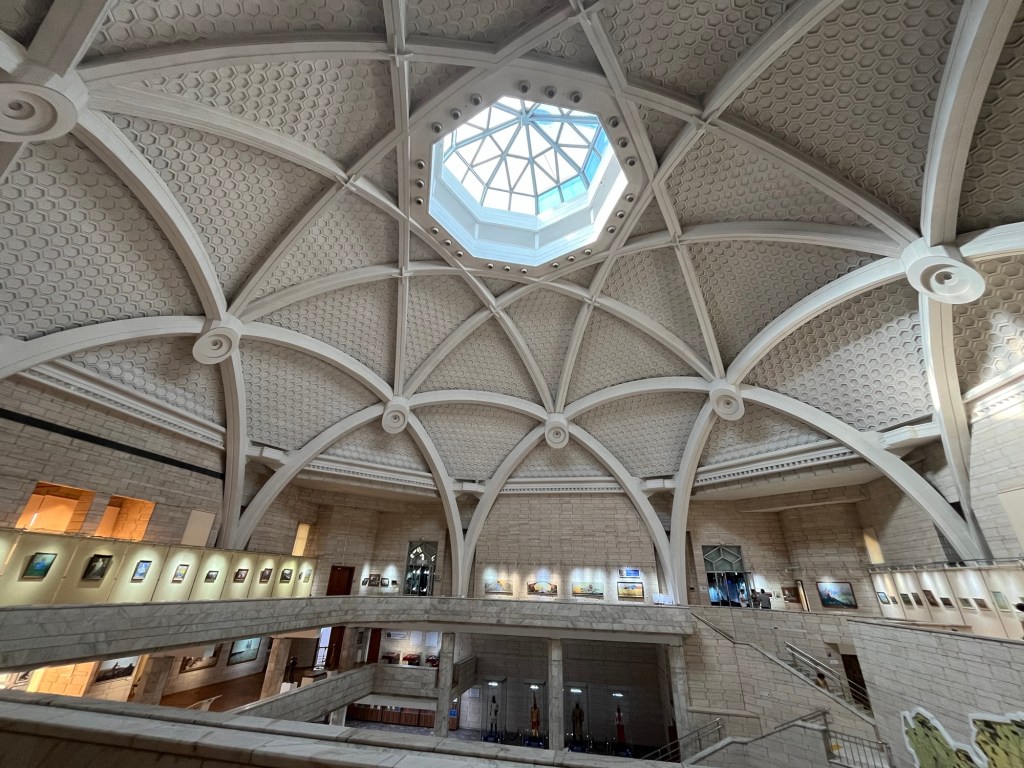
Inside the Central State Museum in Almaty
The next day we caught the bus to Bishtek in Kyrgyzstan. It was a relatively short journey of around five hours, but a bit sweaty as the air con wasn’t working very well. I was a little nervous about the border crossing, but it was straightforward. Once we got to the Kyrgyzstan side, we bought SIM cards from a helpful young man and changed a small amount of our money. As usual we were offered rides by taxi drivers who told us that no buses ran to the centre of town. As usual we refused and very soon a bus turned up. We later discovered that we could have used the Yandex Go taxi app that Tim had downloaded in Kazakhstan. It works in exactly the same way as Uber and means that a reasonable rate has to be charged by the driver who is an officially recognised taxi, rather than a local guy just trying to make a lot of money out of a hapless tourist.
The bus journey into town was quite lengthy but allowed us to get the lie of the city. I usually try and book hotels or guest houses rather than flats, but on this occasion there hadn’t been too many good options. Bishtek is not yet Barcelona where locals are protesting the impact of flats being rented out to tourists on housing for locals, so we had booked into an old Russian apartment block. The owner had been in touch with me via whatsapp, so I knew that her niece was waiting for us in the flat.
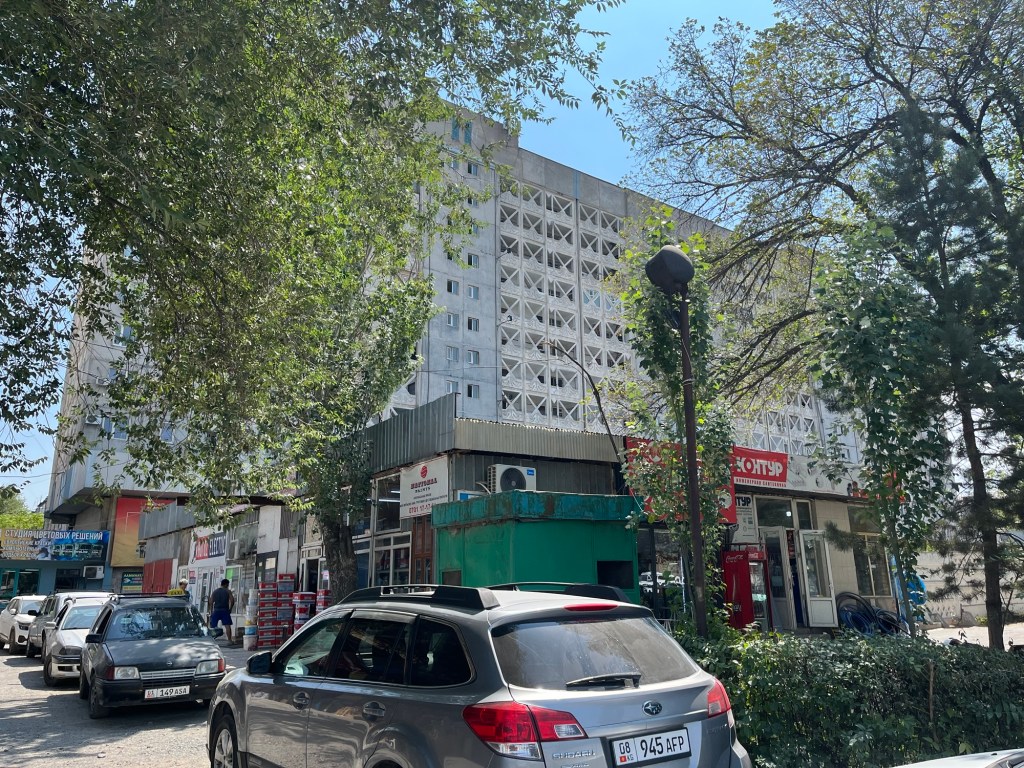
Initially I thought we had made the wrong choice – the area that the flat was in and the exterior of the block looked decidedly sketchy. The stairs and corridors were worse for wear with loose tiles and the need for more than a lick of paint. The niece welcomed us into the flat that was very secure with several locks and a keypad entry system. It was very comfortable inside. Despite initial appearances the flat was in a calm area. Everybody in the block and the local shop who we saw were very friendly. On our first night we ordered a takeaway via Glovo, a food delivery app and got some rest.
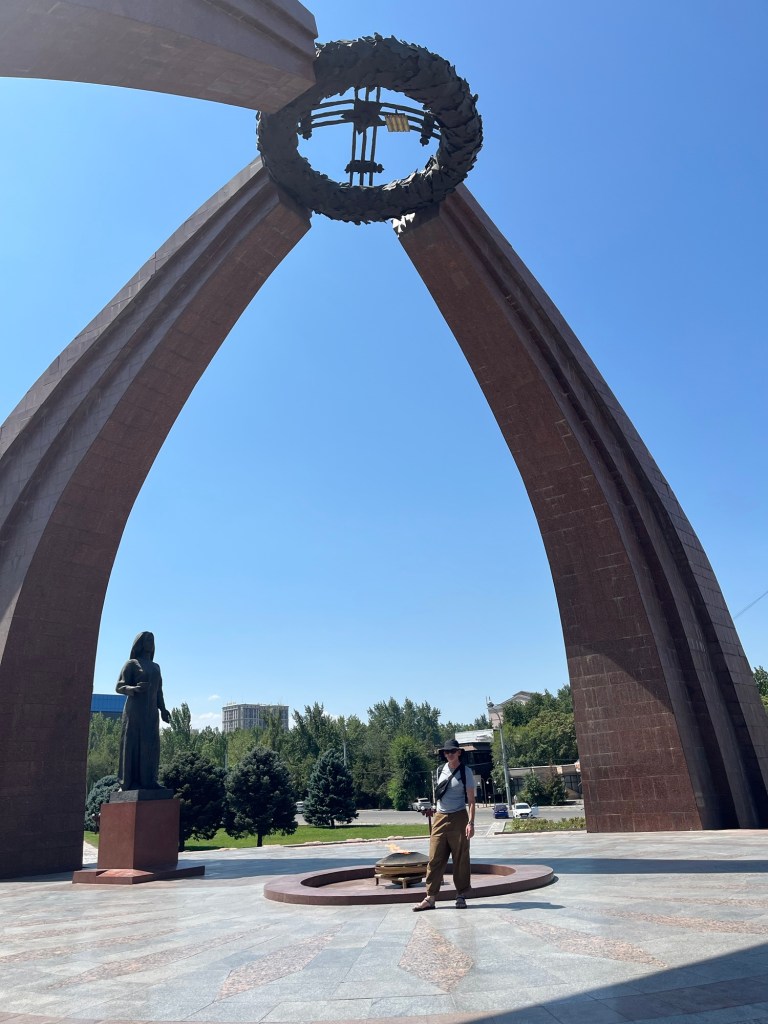
The next morning we set off to explore Bishtek. The main area of interest is a small section of down encompassing a couple of parks with shady trees to walk under and various patriotic monuments, some from the Soviet era and some more modern. The first area we came upon was Victory Square where there is a monument that brings to mind a yurt. Like a lot of the Victory Monuments in this part of the world it has an eternal flame. It was erected in 1985 on the 40th anniversary of the Soviet Victory over the Nazis.
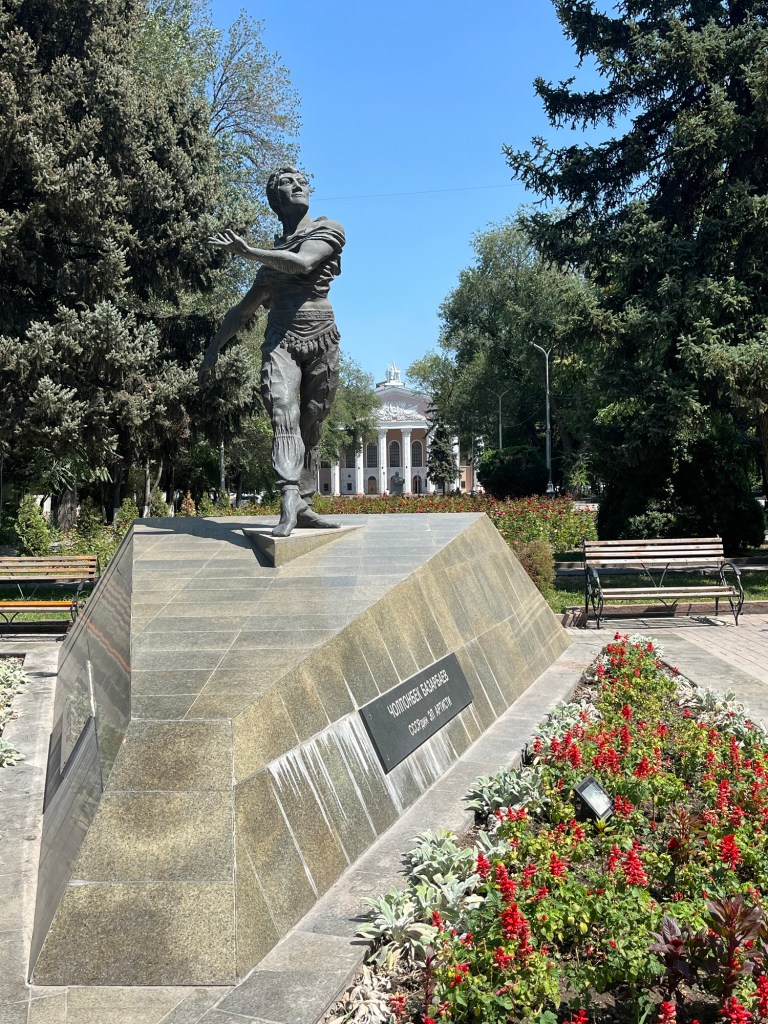
We walked past a Soviet era theatre with murals of ballet dancers on its outside walls It seemed empty and abandoned. We saw one woman alone in a kiosk inside and enquired if there were any performances, but nothing was planned. Later we came across a beautiful statue of a famous male ballet dancer. In the photo below you can see the theatre in the background of the picture.
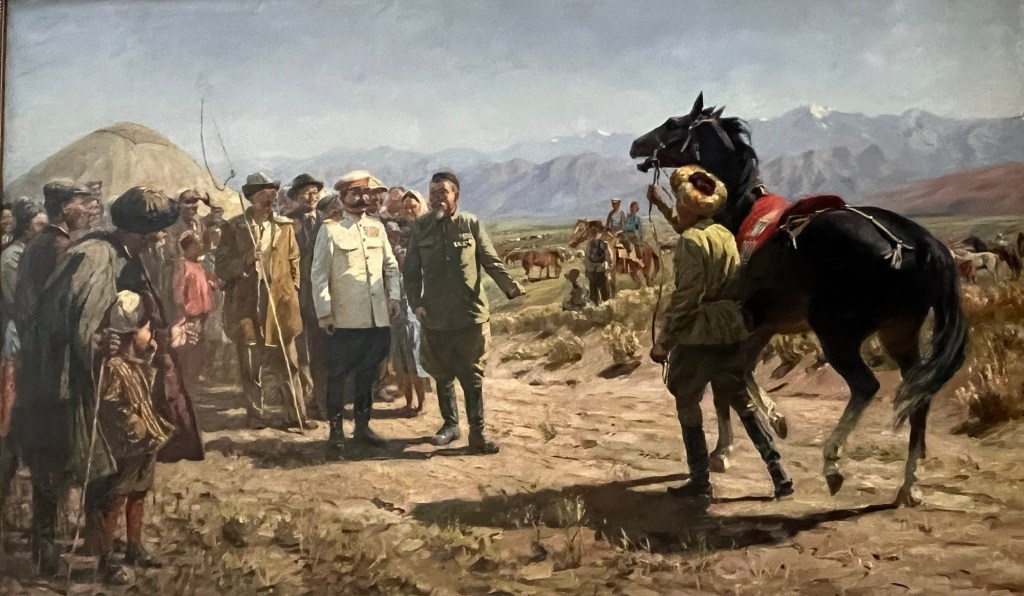
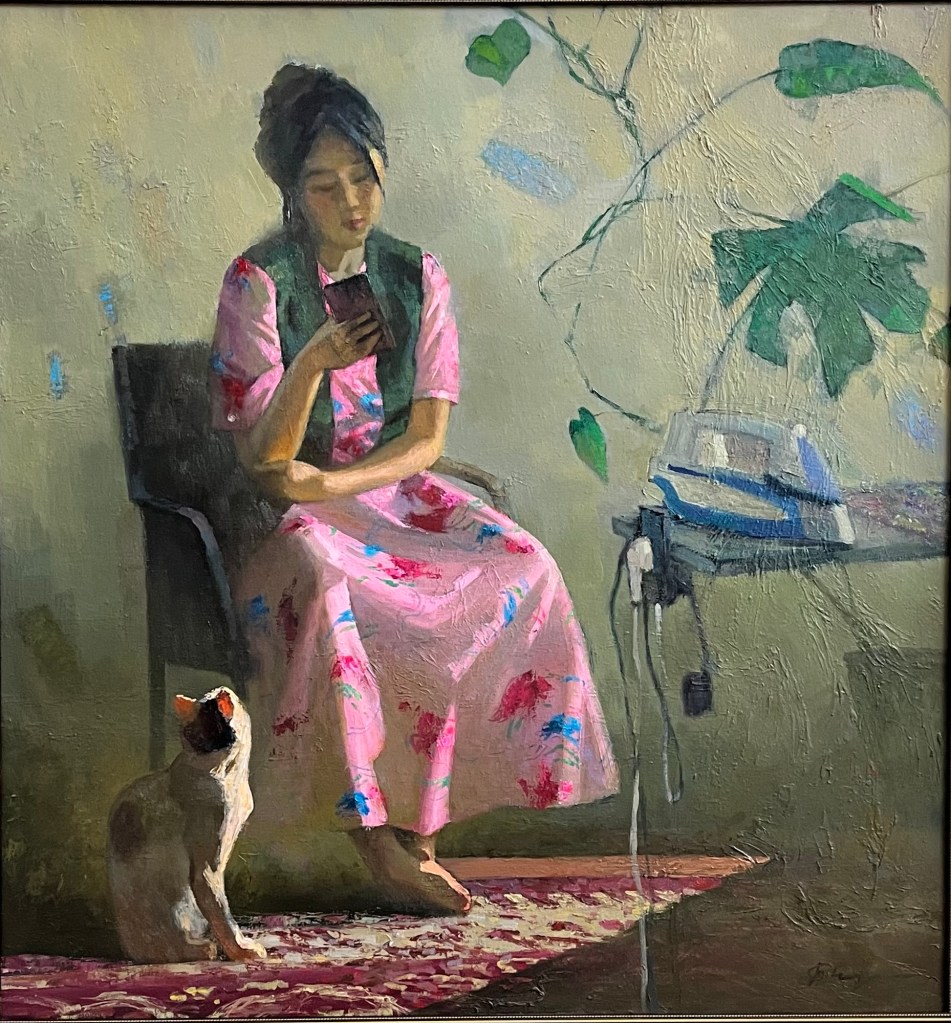
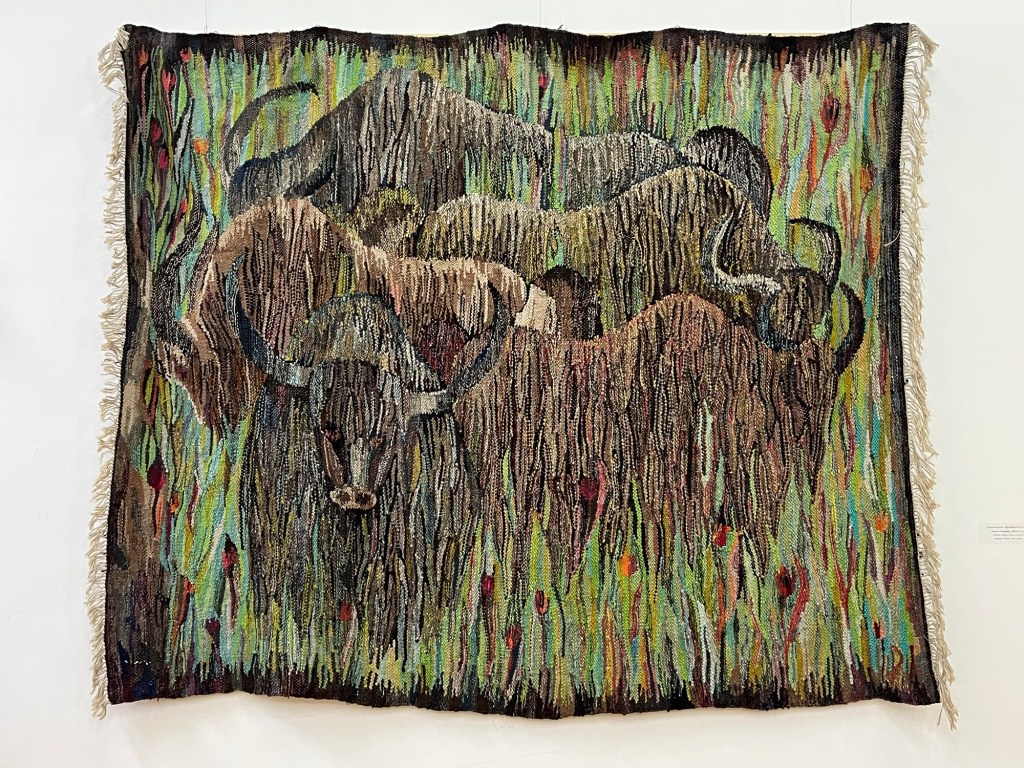
We came across a gallery and decided to spend some time there to escape the heat of the day. It turned out to have a very interesting and wide selection of pictures and carpets/ other crafts covering multiple eras of Kyrgystan’s history.
It was relaxing being able to return to the flat, do our washing and even cook for ourselves for a couple of nights after being so long on the road.
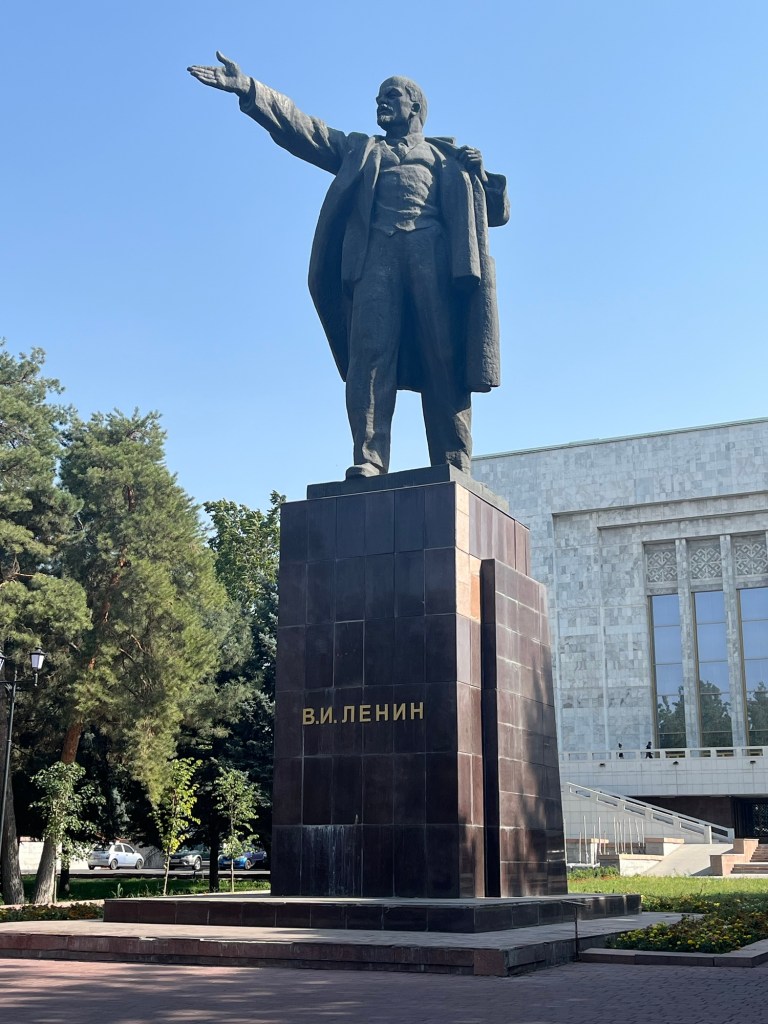
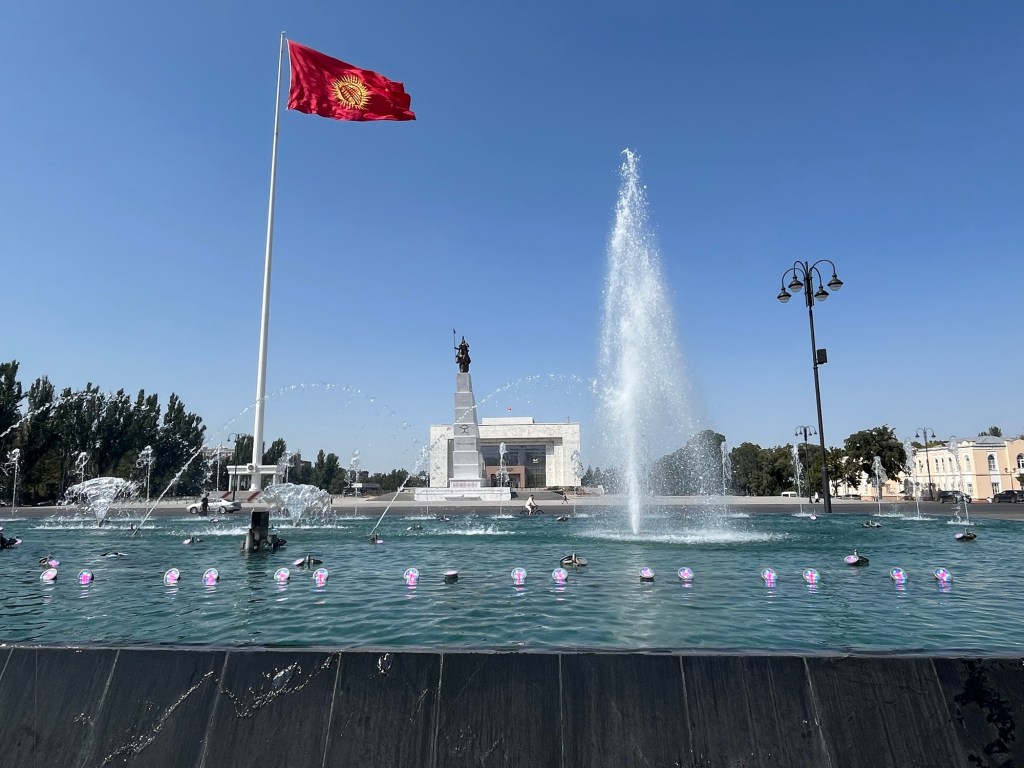
The next day we visited more Soviet monuments. These included an enormous Lenin statue. I believe this has been removed from its previous position which has been taken by the statue of Manas, the hero of Kyrgyzstan, on his horse. Manas faces a square full of fountains which create a cooling spectacle. In a park nearby is the statue of Marx and Engels. Kyrgyzstan does not seem to be banishing its Soviet era monuments, like the countries of Eastern Europe have done, but is introducing additional statues that celebrate its national identity.
While we were in Almaty and Bishtek Tim developed itchy patches on the small of his back and one foot. After consulting ‘Staying Healthy when you Travel’ by Jane Wilson-Howarth (previously known as ‘Bugs, Bites and Bowels’) and google I diagnosed geographic worm/ hookworm. Most likely this was the dog variety and we suspected that Tim picked it up in our favourite restaurant in Leh from the carpets we sat on.
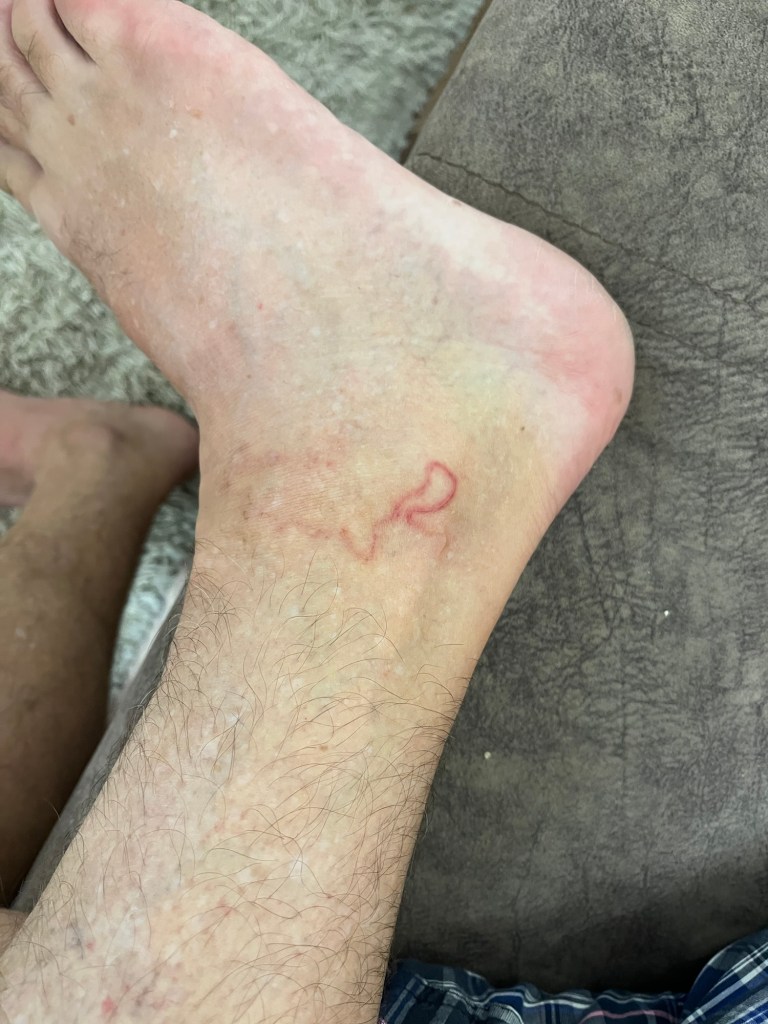
It was fairly easy to consult a pharmacist and get the right medication, although we are both going to get screened when we get home. Tim feels very unlucky, as he came back from India with a worm that a Hastings GP turned into a paperweight after our 2000 trip. So far I seem to have escaped any infestations.
The next leg of our trip was due the next day – by plane to Osh, the second biggest city in Kyyrgyzstan,
 Kate's Travels
Leave a comment