
We arrived on the station at Samarkand to the accompaniment of a brass band. They were welcoming a victorious sports team to the city. We hopped in a Yandex taxi and headed for the old city. There were speed cameras on the main road, so the traffic was a little calmer than it had been in Tashkent.
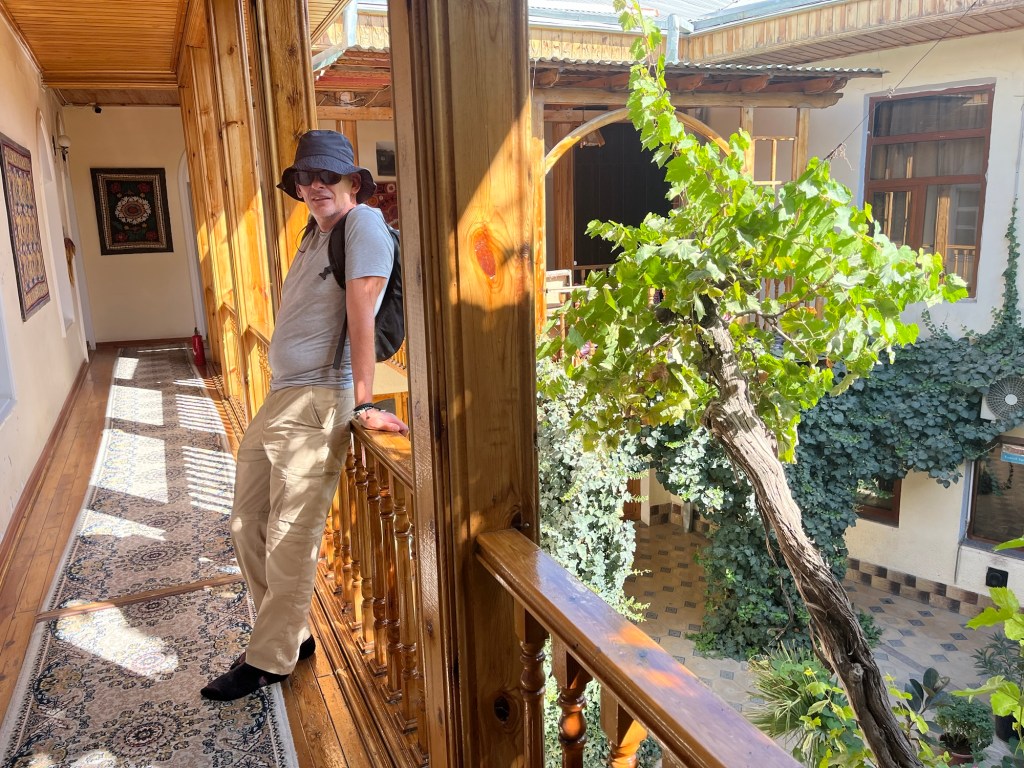
Our hotel in Samarkand was the nicest we have stayed in during our time in Central Asia. It is a family owned place in the heart of the old town, round the corner from most of the main sights. The door to the house compound opens from the street and leads into a series of courtyards filled with greenery, a style that you sometimes find in India and Pakistan as well as the more traditional areas of Central Asia. The breakfast provided was a cut above most of those we have experienced as well, in terms of freshness and variety.
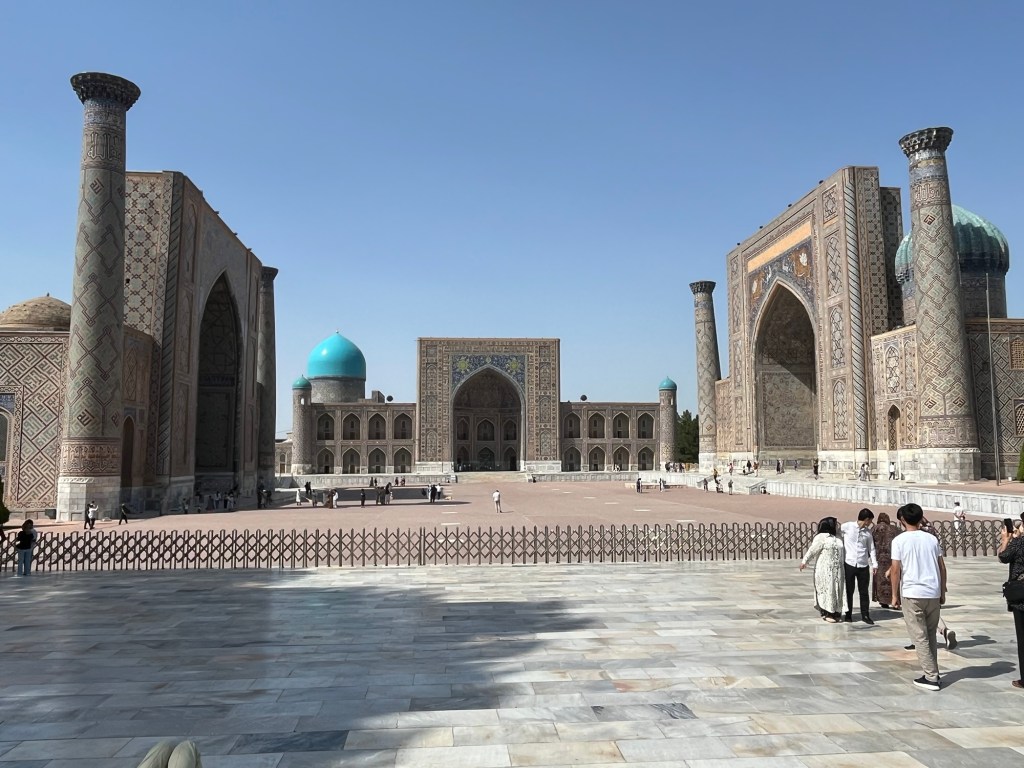
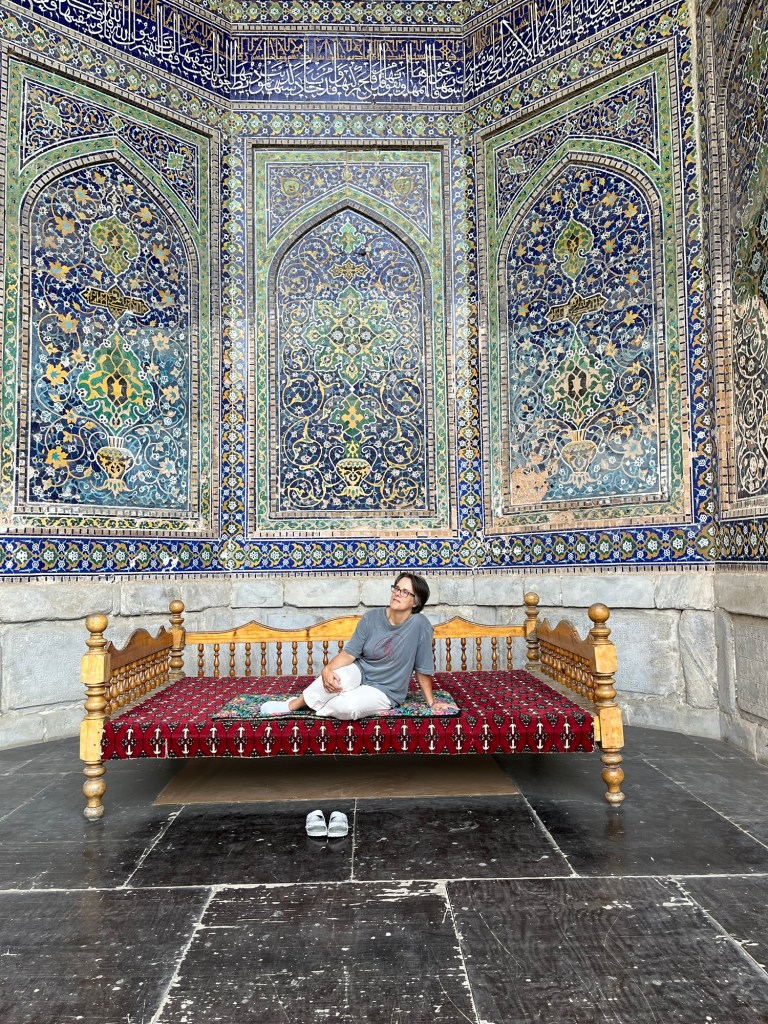
I have been keen to visit Samarkand for years, but haven’t had an opportunity until now. After a rest we headed for the famous Registan Square (this means ‘sandy place’ in Tajik, according to Lonely Planet). It was the heart of the city under the Timorid empire. It consists of three ancient medressahs facing each other. One is very unusual as it depicts animals (lions) rather than sticking to geometric designs and calligraphy.
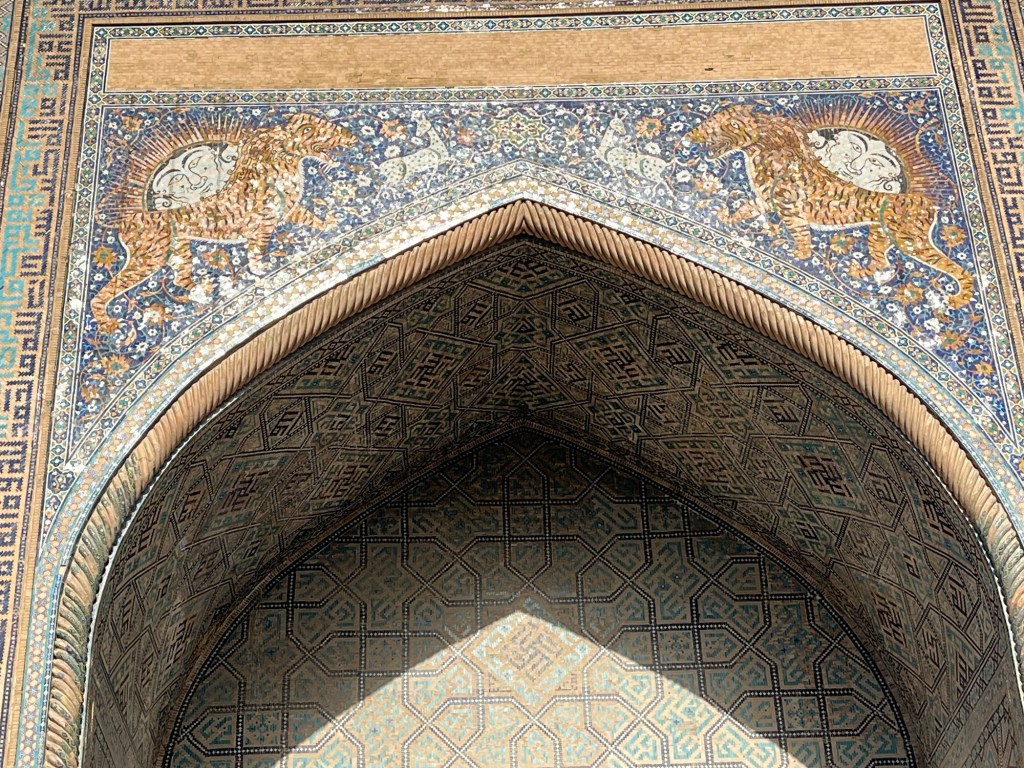
The lion illustrations on one of the medressahs
The photos I took don’t do justice to the buildings. Despite earthquakes and neglect over the years they have survived. The Soviets carried out major reconstruction on them and although there is some suggestion that they went a bit too far, at least the buildings are preserved for posterity.
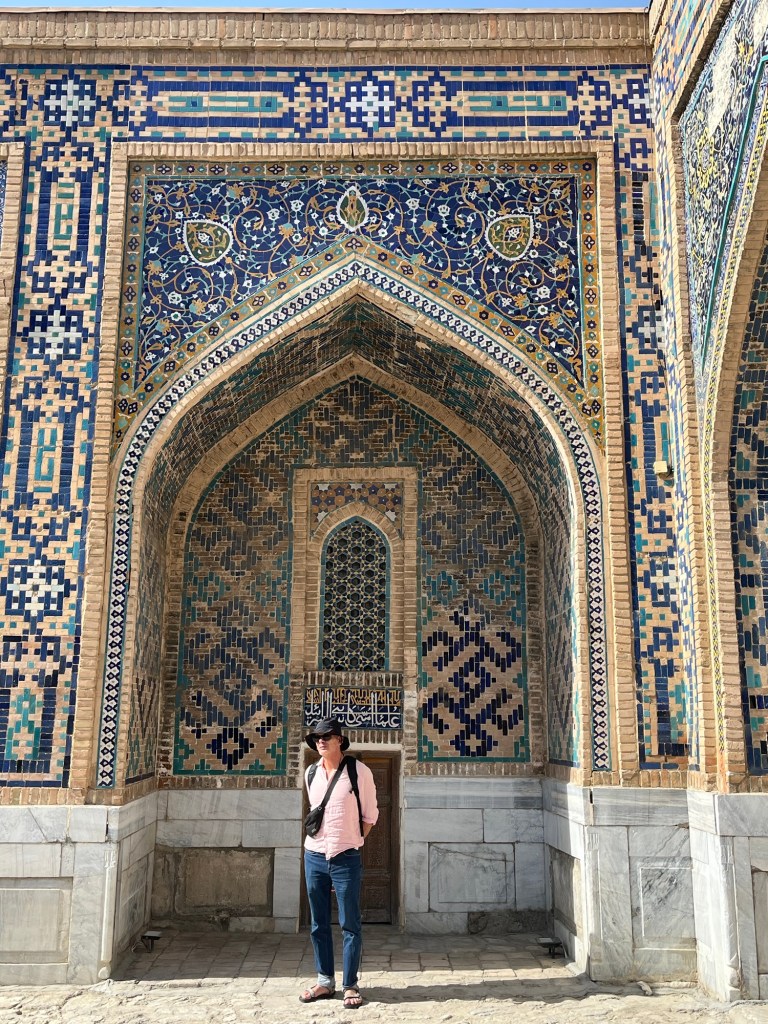

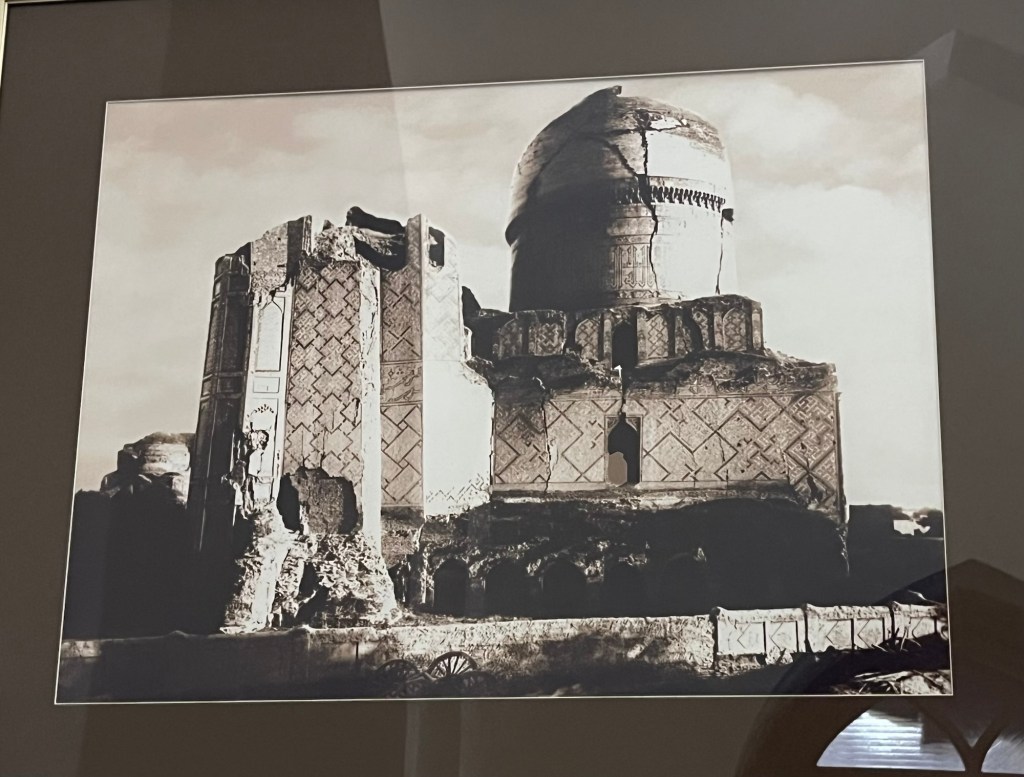
Registan Square buildings before restoration by the Soviets
Samarkand was a key destination on the Silk Road. When Alexander the Great arrived here he said that everything he had heard about the city was true, except that it was even more beautiful than he had been told (at that time it was known as Marakanda). I have to agree with him. The original city was sacked by Genghis Khan and rebuilt by the Timurids (12th to 16th century). It was abandoned and neglected after the capital was moved to Bukhara and was only revived after the Russian conquest of the 1860s (info taken from Lonely Planet).
In the evening the Registan is lit up and there is a sound and light show. This reminded me a bit of Disneyland Paris. In fact, the whole place is tourist central, but that doesn’t take away from its beauty.
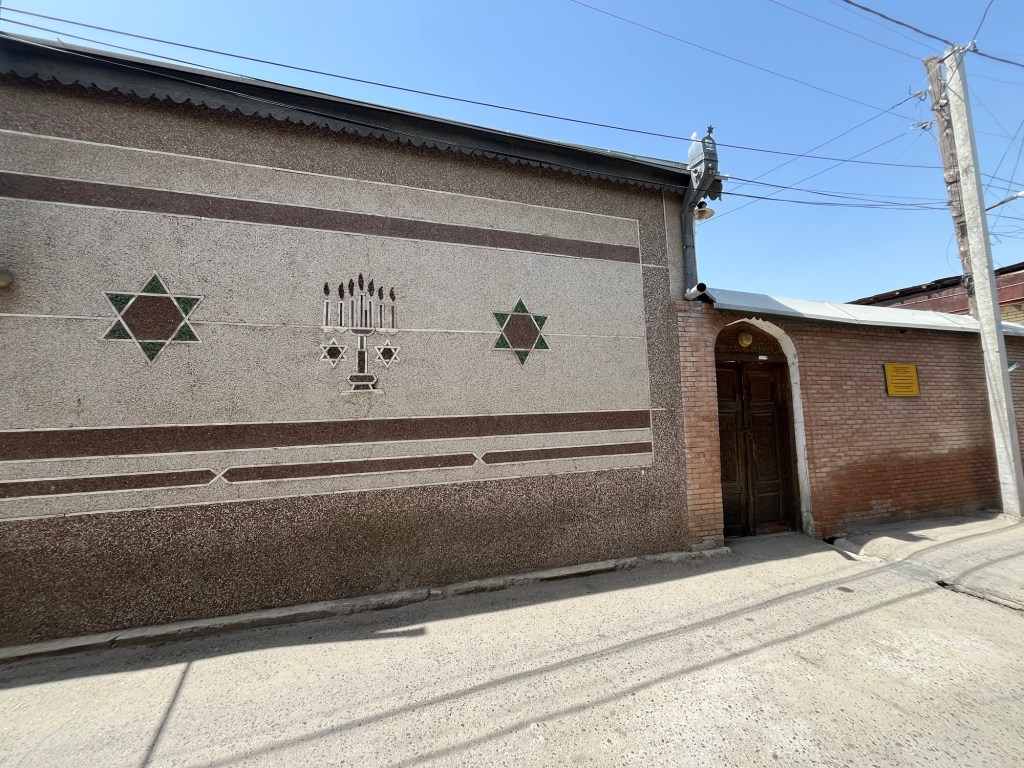
We did wonder, particularly wandering around the old town, how the tourism industry has impacted on the locals. There is no massive bazaar like there is in most other major Central Asian cities we have visited. On our second day in Samarkand even the small bazaar was shut. The old town felt deserted and we wondered how many families have had to leave due to the development of hotels. We spotted the ancient synagogue. Very few Jews are now left in the town, but at one time it was a melting pot of cultures, like London is now.
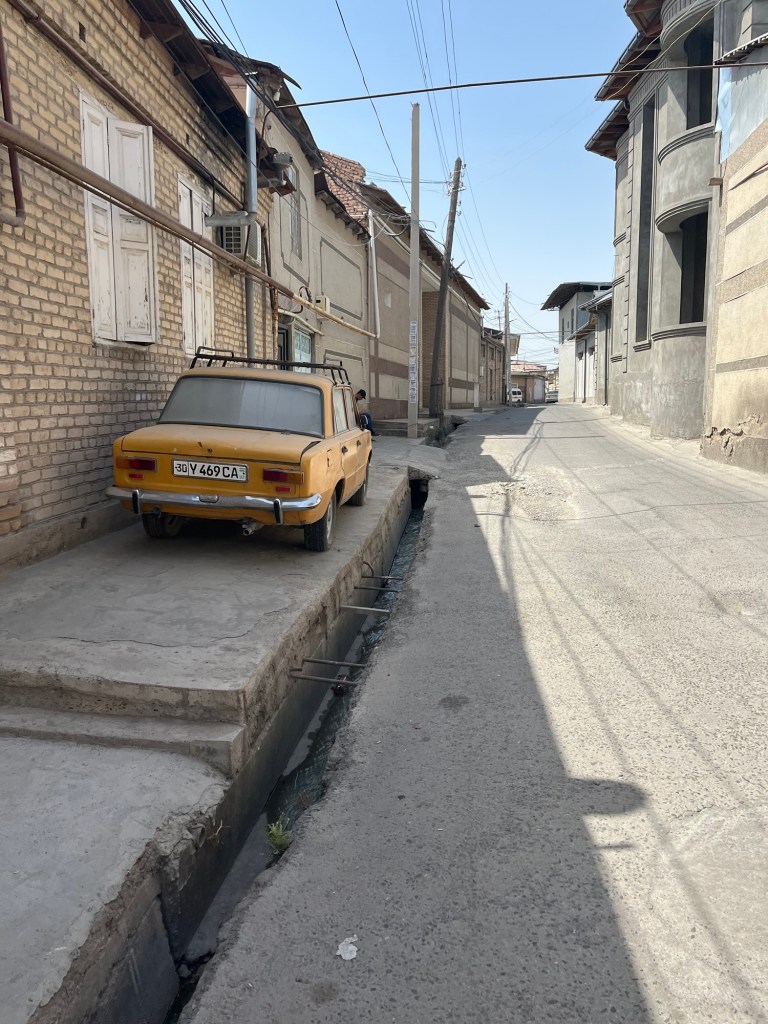
Deserted streets in the old town
That day there was a massive police presence in town. We later found out that the president of Uzbekistan was visiting. In fact, we saw his helicopter arrive and leave when we were eating dinner in our favourite rooftop restaurant! Next day the small market and shops that had been closed were back open and everything felt more relaxed.
Samarkand is packed with interesting places to visit. I got what I think was covid while I was there, so we didn’t manage to see quite as much as I wanted to. We did visit the Bibi Khanym mosque and the Shah-i-Zinda tombs where the royalty of the town are buried.
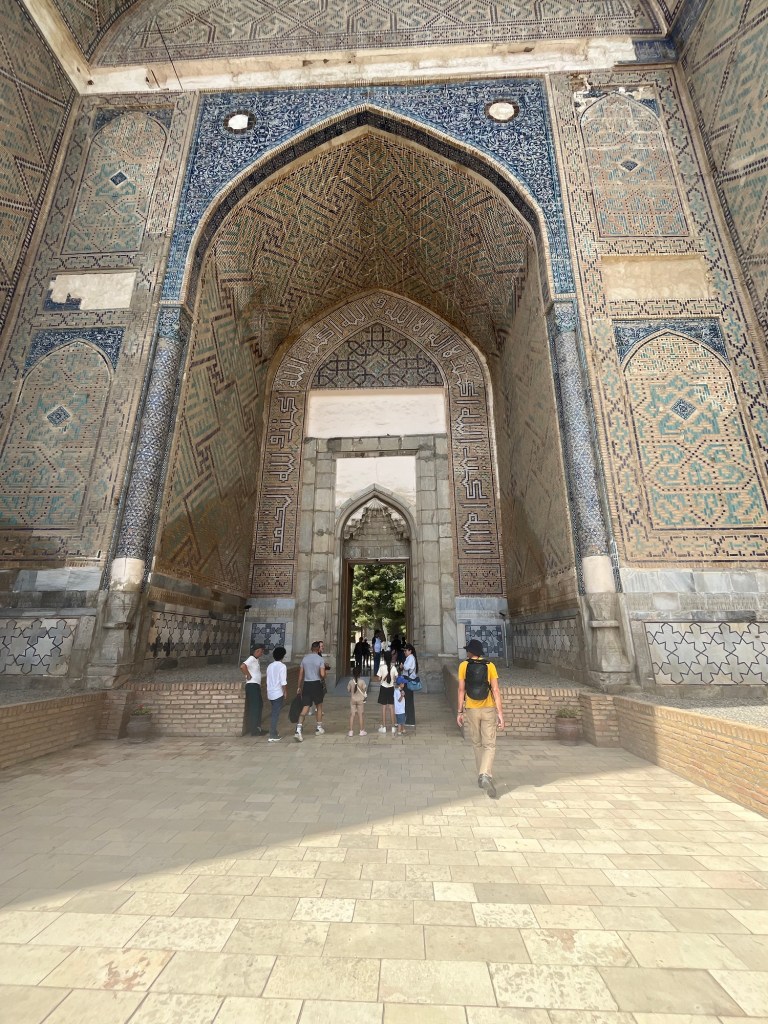
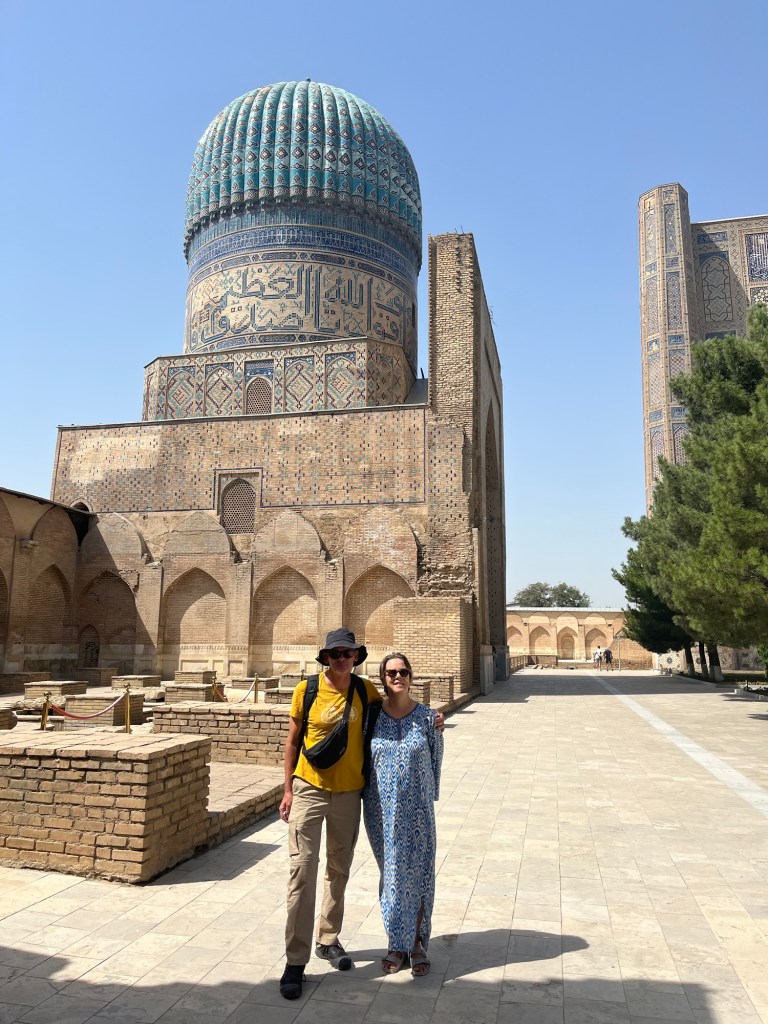
The mosque did not seem to be an active place of worship, which felt a little sad, although it and the tombs are still very holy places for Muslims. There are many visitors from Arab nations. Uzbekistan has diplomatic relations with the Taliban as well as Russia, China and western countries.
The manager of our hotel heard the call to prayer that Tim had recorded at the Minor Mosque in Tashkent and said that this sound was very special and important to his people. As I have previously said you don’t hear this being loudly broadcast across cities in Uzbekistan like you do in most Muslim countries and even non Muslim ones like India and the UK.
The Shah-i- Zinda are a long row of tombs near a cemetery that is still in use. They are exquisitely decorated, some inside as well as outside. The atmosphere is very peaceful, even though we went at a time when a few tourist groups were visiting.

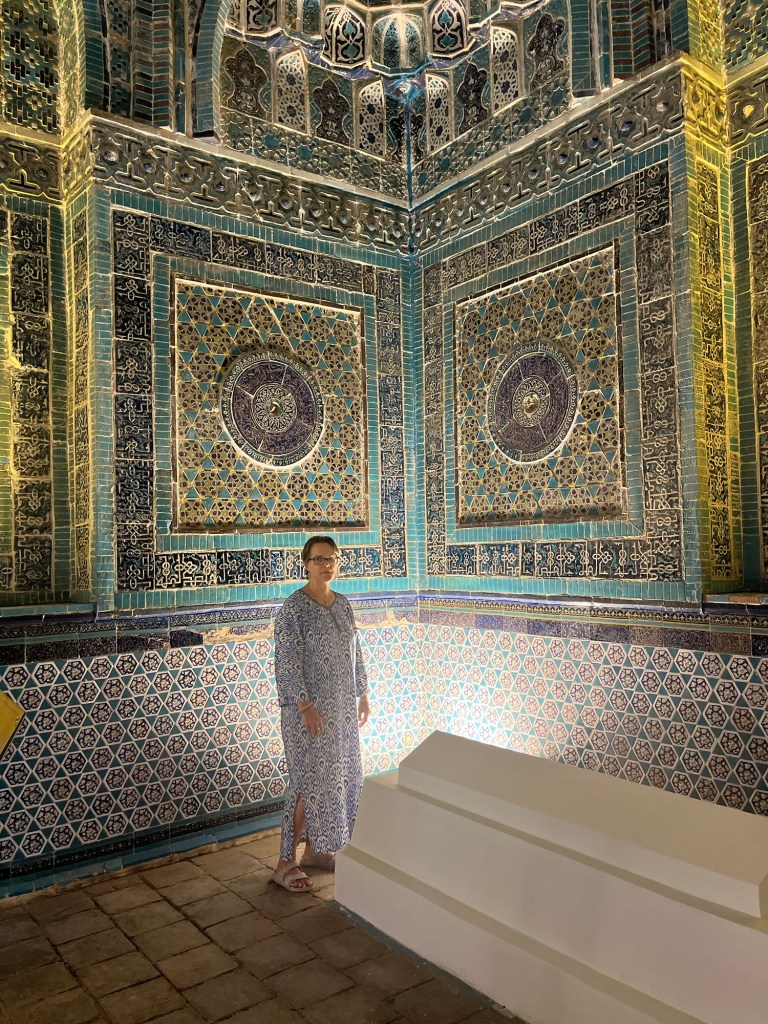

I took the opportunity to do some shopping in the many souvenir shops and bought a couple of kaftan type garments to wear, which are nice and cool in the heat.
From our favourite (very touristy but lovely) restaurant we could see Registan Square lit up at night as the sun dropped below the horizon.
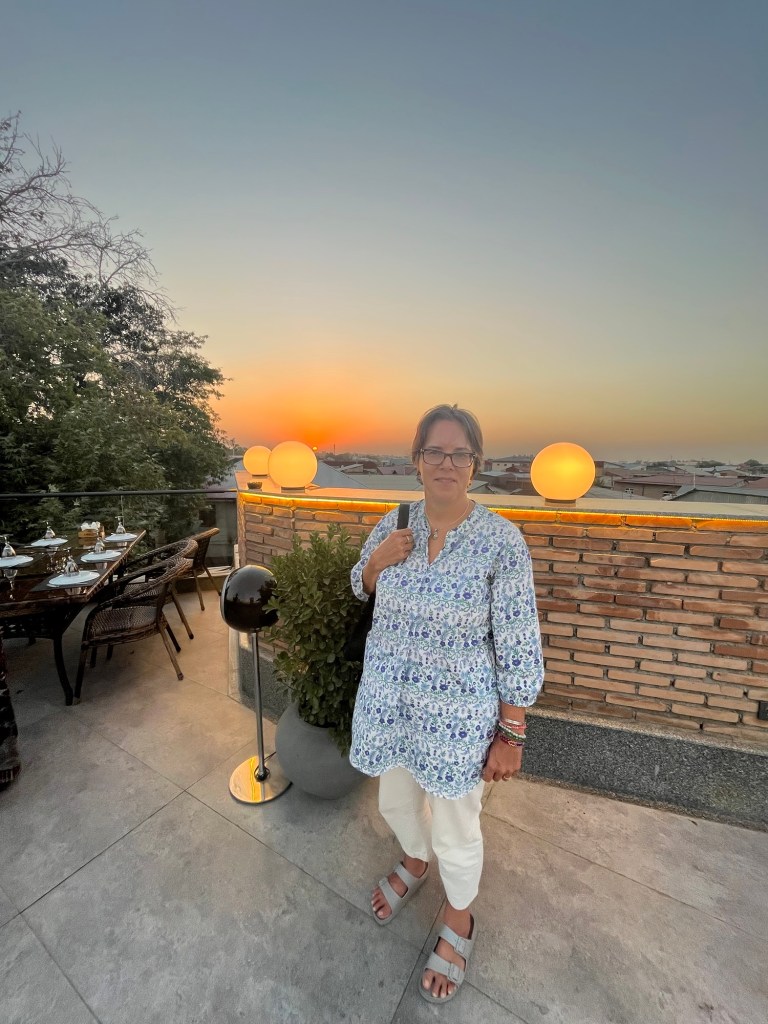


We didn’t get a chance to visit the very ancient Afrosayib area of the town. Maybe we will be able to return someday and see it. It was time for us to get in the train again towards our final Central Asian destination – Bukhara.

 Kate's Travels
Leave a comment