
The train journey from Samarkand to Bukhara is very short – less than two hours. Although Samarkand was hot Bukhara felt hotter. The area of Uzbekistan from Bukhara until the border is pretty much desert. We were missing out the oasis city of Khiva and the ancient ruins that are found around it. I would love to return to see them one day, but maybe later in the year, when it’s cooler!
Tim had lost his sunhat so we had to do some immediate shopping to prevent his head getting burned! Many of the old buildings in Bukhara are caravanserai that were used by silk route traders. They are now full of stalls selling clothes, jewellery, scarves, carpets and other souvenirs to tourists. The quality and prices are good, especially if you bargain, which is expected.
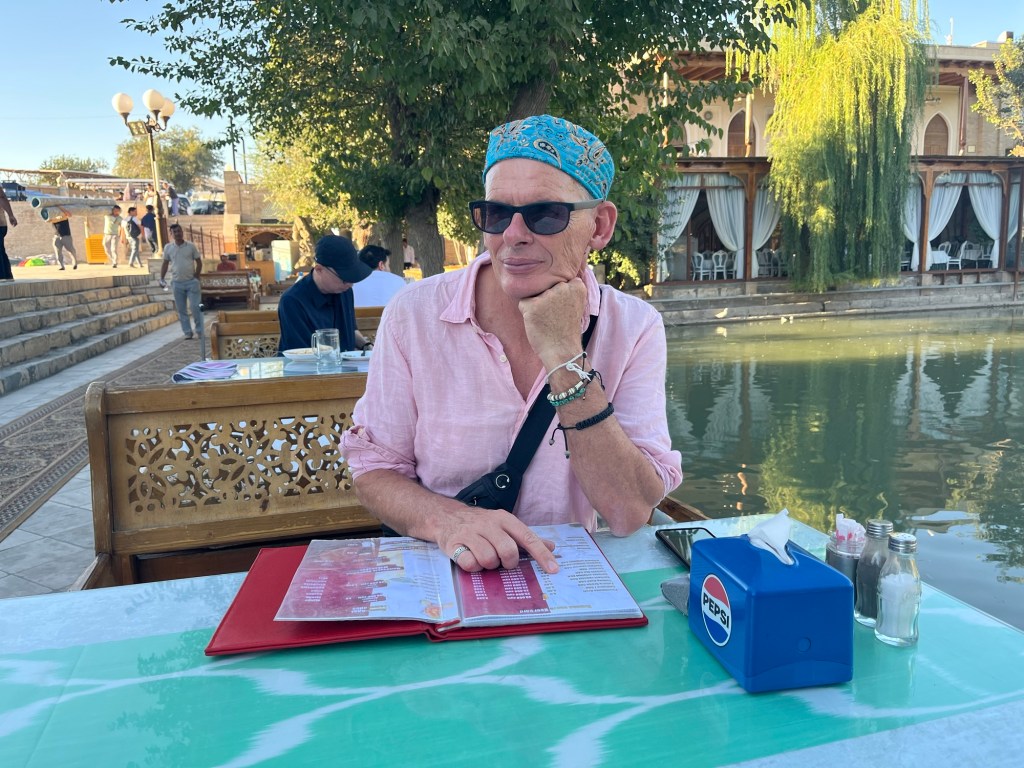
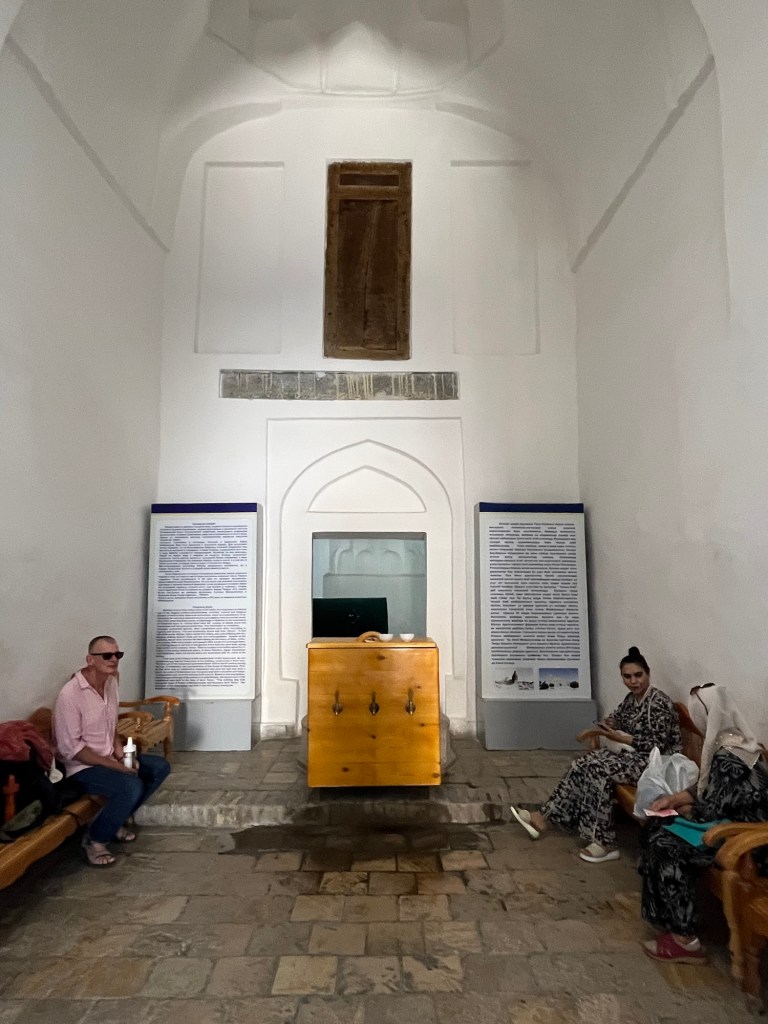
After a bit of shopping we found a lovely cafe to relax in by a big tank. Bukhara used to be famous for these tanks, which were the backbone of its water system. Apparently they became polluted, causing illness to the population. However a spring that is venerated by the local population still exists. It is said to have been created by the Prophet Job when he struck his staff against the ground. The water in it cured him of his boils and ulcers. The spring is contained within a mausoleum, Chashma Ayub. We visited it on our last day in Bukhara. While we were there local people were popping in and out, saying prayers and collecting water.
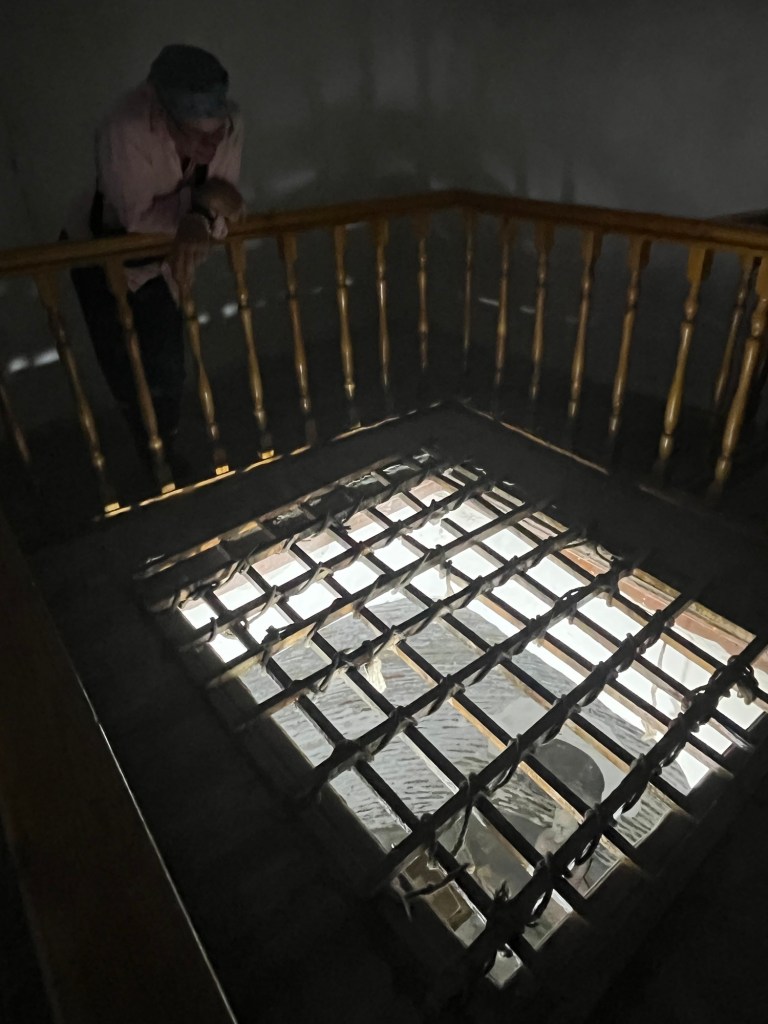
When the sun started to sink and it got a bit cooler we walked over to the old Zindan or prison of Bukhara. Two British army officers, Stoddart and Connolly, were imprisoned in a bug and scorpion infested hole here in the 19th century. The Emir was annoyed that they didn’t bring a personal letter from Queen Victoria with them and felt slighted, so he took revenge. The funniest part of the story is that a clergyman who was later sent to confirm that they had been beheaded was only saved because the Emir found his clerical garb so ridiculous that he couldn’t take him seriously.
The man in charge of the museum told us that King Charles had visited here when he was still a Prince.
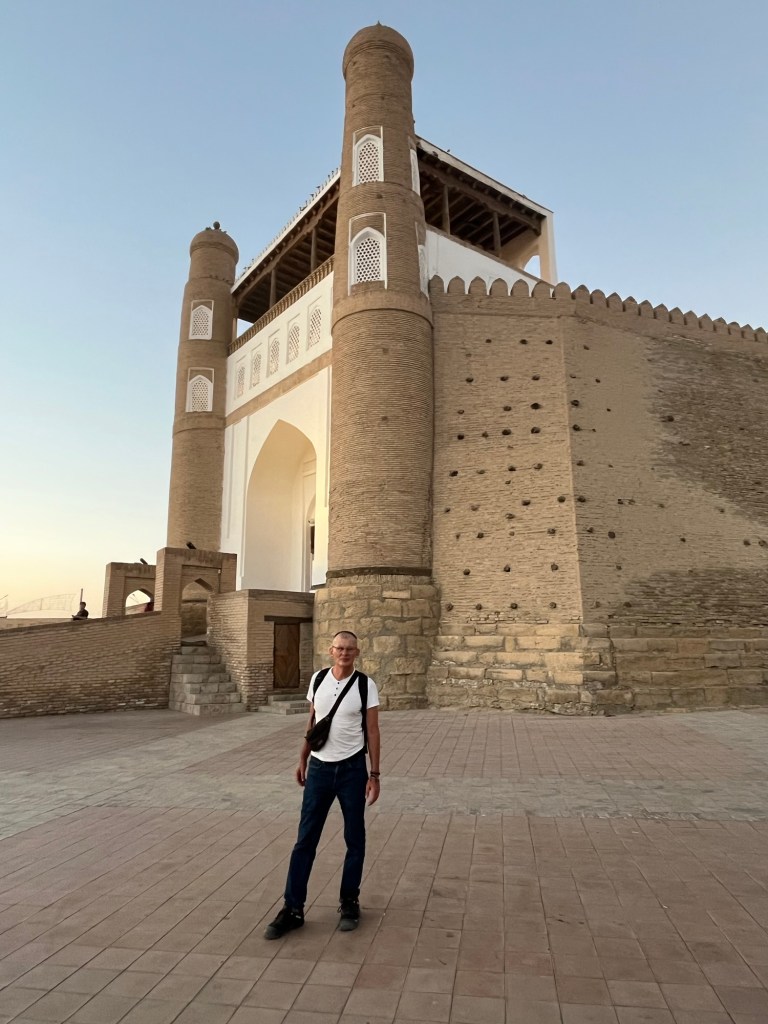
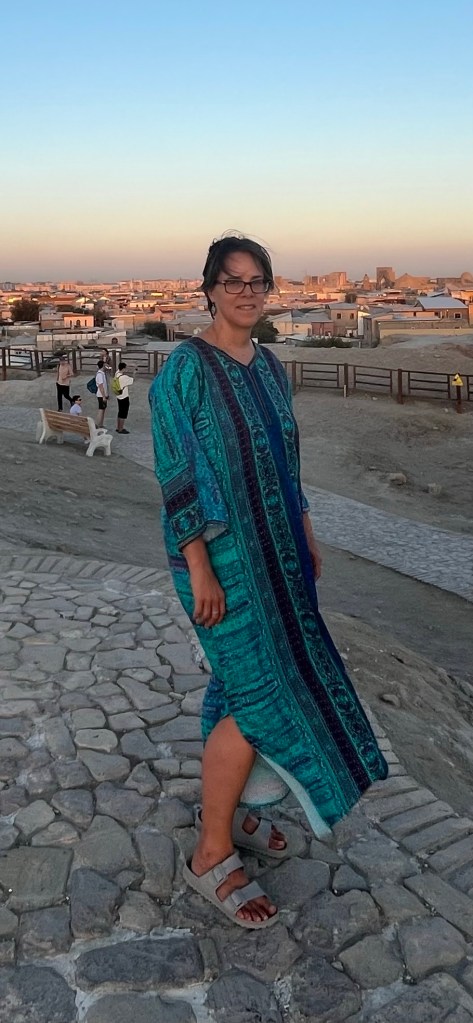
We climbed up to the Ark of Bukhara just as it was getting dark and returned the next day when it was lighter for a proper look around. The Ark is an old fortress. There are remnants of the Emir’s throne room as well as the stables and the mosque to visit. We walked around an area where excavations have uncovered old structures. There are magnificent views over Bukhara.
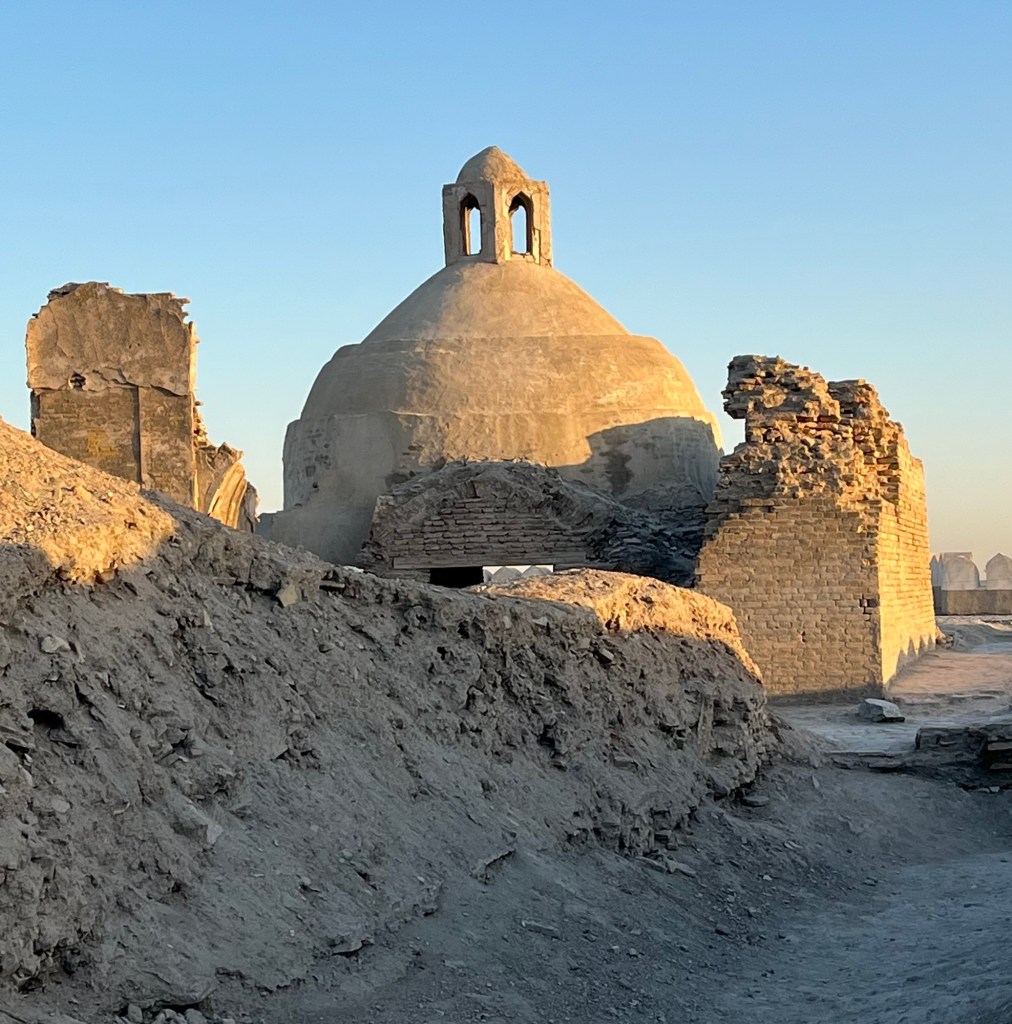
Remains of 18th century mosque in the grounds of The Ark Bukhara
I had a rest in the hotel the next morning as I was feeling tired and ill with the cold/ covid I had caught. Everybody in Bukhara seemed to be coming down with it – everywhere we went we heard coughs and sneezes. Tim had a wander of the town on his own and as the day cooled down I felt recovered enough to explore some sights near our hotel. These included a beautiful mosque and a nearby minaret, Chor Minar.
The next day we visited a few more mosques and mausoleums. Although the buildings in Bukhara are not quite as magnificent as those in Samarkand, the old town is a good place to ditch the guidebooks and mooch. Whatever way we turned there were interesting things to see.
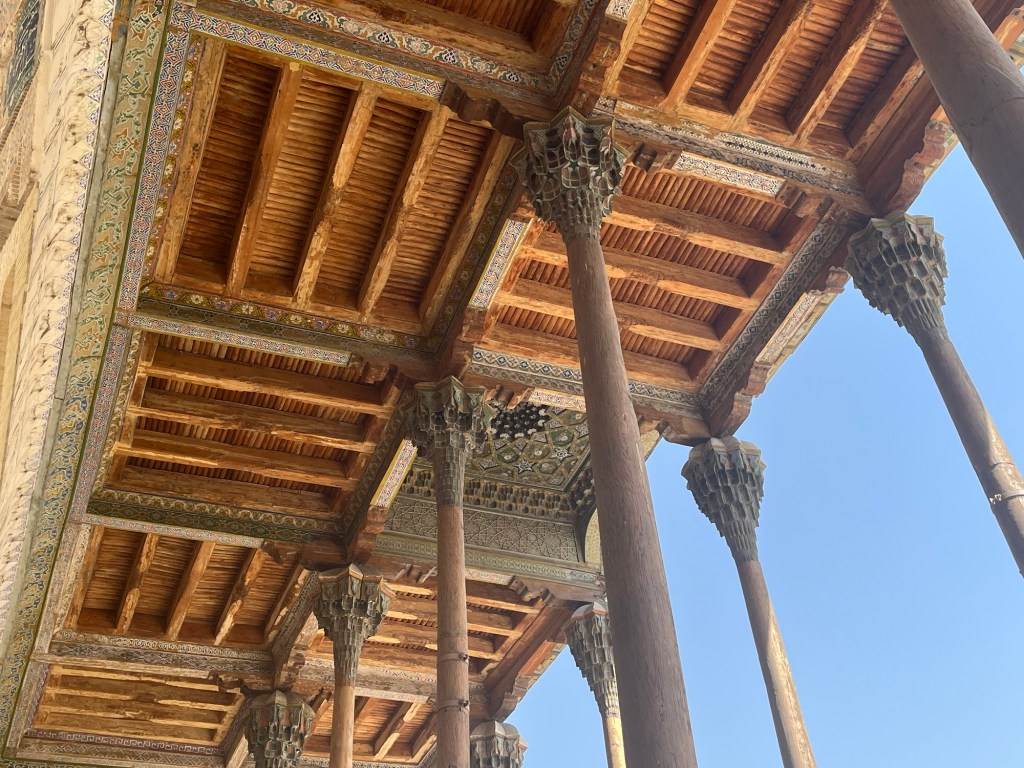
Opposite the Ark is the oldest mosque in town, Bolo Hauz, which has beautiful wooden pillars. The ceiling was constructed from poplar wood using the same method as the buildings we explored in Leh.
We found the main market which was bigger than the one in Samarkand and full of life.
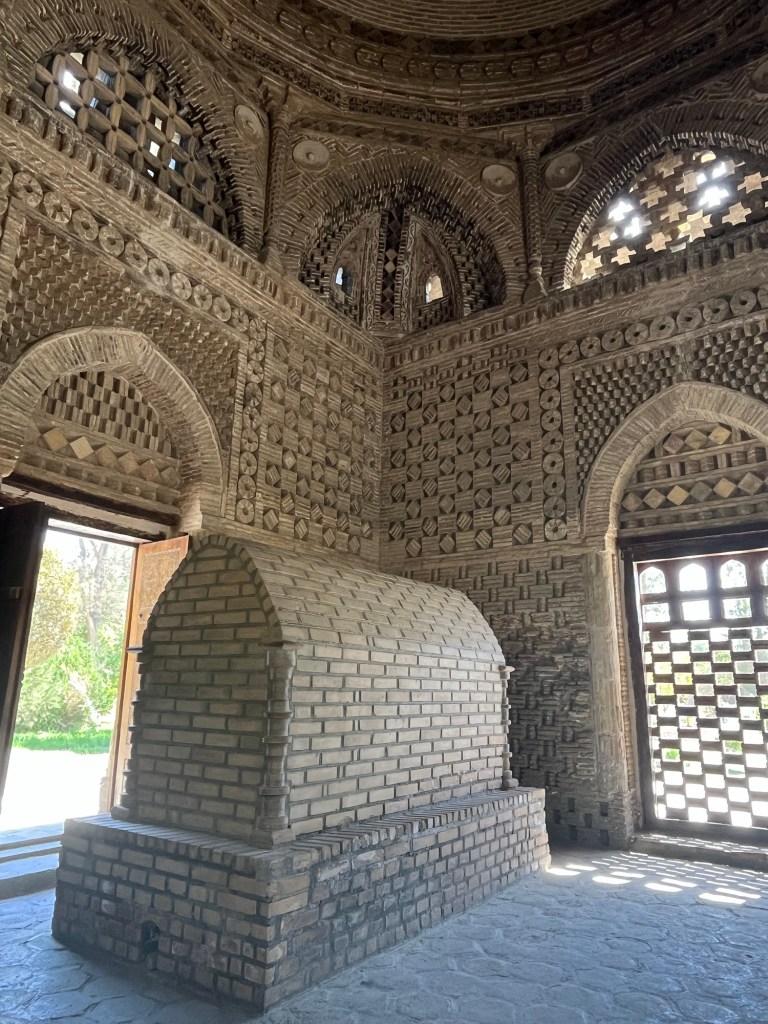
In a small park was the oldest building in Bukhara, dating from the 9th century. It is a mausoleum built from mud bricks. Its walls are two metres thick.
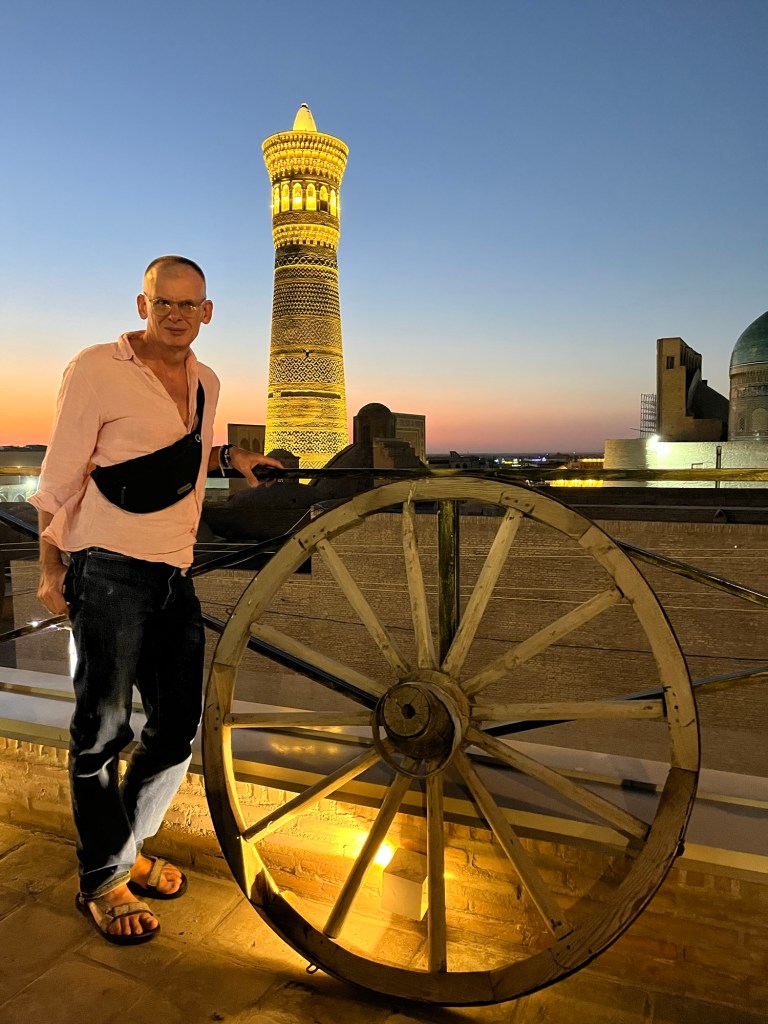
On our last evening in Bukhara we found a lovely roof top restaurant from where we could view the lit up Chor Minar. It was time for us to say goodbye to Central Asia and head for Europe and Istanbul.
 Kate's Travels
Leave a comment